

Grow Zone 10 Planting Guide: What to Plant and When
 By Richard "Woodie" Buller, GGD co-founder with 35+ years in horticulture
Published On: Aug 31, 2026
Share:
| In this Article | |||
|---|---|---|---|
Gardening in USDA Grow Zone 10 is a completely different experience from gardening in much of the country.
While gardeners farther north spend winter waiting for the ground to thaw, Zone 10 gardeners can be planting, growing, harvesting, and enjoying their landscapes through much of the year. Frost is uncommon, winters are mild, and the growing season is exceptionally long.
That sounds like the perfect gardening climate, and in many ways, it is.
But Zone 10 brings its own challenges.
Intense summer heat, strong sunlight, warm nighttime temperatures, drought, humidity in some regions, salt exposure near the coast, and rapidly drying soil can put tremendous stress on plants. The traditional advice to "plant in spring" doesn't always make sense here. In fact, for many trees, shrubs, and perennials, fall and winter can be some of the best planting seasons in Zone 10.
The key to successful gardening in Zone 10 isn't simply choosing plants that can survive warm temperatures. It's understanding how the seasons work differently and choosing plants that thrive within those conditions.
Once you understand that, Zone 10 becomes one of the most exciting places in the country to garden.
What Is USDA Grow Zone 10?
The USDA Plant Hardiness Zone Map divides the country according to average annual extreme minimum winter temperatures. Zone 10 generally experiences average annual extreme minimum temperatures between 30°F and 40°F, with Zone 10a representing the cooler half of that range and Zone 10b the warmer half.
That means winter cold usually isn't the primary limitation it is farther north.
Instead, gardeners often need to think about the opposite extreme.
Can the plant handle the heat?
A plant may technically be hardy to Zone 10, but that doesn't automatically mean it will thrive in every Zone 10 landscape. Sun intensity, humidity, rainfall, soil drainage, elevation, coastal exposure, and summer temperatures all matter.
A Zone 10 garden in coastal Southern California can be very different from one in South Florida.
That's why the USDA hardiness zone should always be considered a starting point, not the entire story. If you aren't sure which zone you garden in, our plant hardiness zone map and our overview of how planting zones work are the place to start.
Where Is Grow Zone 10?
USDA Zone 10 occurs primarily in the warmest parts of the United States, including portions of Florida, Southern California, southern Arizona, southern Texas, and other warm coastal or protected areas.
Even within those areas, conditions vary tremendously.
Some Zone 10 gardens experience hot, humid summers with heavy seasonal rainfall. Others experience extremely dry summers where irrigation becomes essential. Coastal locations may have milder temperatures but contend with wind and salt spray.
The plants you choose should match not only your hardiness zone but also your specific landscape.
That's the "right plant, right place" philosophy in action. Everything we grow and ship for this climate is gathered in our Zone 10 trees, Zone 10 shrubs, and Zone 10 perennials collections, and it is worth checking where we ship plants before you plan an order.
The Zone 10 Planting Calendar Is Different
If you've gardened in colder climates, you may have been taught that spring is the beginning of the planting season.
In Zone 10, I want you to think differently.
Fall can be your second spring, and sometimes your best spring.
When temperatures begin to moderate in the fall, soil remains warm enough for root development, while plants face less stress from extreme heat. Roots can continue to establish throughout much of the mild winter, giving plants a tremendous head start before summer arrives.
Winter can also be an excellent planting season for many hardy trees and shrubs, particularly when conditions are mild.
Spring remains a wonderful time to plant, but earlier is often better. The goal is to give new plants as much time as possible to develop roots before the most intense summer weather arrives.
Summer planting is certainly possible, especially with container-grown nursery plants, but it requires much closer attention to watering and heat stress.
As a general rule:
- Fall: Excellent planting season for many trees, shrubs, and perennials.
- Winter: Often an excellent time for trees and shrubs where conditions remain mild.
- Spring: Excellent, particularly when planting early enough for roots to establish before extreme heat.
- Summer: Possible, but requires careful watering, mulching, and monitoring.
Fall May Be Zone 10's Secret Weapon
I think fall planting is one of the most underused opportunities in warm-climate gardening.

When you plant in the fall, the plant doesn't have to simultaneously establish roots and survive the hottest weather of the year. Cooler air temperatures reduce moisture loss from foliage, while warm soil encourages continued root development.
Instead of asking a newly planted shrub to endure ninety-degree afternoons immediately after planting, you're giving it months to become established.
By the following summer, that same plant can have a much larger root system capable of finding moisture deeper in the soil.
That can make an enormous difference. The same logic drives our guide to planting trees and shrubs in fall and winter, and it applies with even more force in a climate where summer is the hard season rather than winter.
Choosing Trees for Zone 10
Trees provide some of the greatest long-term value in a warm-climate landscape. They create shade, cool outdoor living spaces, soften architecture, provide habitat, and can even reduce heat around the home.
The trees I would reach for first in Zone 10 are the ones that shrug off heat and strong sun rather than merely tolerating them. Chinese Pistache is one of the most heat- and drought-durable shade trees you can plant. Italian Cypress, Leyland Cypress, and Murray Cypress handle warm climates and give you evergreen height and screening. For flowers, Crape Myrtle trees such as the Double Dynamite® Crape Myrtle bloom through the hottest weeks of the year. Sweetbay Magnolia is the magnolia I would choose for a wetter site, and Chicago Hardy Fig gives you fruit from a small, easy tree.
You can see the full list in our Zone 10 tree collection.
The most important consideration is mature size.
A small tree in a nursery container can eventually become a major landscape feature. Before planting, consider its mature height and width as well as its distance from the house, driveway, sidewalk, utilities, and neighboring properties.
In Zone 10, especially, shade can be an asset. A strategically positioned tree can help create cooler microclimates where other plants can thrive.
Flowering Shrubs for Zone 10 Gardens
Zone 10 gardeners have access to an incredible palette of flowering shrubs.
Depending on the specific cultivar and local conditions, the ones I would build a Zone 10 garden around include Frost Proof Gardenia and August Beauty Gardenia, fall-blooming Camellias such as Yuletide and spring bloomers like Kramer's Supreme, reblooming Encore® Azaleas, Purple Daydream® Loropetalum, Knock Out® and Drift® roses, hardy Hibiscus, compact Butterfly Bush, and Crape Myrtle grown as a shrub.
The trick is paying attention to sunlight.
A plant labeled "full sun" may tolerate six or more hours of sunlight, but there's a considerable difference between six hours of morning sun and an entire day of blazing afternoon sun in a Zone 10 landscape.
Some plants benefit from protection during the hottest part of the afternoon, especially in hotter inland locations.
Use your home, larger shrubs, fences, and trees to create microclimates throughout the property.
Evergreen Shrubs Provide the Framework
One of the principles I use in almost every landscape applies especially well in Zone 10:
Build the garden around the structure first and flowers second.
Evergreen shrubs provide that structure.
Fragrant Tea Olive, Nandina, Ligustrum, Aucuba, Gardenias, Camellias, and Loropetalum can provide year-round foliage while flowering plants rotate through their seasonal displays.
In practice that means plants like Gulf Stream Nandina and Lemon Lime Nandina for low structure, Sunshine Ligustrum and Wavy Leaf Ligustrum for hedging, Gold Dust Aucuba for shade, and Color Guard Yucca or Red Yucca where heat and reflected light are punishing. Browse the whole range in our Zone 10 shrub collection.
This keeps the landscape from looking empty between bloom cycles.
Instead of filling every available space with flowering plants, use evergreens as anchors and allow flowering shrubs and perennials to provide changing seasonal color around them.
Perennials for Zone 10
Perennial gardening becomes especially interesting in Zone 10 because some plants that behave as annuals farther north may survive for years in warmer climates.
Depending on local conditions, the perennials and ornamental grasses that earn their place here include Big Blue Liriope, Mondo Grass and Dwarf Mondo Grass, White Cloud Muhly Grass, Mexican Feather Grass, Dwarf Pampas Grass, Delosperma, Little Goldstar Black-Eyed Susan, Tall Verbena, Airbrush Effect Hardy Hibiscus, Rosemary, and Japanese Holly Fern for shaded corners.
But there's an important lesson here.
Just because a plant survives winter doesn't necessarily mean it enjoys Zone 10 summers.
Some traditional northern perennials require a winter chilling period or simply struggle with prolonged heat and humidity. Lavender, Peonies, and many classic border perennials fall into that category. Always check the requirements of the individual species and cultivar rather than relying solely on its USDA hardiness rating, and start from our Zone 10 perennial collection rather than a general perennial list.
Tropical Plants Become Landscape Plants
Here's where gardening in Zone 10 becomes really fun.
Plants that gardeners farther north grow in patio containers and bring indoors for winter may become permanent landscape plants in warmer areas.
Depending on your particular Zone 10 climate, that can include palms such as Sago Palm and Ponytail Palm, an Arbequina Olive on a sunny patio, Star Jasmine climbing a trellis or wall, succulents, and the rest of our tropical plants.
These plants can transform patios, pool areas, entrances, and outdoor living spaces. If you want to lean into the look, our guide to creating a tropical oasis at home walks through the combinations that work.
Mixing tropical plants with more traditional evergreen shrubs can create an especially interesting landscape—lush and colorful without feeling like a collection of unrelated plants.
One practical note. Some plant material is regulated at the state line. Citrus cannot ship into Florida or Texas, and several palm species are restricted for Texas. Check the shipping page for the current list before you plan a tropical planting around a specific plant.
Woodie's Picks for Zone 10
If I were planting a Zone 10 landscape from scratch this fall, these six would go in first. Every one of them handles heat, holds up to strong sun, and earns its space for more than a few weeks a year.
Chinese Pistache Tree
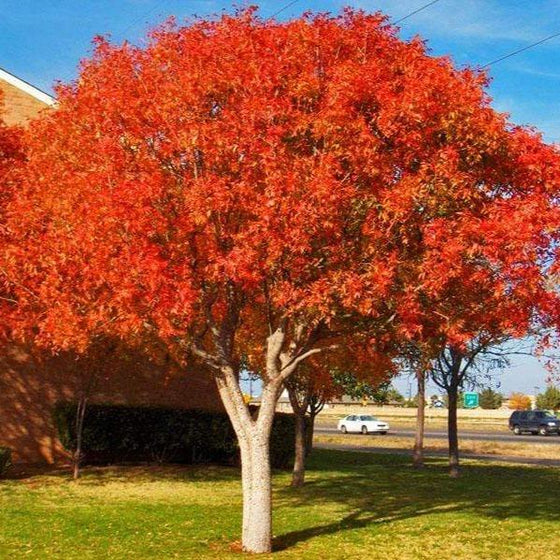
Chinese Pistache is the shade tree I recommend most often for hot, dry landscapes. It tolerates heat, drought, poor soil, and reflected light from pavement better than almost anything else of its size, and it develops a broad, umbrella-shaped canopy that actually cools the ground beneath it. Plant one on the west side of the house and you have changed the growing conditions of that whole side of the property.
Italian Cypress

Nothing gives a warm-climate landscape vertical structure faster than Italian Cypress. It is narrow enough to plant close to a wall or driveway, it stays evergreen year-round, and it thrives in exactly the hot, dry, well-drained conditions that give other evergreens trouble. Use them in pairs to frame an entrance or in a row to draw the eye down a long garden.
Fragrant Tea Olive

Tea Olive is the evergreen I would plant near a door, a window, or a patio, because the flowers are small and easy to miss but the fragrance carries across the whole yard. It takes heat and sun without complaint, holds a dense form with very little pruning, and can be grown as a specimen, a hedge, or a screen. In a Zone 10 garden it does structural work and sensory work at the same time.
Frost Proof Gardenia

Gardenias are close to a requirement in a warm-climate garden, and Frost Proof is the one I trust most. The narrower foliage and heavier bud set make it more reliable than older varieties, and it blooms on a plant that looks good the rest of the year. Give it morning sun with some afternoon protection in the hottest inland locations and keep the soil consistently moist while it establishes.
Autumn Royalty® Encore® Azalea

A long growing season deserves a shrub that uses it. Encore® Azaleas bloom in spring and then again through summer and fall, which is exactly the behavior you want in a climate where the garden never really shuts down. Autumn Royalty® carries the largest flowers of the series on a well-branched evergreen frame. Morning sun and afternoon shade is the sweet spot.
Red Yucca
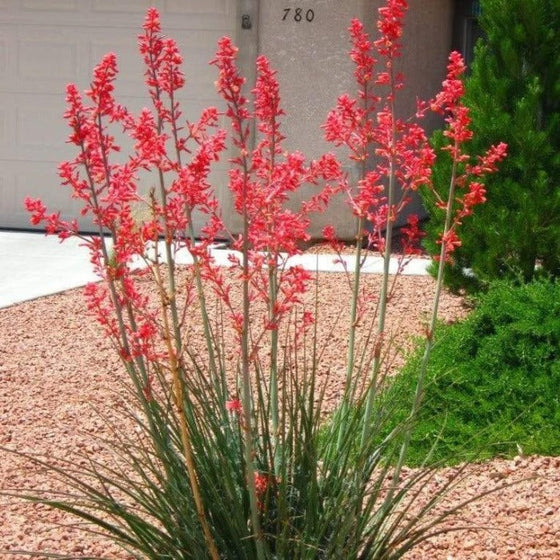
Red Yucca is what I plant in the spot nothing else will take: full sun, reflected heat off a driveway or a south-facing wall, and soil that dries out fast. It sends up coral flower spikes for months, hummingbirds work them constantly, and once established it needs almost no supplemental water. In a dry-side Zone 10 garden it does more with less than nearly anything else.
Don't Underestimate the Zone 10 Sun
Sunlight is one of the most misunderstood parts of warm-climate gardening.
The words "full sun" appear on countless plant tags, but the intensity of sunlight varies dramatically across the country.
A plant that thrives in all-day sun farther north may appreciate some afternoon protection in a very hot Zone 10 location.

Monitor your property throughout the day.
Morning sun with afternoon shade can be ideal for plants that appreciate plenty of light but struggle with extreme afternoon heat. Areas receiving reflected heat from south- or west-facing walls, concrete patios, pools, driveways, and stone surfaces can be considerably hotter than the surrounding landscape.
Those are microclimates, and understanding them will make you a much better gardener.
Watering, Mulch, and Drainage in Zone 10
Watering Correctly Is Critical
Zone 10 gardeners need to become good at reading soil moisture.
Newly planted trees, shrubs, and perennials need consistent moisture while their roots become established, particularly when planting close to summer.
But that doesn't mean watering everything every day.
I prefer deep, thorough watering, followed by letting the soil begin to dry slightly before watering again. This encourages roots to move deeper into the surrounding soil rather than remaining concentrated near the surface.
Whenever possible, water early in the morning and direct the water toward the soil rather than soaking the foliage. This reduces evaporation and can help limit the extended leaf wetness that encourages certain fungal diseases. A soaker hose or drip line from our watering and irrigation supplies makes that far easier than standing there with a hose.
How frequently you'll need to water depends on your soil, rainfall, temperature, wind, plant type, and how recently the plant was installed.
Don't water according to the calendar.
Check the soil.
Mulch Becomes Even More Important
If I were gardening in Zone 10, proper mulching would be near the top of my priority list.
A 2- to 3-inch layer of mulch around trees and shrubs helps moderate soil temperature and reduce moisture loss during hot weather.
Mulch also reduces weed competition and gradually improves the soil as organic materials break down.
Just remember that more isn't better.
Keep mulch away from tree trunks, shrub stems, and perennial crowns. We're trying to protect the root zone—not bury the plant.
Drainage Still Matters
It might seem strange to discuss drainage in a guide focused heavily on heat and drought, but some Zone 10 climates receive tremendous amounts of rainfall at certain times of the year.
Warm, saturated soil can be particularly difficult for plants that require excellent drainage.
Before planting, watch what happens after heavy rainfall.
Does water disappear relatively quickly?
Or does it remain around the planting area for hours or days?
If the site remains consistently wet, choose plants adapted to those conditions rather than trying to force a drought-loving plant to survive there. Working compost and soil amendments into a heavy planting area before you plant is far easier than fixing drainage afterward. The University of Florida IFAS Extension has good regional guidance on managing wet-season soils.
Again, right plant, right place.
Creating a Water-Wise Zone 10 Landscape
In drier parts of Zone 10, water conservation should be built into the landscape design from the beginning.
Group plants according to their moisture requirements. Plants requiring regular irrigation should be planted together, while drought-tolerant trees, shrubs, grasses, and perennials can be planted elsewhere in the landscape.
This concept is often called hydrozoning, and it makes tremendous sense.
There's no reason to water an entire landscape heavily because a handful of plants require extra moisture.
Good landscape design should reduce the resources required for its maintenance. Delosperma, Mexican Feather Grass, Red Yucca, and other low-water plants let you build a section of the yard that essentially takes care of itself.
Create Shade with Plants
One of my favorite approaches to warm-climate gardening is using plants to improve the growing environment for other plants.
A well-positioned shade tree can eventually create an entirely new garden beneath it.
Suddenly, that blazing section of lawn becomes an opportunity for shade-loving shrubs, ferns, groundcovers, and woodland-inspired plants. Aucuba, Japanese Holly Fern, Ajuga, and Dwarf Mondo Grass all come into play once you have a canopy.
You can do the same thing on a smaller scale by using taller shrubs and ornamental grasses to provide afternoon protection for lower-growing plants.
You're not just planting individual plants.
You're creating an ecosystem.
Pollinator Gardening in Zone 10
A long growing season creates tremendous opportunities to support bees, butterflies, hummingbirds, and other pollinators.
The goal should be to provide flowers as much of the year as possible.
Rather than planting one large group that blooms simultaneously, combine plants with overlapping flowering periods. Tall Verbena, Black-Eyed Susan, Butterfly Bush, Red Yucca, American Beautyberry, and the rest of our pollinator garden perennials can help create a succession of nectar and pollen sources.
Leave some seed heads standing when appropriate, too. Birds can benefit from them while the dried stems provide winter habitat for beneficial insects.
A beautiful garden can also be a functioning habitat.
Don't Forget Container Gardening
Zone 10 is almost made for container gardening.

Patios, pool decks, balconies, entrances, and outdoor living areas can support spectacular combinations of tropical plants, flowering perennials, ornamental grasses, compact shrubs, and even small trees. An Arbequina Olive, a Majesty Palm, or a Ponytail Palm in a good planter can carry an entire corner of a patio.
The challenge is water.
Containers dry considerably faster than plants growing in the ground, particularly when exposed to hot sun and wind. During the hottest weather, some containers may need to be checked every day.
Always use containers with drainage holes and a quality potting mix rather than garden soil.
A Simple Zone 10 Landscape Design
If you're starting from scratch, don't feel like you need fifty different plants.
Start with a strong structure and build outward in this order:
- Choose one or two trees. Place them for height and eventual shade, keeping mature size in mind relative to the house, drive, and property lines.
- Add evergreen shrubs. Frame the house and create the year-round structure the garden will be read against.
- Introduce flowering shrubs. Use them for the major seasonal displays, placed where you will actually see them from inside and from the patio.
- Fill in with perennials and ornamental grasses. These provide color, texture, movement, and pollinator value between the woody plants.
- Mulch the beds and leave room to grow. Apply 2 to 3 inches of mulch, kept off trunks and crowns, and space everything for its mature size rather than its nursery size.
The result might include only ten or fifteen different plant types, repeated throughout the property.
That's usually far more effective than planting one of everything.
Repetition creates rhythm.
And rhythm makes a landscape feel intentional.
The Biggest Zone 10 Planting Mistakes to Avoid
Most Zone 10 gardening problems aren't caused by the zone itself. They happen when we treat a warm-climate garden as if it were growing somewhere else.
A few principles can prevent many of those problems:
- Don't assume spring is your only planting season.
- Don't choose plants based on hardiness zone alone.
- Don't underestimate the afternoon sun and reflected heat.
- Don't water shallowly every day.
- Don't bury plants under excessive mulch.
- Don't ignore drainage during rainy seasons.
- Don't plant without considering mature size.
- Don't assume every "full sun" plant appreciates extreme all-day heat.
- Don't overlook fall and winter as valuable planting seasons.
- Don't fight your climate—design around it.
Shop the Zone 10 Shrub Collection
Zone 10 Questions, Answered
What is USDA Grow Zone 10?
Zone 10 is the USDA hardiness zone where average annual extreme minimum winter temperatures fall between 30°F and 40°F. Zone 10a is the cooler half of that range and Zone 10b the warmer half. In practice it means winter cold is rarely the limiting factor, and summer heat usually is.
Where is Grow Zone 10 located?
Zone 10 covers the warmest parts of the United States, including much of South Florida, coastal and Southern California, southern Arizona, southern Texas, and scattered warm coastal or protected pockets elsewhere. Conditions within Zone 10 vary widely, from humid and rainy to hot and arid.
When is the best time to plant in Zone 10?
Fall is usually the best planting season in Zone 10. Soil is still warm enough for root growth while air temperatures have moderated, so a new plant can establish roots without simultaneously fighting extreme heat. Winter planting is often excellent for trees and shrubs, and early spring works well. Summer planting is possible but demands close attention to watering.
Can you plant trees and shrubs in Zone 10 during winter?
Yes. In most Zone 10 locations the soil never freezes, so roots continue developing through the winter months. For many trees and shrubs, a winter planting gives the plant several additional months of root growth before the first hot summer.
Does a plant rated hardy to Zone 10 always thrive there?
No. A hardiness rating only describes cold tolerance. It says nothing about heat tolerance, humidity, rainfall, soil drainage, or sun intensity. Plants that require a winter chilling period, or that struggle with prolonged heat and humidity, can be listed as hardy to Zone 10 and still perform poorly there. Always check the individual species and cultivar.
How often should you water new plants in Zone 10?
Water deeply and thoroughly, then let the soil begin to dry slightly before watering again, rather than watering lightly every day. Frequency depends on soil type, rainfall, wind, temperature, and how recently the plant went in the ground. Check the soil rather than following a fixed schedule, and water early in the morning at the soil line rather than over the foliage.
Woodie's Take
If I could give a Zone 10 gardener one piece of advice, it would be this:
Stop thinking of your growing season the same way gardeners farther north do.
You have an incredible advantage.
Your winter is mild. Your planting season is long. Your selection of trees, shrubs, perennials, and tropical plants is remarkable. You can create landscapes that remain green, colorful, and alive during months when much of the country is dormant.
But every advantage comes with a responsibility.
Your biggest challenge isn't usually surviving winter.
It's preparing plants for summer.
That's why I would take full advantage of fall and winter planting whenever appropriate. Give trees and shrubs months to establish roots before the heat arrives. Build shade into the landscape. Mulch properly. Learn how quickly your soil dries. Choose plants for your particular combination of heat, sunlight, rainfall, and soil rather than relying on a zone number alone.
Most importantly, work with your climate instead of trying to garden around it.
Do that, and Zone 10 isn't simply a place where you can garden almost year-round.
It becomes one of the best places in the country to do it.