

ose Bushes for Fragrant Blooms, Vibrant Color & Lasting Beauty
The fastest way to add timeless color, fragrance, and curb appeal.
Rose bushes are the “signature plant” that can make an ordinary landscape feel finished—whether you’re building a formal bed, softening a walkway, or adding a single focal point near the front door. The best part is how many looks you can get from one category: compact landscape shrubs for easy color, taller types for long stems and classic bloom form, and climbers that can turn a fence or trellis into a living backdrop. With today’s rose selection, you can shop by the outcome you want—fragrance, nonstop flowering, cutting-garden blooms, or a shrub that holds its shape and fills space like a pro.
To keep roses blooming hard, set them up with sun, airflow, and steady establishment care: six or more hours of direct light is the sweet spot for strong flowering, and spacing plants so leaves dry quickly is one of the simplest ways to prevent recurring disease frustration. Keep watering focused at the base, prune at the right season so plants push fresh, flower-ready growth, and watch for the few issues that matter most (like black spot and rose rosette disease) so small problems don’t turn into season-enders. That’s the whole idea behind the We Grow Together Promise—clear steps, confident timing, and roses that reward you from late spring to frost.
Roses by Type

Knockout Roses
10 products

Drift Roses
9 products

David Austin Roses
0 products

Hybrid Tea Roses
1 products

Floribunda Roses
2 products

Climbing Roses
0 products

Grandiflora Roses
1 products
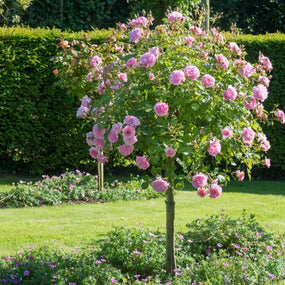
Tree Roses
0 products
Roses by Color


Find the rose that fits your landscape plan.
Rose bushes are unusually versatile for a flowering plant: they can act like a tidy border shrub, a bold mid-bed anchor, a flowering screen, or a cut-flower workhorse—depending on the type you choose and how you place it. If you want “easy impact,” many modern landscape-style shrubs are bred to flower repeatedly and keep a fuller shape with straightforward care. If you want romance and drama, taller, more upright types deliver larger blooms and longer stems. And if you want vertical color, climbers can dress up structures without needing a whole new bed footprint.
This collection approach is especially helpful for homeowners and landscapers because it lets you choose by use case instead of guessing by name. Want a foundation planting that won’t swallow windows? Choose a compact habit and plan spacing for mature width. Want a statement plant by the patio? Prioritize fragrance and place it where you’ll actually walk past it. Want a long-season flower bed? Focus on repeat-blooming types and commit to deadheading (or light trimming) to keep the plant cycling. Repeat-flowering roses are widely described as blooming from late spring until the first frosts, which is exactly the kind of return-on-space most gardens need.
Roses also scale beautifully from small gardens to big projects. In a tighter yard, a few well-spaced shrubs can read like a “designed” garden without a long plant list. In larger landscapes, repeating the same rose type down a walk or along a fence creates instant rhythm and cohesion—especially when paired with low perennials or ornamental grasses that hide the base of the plant as it grows. The key is leaving enough breathing room so the shrubs stay healthier, easier to prune, and better at flowering along the whole plant instead of only at the top.
Choose bloom style, fragrance, and plant size with confidence.
Roses come in a range of bloom presentations—from single, classic “one big flower per stem” looks to cluster-flowering types that create fuller color at a distance. That matters because it changes how the plant reads in the landscape: clustered bloomers can look like a bright flowering shrub even from the curb, while larger individual blooms shine in close-up spaces and cutting gardens. Fragrance is equally variable, so it’s smart to pick at least one strongly scented rose for the places you actually live outdoors—near seating, a gate, or the path from the driveway to the front door.
Mature size is where smart rose gardens feel effortless. Many rose bushes land somewhere in the “shrub zone” (roughly a few feet tall and wide), but vigor can swing widely based on type, climate, and how hard you prune. The best rule is to plan for the mature spread so you’re not forced into constant shearing later—because roses look best when their natural structure is respected. When plants have room, you’ll also see better flowering along side shoots, less leaf drop from disease pressure, and easier access for deadheading and seasonal pruning.
Growth rate is typically steady when conditions are right: sun, drainage, consistent moisture while establishing, and feeding during the active season. In real-life terms, you’ll often see the biggest “jump” in performance in the second and third seasons as roots settle in and the plant builds more flowering canes. If you want quicker fullness, choose a site with strong morning sun and plan a spacing layout that fills in without crowding—staggered planting patterns can look lush while still keeping airflow moving through the bed.
Plant in the sun and space for healthier leaves.
The sun is the foundation for rose success. Multiple extension resources emphasize high light—often 6 or more hours of direct sun, ideally in the morning—as a key driver of bloom quantity and leaf health. Morning sun helps foliage dry earlier, which reduces the damp conditions that many common rose diseases love. If you have to choose between “more sun” and “more convenience,” choose the sun; it’s the difference between roses that coast and roses that constantly need intervention.
Spacing is your simplest disease-prevention tool that also improves bloom. Guidance varies by rose type and vigor, but a practical planning range is: miniatures about 1–2 feet apart; many bush and clustered types about 2–4 feet apart; and more vigorous shrub forms sometimes 4–6 feet apart. That space helps air move through the canopy, shortens leaf-wetness time after rain, and makes it easier to prune for an open center. If you’re planting a row, consider staggered spacing rather than a tight single line—same number of plants, better airflow.
Watering technique matters as much as watering amount. The most consistent advice is to water at the base (drip, soaker, or careful hand-watering) and avoid overhead sprinklers, which keep leaves wet and spread disease spores. Pair that with mulch to reduce splash-up from soil, keep roots more evenly moist, and reduce stress during heat—because stressed roses are simply more likely to struggle with pests and spotty foliage.
Prune at the right time and keep problems small.
Most roses respond best to pruning in late winter to early spring, timed around the end of dormancy and your local last-frost window. The goal isn’t “make it tiny”—it’s to remove dead or weak wood, open the canopy for airflow, and encourage strong new canes that flower well. Through the season, deadheading (or light trimming after a flush) helps many repeat bloomers keep cycling, so the plant continues producing buds instead of putting energy into hips.
The biggest health win is staying ahead of common fungal issues like black spot. Extension guidance repeatedly emphasizes the same basics: bright light, good spacing, pruning for airflow, sanitation (removing infected leaves and leaf litter), and watering at the base. If you’ve ever watched roses defoliate mid-summer, this is where you reclaim the season—because prevention is dramatically easier than “rescue mode” after infection is widespread.