
Knock Out® Roses for Easy-Care Color & Abundant Repeat Blooms
Nonstop blooms and easy curb appeal from spring to frost
Knock Out roses are the “I want roses, but I don’t want a second job” answer. They’re landscape workhorses that bloom again and again, giving you reliable color from spring through the first hard frosts—without needing constant deadheading to keep the show going. They fit right into real-life yards: foundation beds, mailbox plantings, sunny borders, and long runs along fences where you want a flowering hedge that looks cared for even when you’re busy. Most varieties mature into that perfect shrub-rose size—big enough to make an impact, but still manageable with one good pruning each year.
Here’s the simple recipe for success: give them sun (the more sun, the more flowers), plant them in well-drained soil, water consistently while they establish, and prune in late winter/early spring when new growth starts waking up. Knock Out roses are known for strong disease resistance—especially to black spot—but any rose can struggle if it’s stuck in shade, crowded with poor airflow, or kept wet on the leaves day after day. If you plant them with room to breathe and keep the basics steady, you get the classic rose look with a much easier care routine. And when you order from Garden Goods Direct, you get fast shipping, real horticultural support, and the We Grow Together Promise.


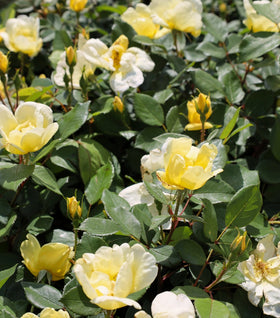
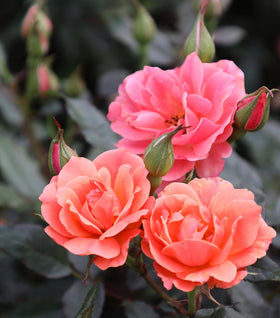

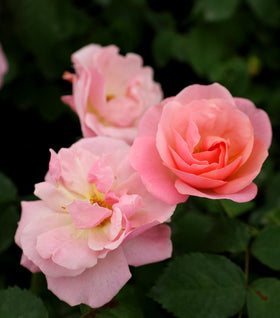
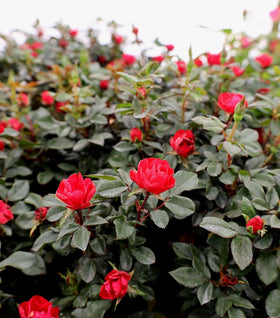


Nonstop color that makes the yard look finished.
Knock Out roses are famous for one thing that matters most in a landscape: they keep performing. Many bloom repeatedly from spring to frost, which means your beds don’t “go quiet” after one big flush. That long season of color is why they’re used everywhere from home gardens to commercial plantings—when you want something that looks good for months, not weeks. Use them as a flowering hedge, a bold foundation planting, or repeated accents that pull your whole landscape together the way a good design plan does.
They’re also a smart fit for homeowners who want impact without fuss. Knock Out roses are commonly described as low-maintenance shrub roses with strong disease resistance, and they don’t demand the same level of precision as many traditional hybrid tea roses. In plain terms, you can still grow them beautifully without being a rose expert. Give them sun, don’t drown the roots, and you’ll typically get steady growth and dependable bloom cycles through the warm season.
Design-wise, you can go “single specimen” or “mass planting” and win either way. A single shrub can anchor a corner bed with color, but planting in groups is where the magic happens—Knock Out roses make an easy, repeatable rhythm across the front of a home or along a walkway. If you’re aiming for that magazine-level curb appeal, repetition is your best friend—and these roses make it simple to pull off.
Big blooms, glossy foliage, and a shrub shape that’s easy to plan for.
Across the Knock Out family, bloom color and flower form vary by variety, but the growth habit is the shared advantage: a bushy shrub rose that’s made to live in the landscape. Many mature around the 3–4 ft range (often with a similar spread), while some can reach larger sizes if left untrimmed—so you can choose a footprint that fits your bed depth and your maintenance style. The payoff is a plant that looks full and intentional, not sparse and leggy, especially when it’s planted in the sun it wants.
Bloom timing is a major selling point: these are repeat bloomers that can carry color through the growing season into fall frosts. That matters for real landscapes because it keeps your garden looking “in season” even when other shrubs have finished their one-and-done flowering window. If you want the romance of roses with the consistency of a landscape shrub, this is one of the most dependable routes you can take.
Foliage and overall plant health are part of the look, too. Knock Out roses are widely recognized for their resistance to black spot, but they’ll still do best with the basics: plenty of sun, good airflow, and watering at the base rather than soaking the leaves. Strong conditions don’t just reduce disease pressure—they help the foliage stay cleaner and glossier, which makes the blooms pop even more.
Plant them where they can bloom hard and grow cleanly.
Start with the sun. The Knock Out family is commonly recommended for full sun—think 6–8 hours a day—because that’s where you’ll get the strongest flowering and the healthiest growth. They can tolerate some partial shade, but you’ll usually see fewer blooms and more potential for disease when plants stay damp and shaded too long. If you have one prime sunny bed, this is a category that will reward you for using it.
Next, plan spacing based on mature width and the look you want. Since many Knock Out roses mature around 3–4 ft wide (and some larger), a practical spacing range is often about 3–4 ft apart for a fuller “hedge” feel, or 4–5 ft when you want each shrub to hold its own shape with clear air gaps between plants. That airflow is not just a nice-to-have—it’s part of how you keep foliage cleaner and reduce common rose disease pressure in humid spells.
Use placement to solve real landscape problems. Need a flowering border that still reads tidy? These do it. Want a thorny deterrent hedge under windows? That works too (just give yourself room to prune without getting punished). Want a foundation shrub that carries color for months? Perfect. The best planting locations are the ones you’ll see often—front walk, driveway edge, patio border—because these roses earn their keep when they’re part of daily life, not hidden in the back corner.
Easy care that keeps blooms coming and shrubs in shape.
Pruning timing is the confidence move with Knock Out roses. A common approach is an annual prune in late winter to early spring, right as new shoots start to push—this refreshes the plant, encourages strong new flowering growth, and keeps the shrub at a comfortable size. The Knock Out family’s own guidance includes cutting back to a low, tidy framework, and university extension guidance for landscape/Knock-Out types also emphasizes spring pruning to maintain shape and performance.
Watering and soil are straightforward: aim for well-drained soil, water deeply while the plant is establishing, and avoid keeping foliage wet (especially late in the day) to reduce fungal disease pressure. Even disease-resistant roses can get black spot or powdery mildew under the wrong conditions, so good airflow, sun, and smart watering habits do a lot of the heavy lifting. If you keep the plant healthy, it will keep flowering—and you’ll spend more time enjoying blooms than troubleshooting problems.