
Flowering Cherry Trees for Abundant Spring Blooms & Graceful Form
The classic spring “wow” tree—soft shade, bold blossoms, and four-season style.
A flowering cherry is the fastest way to make a landscape feel celebrated. These are the trees people remember—clouds of blossom before the leaves fully arrive, a graceful branching pattern you notice from the street, and a canopy that brings gentle, dappled shade instead of heavy darkness. This collection focuses on reliable, landscape-proven favorites like Yoshino and Kwanzan, plus earlier bloomers like Okame and elegant weeping forms, so you can match your space and your “spring moment” without guessing. Expect spring bloom (often early-to-mid spring, depending on variety and weather), glossy green summer foliage, and frequent gold-to-bronze fall color—then a clean silhouette that still looks intentional in winter.
The confidence play with flowering cherries is simple: give them strong light, good drainage, and just enough care to prevent stress. Many ornamental cherries prefer full sun (with some tolerance for partial shade), and they look their best when roots aren’t sitting in soggy soil. Growth rate is typically moderate, and they establish well when watering is consistent in year one—especially through heat or windy spells. Pruning is usually light and strategic, with many reputable references favoring mid-summer pruning (often July–August) to reduce disease risk on Prunus, while also avoiding cuts so early that you remove next season’s flower buds. And while these trees are generally easy to live with, it’s smart to know the watch-outs: cankers and leaf diseases can show up when airflow is poor, and black knot can appear as hard, dark swellings on twigs and branches. Under the We Grow Together Promise, the goal is simple—pick the right tree, plant it correctly, and keep those blooms coming back year after year

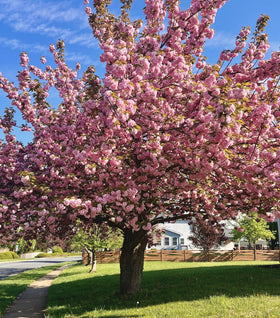
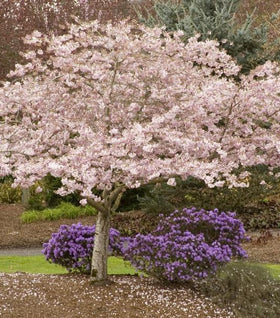
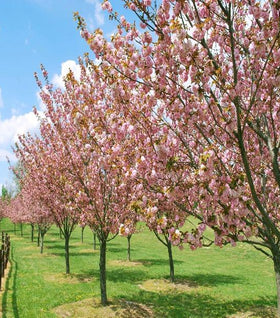

Turn your curb appeal into a spring festival of color.
Flowering cherry trees are pure payoff: one tree can transform an entry walk, front lawn, or courtyard into a seasonal destination. Their signature look comes from blooms that often open before or alongside early leaves, creating that “floating” blossom effect that reads from the street. Use one as a specimen to anchor a foundation bed, or plant a pair to frame a gate or driveway opening—instant structure, instant polish.
These trees also shine because they’re versatile in scale. Many popular flowering cherries are manageable, small-to-medium landscape trees—big enough to make an impact, not so big that they overwhelm a modern lot. That makes them a smart fit for homeowners and landscapers who want a true flowering tree without committing to a giant canopy tree.
If you love design with repetition, flowering cherries are famous for “allée” planting—spacing a single variety at consistent intervals to create a spring tunnel of bloom. If you’d rather extend the season, mixing early, mid, and later bloomers (like Okame, Yoshino, and Kwanzan) can stretch color across weeks, especially when spring temperatures fluctuate.
And because these are spring-blooming ornamentals, the bloom itself is the headline. You’re not planting for fruit production—you’re planting for that annual display, plus refined branching, seasonal foliage, and winter silhouette that keeps working after the petals fall.
Choose your blossom style and the silhouette that fits.
Start with the bloom vibe you want. Yoshino is known for that classic, airy, frothy look—often white to blush—while Kwanzan is loved for fuller, double pink flowers that feel dramatic and “cotton-candy” from a distance. Okame tends to bloom earlier with vivid pink, and weeping forms bring cascades of flowers plus a sculptural shape that stays interesting in every season.
Mature size and habit matter as much as flower color. Upright-oval and vase-shaped trees work beautifully for street-facing beds and lawn specimens, while weeping types are perfect where you want a focal point without building too much height—near patios, water features, or smaller courtyards. In general, expect moderate growth and a form that becomes more characterful as branching thickens with age.
Think beyond bloom season, too. Many flowering cherries offer glossy summer foliage and attractive fall tones, then finish the year with bark texture and a clean branching silhouette. That four-season presence is why they read as “designed” trees, not just spring decorations.
Plant them where blossoms perform best.
Flowering cherries typically perform best in full sun (often defined as 6+ hours of direct light), with some tolerance for partial shade—especially if that shade arrives later in the day. More light generally means more flowers and stronger branching, while too much shade can reduce bloom and increase disease pressure by slowing leaf dry-down.
Soil and drainage are the other “make or break” factors. Many ornamental cherries prefer moist but well-drained soil; constantly wet ground is a common pathway to stress, cankers, and decline. If your site holds water, consider planting slightly high, improving drainage, or choosing a different spot—because healthy roots are what fuel that spring flower show.
Spacing is where planning turns into an A+ result. As a practical range, allow 15–25 feet between trees for most standard flowering cherry forms, and 12–18 feet for smaller/weeping selections—adjusting based on the mature width you’re targeting and whether you want overlapping canopies (romantic) or crisp separation (clean and modern). Wider spacing also improves airflow, helping reduce foliar disease and supporting more consistent year-to-year performance.
Enjoy easy care, and protect next year’s buds.
Planting well is half the maintenance. Prioritize a wide hole, set the root flare at the right height, water deeply after planting, and keep moisture consistent through the first growing season—especially during hot, dry stretches. Mulch over the root zone (kept off the trunk) helps keep roots cooler and reduces drought stress, a major trigger of problems in Prunus.
Pruning is best kept light and intentional: remove dead, damaged, crossing, or crowded branches to preserve the tree’s natural shape and improve airflow. For pruning timing, many reputable references recommend major pruning in mid-summer (often July–August), when tissues are more resistant, and the risk of diseases like bacterial canker and silver leaf is lower; avoid heavy winter cuts that can invite infection in cool, wet conditions and may also remove flower buds.
Know the common watch-outs so you can act early. Ornamental cherries can experience cankers, shot hole, and other foliar diseases, especially when leaves stay wet and air circulation is poor; black knot can be pruned out below visible damage, and sanitation matters. If you see dieback, oozing, or sunken areas on bark, treat it as a site-stress + disease-management problem (not just a cosmetic issue) and remove affected wood during dry weather when recommended for your region.