
Liriope Plants for Evergreen Ground Coverage & Easy-Care Borders
Clean edging, tough groundcover, and late-season color for sun or shade.
If you’ve ever wished you could “outline” a bed the way a designer does, liriope plants are one of the easiest ways to get there. They form neat clumps or dense, grass-like sweeps that make borders look sharper, foundations look cleaner, and pathways feel more intentional. The foliage does the heavy lifting all season, strap-like, glossy leaves that hold shape in heat and humidity, and then, when many landscapes are running low on fresh color, liriope throws up flower spikes in late summer into early fall. That timing is gold for curb appeal, because it adds a second-season moment without requiring a full replant. It’s also a forgiving performer: it tolerates full sun to deep shade (with best flowering generally in brighter light), handles drought once established, and even has moderate tolerance for salt and tough urban conditions when drainage is decent.
The “smart shopping” tip is to match the habit to your goal. Clumping lilyturf (often Liriope muscari) is typically better for tidy edging and controlled mass plantings, while creeping types (often Liriope spicata) can spread quickly by rhizomes and may be difficult to contain, best reserved for confined beds, hardscape-ringed areas, or places you truly want a spreading groundcover. For easy maintenance, plan to mow or cut foliage in late winter before new growth begins, then let it freshen up for spring. And if you garden with pets nearby, it’s reassuring that turf lily (Liriope muscari) is listed as non-toxic to dogs and cats.
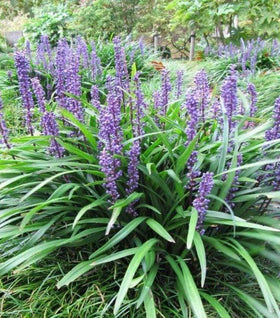

Make borders look instantly finished.
Liriope is a landscape “clean-up crew” plant, meaning it makes everything around it look more polished. Use it to draw a crisp line along walkways, define bed edges, or create a low, uniform ribbon in front of foundation shrubs. It’s also a strong underplanting, where tree roots and shade make other plants sulk; liriope can handle deep shade, and it’s widely used as a groundcover under trees and shrubs, and on slopes and banks, for a stable, filled-in look.
This collection is especially useful because “liriope” often includes both clumping and creeping habits. If you want a tight, orderly edge, clumping forms expand slowly and stay more contained. If you want faster coverage, creeping types can knit together into a dense mat, but that same vigor is why they can invade adjacent turf or nearby beds if they’re not confined. Think of creeping liriope as a tool for contained spaces (hardscape borders, deep edging barriers, or dedicated groundcover zones), and clumping liriope as the safer default for most home landscapes.
Containers are another underrated win. Liriope’s tidy, fountainy foliage makes pots look full without constant watering, and it plays well as a “filler” plant around seasonal color. In-ground, it’s a dependable workhorse for mass plantings, especially where you need durability against heat, occasional drought, and humidity, so homeowners get an attractive result without a high-maintenance routine.
See the foliage, blooms, and mature size clearly.
Most liriope plants form dense clumps of narrow, arching leaves that read like ornamental grass—but they aren’t true grasses. The foliage provides long-season structure, and many popular clumping types send up purple flower spikes in late summer to early fall (often August into September), followed by dark berries that can persist into winter. That bloom window is a big reason liriope is so valuable: it adds fresh color when spring perennials are done and before fall really ramps up.
For sizing, clumping lilyturf typically falls in a sweet, easy-to-design range, growing 12–18 inches tall with a similar spread, making it ideal for edging and front-of-bed structure. Creeping liriope can be shorter (often 6–18 inches tall) but spreads wider, forming patches that can reach 1–2 feet across and continue expanding. In other words, clumping types help you keep lines tidy; creeping types help you cover ground faster.
Growth rate is best described as steady and reliable. Clumping forms expand gradually by short growths, while creeping forms spread by rhizomes and can become weedy or difficult to remove once established. If you’re designing a long border, that difference matters: choose clumping for predictable spacing and maintenance, and choose creeping only when you’re ready to manage boundaries from day one.
Place them where they thrive.
One of the best things about liriope is its adaptability. It can grow in deep shade or full sun, and it tolerates both sand and clay, so long as the site drains well. Flowering is typically strongest with more sun, while heavier shade can slow growth and stretch foliage. That makes liriope an easy “connector” plant when your yard has mixed light: use it to transition from sunnier edges into shadier understory beds without changing your whole palette.
Spacing depends on the look you want, but a simple rule of thumb is about 12 inches apart for a full, uniform planting that knits together over time. For edging, that spacing creates a continuous line; for mass plantings, it creates a carpet effect without years of waiting. If you’re using creeping types, plan your boundaries carefully, hardscape edges, deep edging barriers, or dedicated beds, because rhizomatous spread can push into neighboring turf and planting areas.
Functionally, liriope shines on slopes and banks, under trees, and in front of shrubs where you want weed-suppressing density and year-round presence (especially in milder climates where foliage stays evergreen). It’s also used in urban landscapes thanks to its tolerance for heat and humidity, and many selections tolerate drought once established, making it a practical option for landscapes that need to look good without constant irrigation.
Keep care simple and results consistent.
The biggest success factor is avoiding “wet feet.” Liriope prefers moist, well-drained soil; soggy ground or poor drainage can invite problems such as crown rot, leaf rot, and root rot. If you’re planting in heavy soil, improve drainage with grade adjustments or bed prep, and avoid daily irrigation once plants are established. Keeping foliage dry (instead of frequent overhead watering) also reduces disease pressure, such as anthracnose, which is more common with frequent rainfall and overhead irrigation.
Pruning is refreshingly straightforward: mow or cut the foliage back in late winter before new growth starts. In warmer regions, that can be as early as late January, while in cooler areas, it often targets February into early spring. The goal is simple: remove last year’s tired leaves so fresh growth comes in clean, without nicking the plant crowns.
Feeding and watering are light-touch. Many clumping types benefit from a slow-release or organic fertilizer in early spring, and regular watering during the first year helps establishment; after that, they typically need only occasional supplemental water. For pests, monitor for slugs/snails and watch for leaf spotting or rot symptoms in overly wet sites. If you’re choosing between “more fertilizer” and “better drainage,” drainage wins almost every time.