Images Depict Mature Plants
Variegated Liriope
Liriope muscari 'Variegata'
I've always considered Variegated Liriope one of the most dependable plants for giving a landscape bed a finished, professional appearance. What I like most is the way its creamy yellow and green foliage brightens areas beneath shrubs and along walkways, especially where darker green plants dominate the planting. I particularly enjoy using it in repeating groups along a foundation or as a continuous border beside a garden path. It's also a great choice for homeowners who need deer-resistant groundcover that tolerates partial shade and occasional dry conditions. Unlike running liriope varieties, Liriope muscari ‘Variegata’ grows in attractive clumps, so it's easier to maintain a defined planting. The lavender-purple flower spikes in late summer are a nice bonus, but the foliage is really the star of the show. My advice is to plant it in generous groups, give it enough water to establish, and trim away tired foliage before spring growth begins. Few groundcovers offer this much color, texture, and versatility with so little effort.
$12.76 with code SAVINGS20 at checkout Save $3.19
FREE Ground Shipping on orders over $49.99
This weekend only - ends Mon 11/23 at 12 PM ET
📦 Free shipping on orders over $99.
Delay shipping by leaving us a message at Checkout.
Share:



Variegated Liriope Plants for Colorful Borders and Evergreen Groundcover
Brighten Shady Gardens with Variegated Liriope Plants
Variegated Liriope is an outstanding choice for homeowners who want to introduce bright foliage color into shady or partially shaded landscapes. Its graceful, arching leaves feature rich green centers and creamy yellow margins that create an attractive striped appearance throughout the growing season. Unlike many flowering perennials that offer color for only a few weeks, Variegated Liriope provides consistent ornamental interest through its foliage. This makes it especially useful in foundation plantings, woodland-inspired gardens, and borders where colorful flowers may be less dependable because of limited sunlight.
The contrasting foliage creates a naturally illuminated appearance when planted beneath larger shrubs or alongside darker green evergreens. It also provides an attractive transition between formal foundation plantings and softer perennial gardens. Variegated Liriope grows in neat, individual clumps, allowing gardeners to create defined plantings without the aggressive spreading associated with some running groundcovers. Whether used as a repeating accent or planted in larger groups, its bright leaves bring texture, color, and a finished appearance to spaces that might otherwise feel overlooked.
Create Beautiful Walkway Edging with Variegated Lilyturf
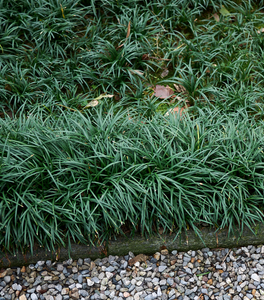
Few plants are as effective for defining the edges of a landscape bed as Variegated Liriope. Its compact, clumping habit and arching foliage create a soft but clearly recognizable border along sidewalks, driveways, garden paths, and patios. Growing approximately 12 to 18 inches tall and wide, it provides enough presence to distinguish a planting area without overwhelming nearby shrubs or flowering perennials. The creamy yellow leaf margins further emphasize the planting line, making paths and garden beds appear more intentional and professionally maintained.
Plant Variegated Liriope in repeating groups to create a continuous ribbon of color, or use individual clumps at regular intervals for a more relaxed appearance. The foliage pairs beautifully with brick walkways, natural stone, dark mulch, and ornamental gravel. It also works well along the edges of hydrangea beds, beneath azaleas, and in front of evergreen foundation shrubs. Its naturally tidy growth habit makes it particularly valuable for low-maintenance landscape designs, where homeowners want an attractive border without constant trimming or seasonal replanting.
Enjoy Colorful Evergreen Foliage and Purple Summer Flowers
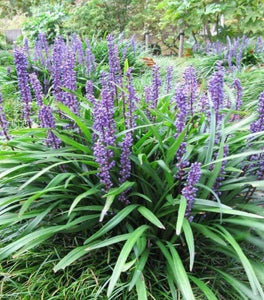
Although Variegated Liriope is primarily grown for its ornamental foliage, its late-summer flowers provide a welcome additional display. Lavender-purple to violet-blue flower spikes emerge among the arching leaves, creating an attractive contrast with the creamy yellow variegation. The flowers resemble miniature grape hyacinth spikes and add a delicate, upright accent above the dense foliage. These blooms are particularly appealing when Variegated Liriope is planted in groups, allowing the flower spikes to create repeating splashes of color across a border or groundcover planting.
After flowering, the plant may develop dark, berry-like fruits that contribute additional seasonal interest. The foliage remains its primary ornamental feature, however, providing reliable texture and color long after the flowers fade. In mild climates, Variegated Liriope maintains an evergreen appearance throughout winter, helping garden beds retain definition when surrounding perennials become dormant. In colder areas, winter foliage may develop some browning or weather damage, but fresh new leaves emerge as temperatures warm. This combination of foliage, flowers, and seasonal durability makes Variegated Liriope an excellent plant for four-season landscape planning.
Add Low-Maintenance Groundcover to Foundation Plantings
Variegated Liriope is especially effective as a groundcover beneath shrubs and along residential foundations. Its arching leaves create a dense, textural planting that helps visually connect larger landscape plants while maintaining a neat appearance. The bright variegation provides a useful contrast against broadleaf evergreens, including hollies, boxwoods, and other dark green foundation shrubs. Because its mature size remains relatively compact, Variegated Liriope can fill open planting areas without requiring the extensive pruning associated with larger ornamental grasses.
For larger beds, mass planting creates a consistent carpet of colorful foliage while preserving the distinctive clumping appearance of each plant. It can also soften the transition between lawns, hardscapes, and shrub borders. Homeowners who want to reduce the amount of exposed mulch in a landscape bed will appreciate its ability to gradually fill the spaces between plants. Planting Variegated Liriope in repeating groups produces an organized, cohesive landscape design while minimizing the need for annual flowers or frequent seasonal renovations.
Grow Deer-Resistant Liriope in Sun or Shade
Variegated Liriope is a versatile landscape perennial that performs well in partial shade and locations receiving morning sun with afternoon protection. It can also grow in full sun when adequate moisture is available, although intense afternoon sun may be more stressful in hot climates. The ability to tolerate a range of light conditions makes it useful beneath high-branched trees, alongside buildings, and in landscape beds where sunlight changes throughout the day. Its grass-like foliage also introduces a distinctive texture among broader-leaved shrubs and perennial plants.
Another important advantage is its generally high resistance to deer browsing. Deer often avoid liriope in favor of more palatable landscape plants, making it a practical option for gardens affected by regular browsing pressure. Once established, it also tolerates dry periods, summer heat, and humidity. Although these characteristics make Variegated Liriope adaptable, the plant performs best when its roots have access to reasonably well-drained soil and adequate moisture during establishment. For homeowners looking for a dependable groundcover that combines ornamental appeal with practical durability, Variegated Liriope is an excellent choice.
Design a Beautiful Landscape with Variegated Monkey Grass
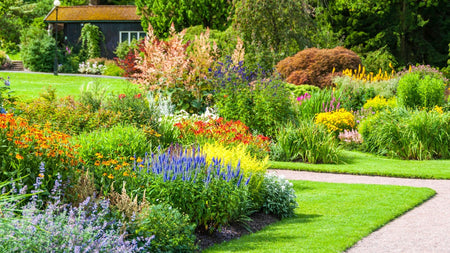
Variegated Liriope, commonly called Variegated Monkey Grass, is one of those versatile plants that can help unify an entire landscape design. Its combination of compact size, bright foliage, and graceful texture makes it easy to incorporate into both formal and informal gardens. Use it beneath flowering shrubs, at the front of mixed perennial borders, around patios, or as an accent among darker evergreen plants. The creamy variegation works particularly well with purple, blue, pink, and white flowers, allowing gardeners to create visually balanced planting combinations.
For a more dramatic effect, arrange Variegated Liriope in broad sweeping masses rather than scattered individual plants. Repeating groups across several landscape beds creates a consistent design theme and helps connect different areas of a property. It can also provide an attractive contrast beside ornamental grasses with darker or finer foliage. Variegated Liriope offers the polished appearance of a professionally designed groundcover with remarkably little ongoing maintenance. Its reliable foliage color, attractive flower spikes, and adaptability make it a valuable addition to residential gardens of many styles.
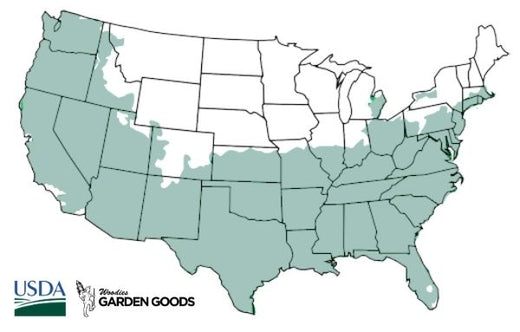
| Hardiness Zone: | 6-10 |
|---|---|
| Mature Height: | 12 to 18 Inches |
| Mature Width: | 12 to 18 Inches |
| Botanical Name | Liriope muscari ‘Variegata’ |
| Sunlight: | Full sun to partial shade; tolerates shade |
| Soil Condition: | Average to fertile; well-drained; adaptable to loam, sandy soils, and improved clay |
| Water Requirements: | Moderate during establishment; low to moderate once established |
| Bloom Time / Color | Late summer to early fall; Lavender-purple to violet-blue |
| Ornamental Features | Creamy yellow and green striped foliage; lavender-purple flower spikes; dark berry-like fruits; arching evergreen texture |
| Wildlife Value | Bees; occasional butterflies; other flower-visiting insects |
| Resistance | Deer; rabbits; drought once established; heat; humidity; moderate salt exposure |
| Landscape Uses | Groundcover; edging; shade gardens; foundation plantings; borders; mass plantings; tree rings; walkway borders; slopes |
How to Care for Variegated Liriope
Before you buy a Variegated Liriope Plant, make sure to read about these care instructions to keep this plant healthy and flourishing.

How do I plant Variegated Liriope?
Choose a location with well-drained soil and full sun to partial shade. In warmer climates, a site receiving morning sun and afternoon shade often produces attractive foliage with less stress during summer heat. Dig a hole approximately twice as wide as the root ball and no deeper than its height. Remove the plant from its container, gently loosen circling roots, and position it so the crown remains level with the surrounding soil. Backfill, firm the soil lightly, and water thoroughly. Space plants approximately 12 to 18 inches apart for borders and groundcover plantings. Closer spacing creates a fuller appearance sooner, while wider spacing keeps individual clumps more distinct. Apply a light layer of mulch around the plants, keeping it away from the crowns. Water consistently during the first growing season to encourage strong root development.

How often should I water Variegated Liriope?
Newly planted Variegated Liriope requires regular watering until its root system becomes established. Check the soil frequently during the first several weeks and water when the upper inch or two begins to dry. Water deeply enough to moisten the root zone without leaving the soil saturated. Plants growing in containers or sandy soils may dry more quickly than those planted in moisture-retentive landscape beds. Once established, Variegated Liriope tolerates occasional dry periods and generally requires less frequent watering. Supplemental irrigation is beneficial during prolonged summer drought, especially in full-sun locations. Avoid constantly wet soil, which can encourage root problems. Proper mulching helps retain moisture and reduces the frequency of watering during hot weather.

What is the best fertilizer for Variegated Liriope?
Variegated Liriope generally performs well without heavy fertilization. If the soil is nutrient-poor or established plants show weak growth, apply a balanced, slow-release fertilizer in early spring, following the manufacturer's directions. A light application of compost around established clumps can also help improve soil structure and nutrient availability over time. Avoid excessive fertilizer, particularly products containing large amounts of nitrogen. Heavy feeding may encourage excessive foliage growth without improving the plant's overall appearance. Healthy soil, appropriate sunlight, and consistent moisture during establishment are more important than frequent fertilization.

When and how should I prune Variegated Liriope?
The best time to prune Variegated Liriope is late winter to very early spring, before new foliage emerges. Remove old, damaged, or winter-browned leaves to make room for fresh spring growth. For established groundcover plantings, the foliage can be cut back to a few inches above the crown using clean, sharp garden tools. Take care not to damage newly emerging shoots. Pruning is optional when the foliage remains attractive throughout winter. Remove individual damaged leaves as needed, and divide crowded clumps in spring if they have developed dead or thin centers. Avoid cutting back actively growing foliage unnecessarily, as the variegated leaves provide most of this plant's ornamental appeal.