
Spirea Plants for Abundant Blooms & Easy-Care Landscape Color
Fast color, tidy mounds, and easy-care bloom for sunny landscapes.
Spirea shrubs are the definition of “easy impact.” They slide into almost any landscape plan, front-yard foundations, border edges, sunny slopes, mailbox beds, and instantly make the space look more finished. Many spirea types bloom from late spring into summer (timing varies by species), and several are known for rebloom when you shear or deadhead spent flowers. Add in foliage that can run from fresh green to bright gold (and sometimes fall tones), and you get a shrub that pulls its weight well beyond bloom week.
The secret to loving spirea long-term is simple: match pruning to bloom timing, then keep it tidy with quick, confident cuts. Summer-flowering Japanese spirea blooms on new wood, so a late-winter/early-spring cutback keeps plants dense and flower-heavy, while trimming after flowers fade can push fresh growth and more color.
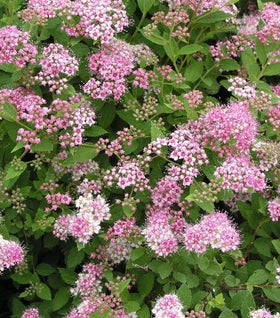


Low-maintenance bloom that upgrades curb appeal.
Spirea is a landscape workhorse because it gives you that “freshly planted” look without a fussy routine, mounded form, dependable flowering, and easy sizing for modern foundation beds and borders. In mass plantings, it reads as a clean ribbon of color; as a single shrub, it gives structure where a bed needs definition.
This collection is especially useful because spirea covers multiple roles: compact shrubs for edging and small spaces, medium mounds for foundations, and larger forms that can act as informal hedging. When you repeat one spirea style in groups of three or five, you get a designer rhythm that makes the whole bed feel intentional instead of “collected.”
If you’re shopping for speed, spirea is a smart choice; many forms establish quickly and respond well to pruning, so you can shape the plant to the look you want (crisp mounds, soft hedges, or relaxed drifts). And if you want more flowers over a longer window, trimming after the first flush is a simple habit that often pays off fast.
Blooms and foliage color you can plan around.
Spirea’s look is two-part: seasonal flowers plus foliage that keeps the plant attractive even when it isn’t blooming. Many popular types carry clusters of pink blooms, while gold-leaf selections bring bright contrast that can “light up” darker evergreens and green shrubs. The result is a color that works as both a bloom moment and an all-season design tool.
Bloom windows vary by type, which is actually an advantage when you’re building a landscape calendar. Spring-flowering spireas generally get pruned after bloom to protect next year’s flowers, while summer-flowering Japanese spirea blooms on new wood and can be pruned in late winter/early spring for best performance. This is how you keep flowers coming without guessing.
Mature size and growth rate depend on selection, but the overall planning win is consistent: most spireas naturally form tidy mounds that are easy to fit into beds without constant corrective pruning. Choose a size class that matches your space, then let the plant hold its shape with occasional refresh pruning instead of frequent shearing.
Planting spots that make spirea thrive.
Most spireas perform best in full sun, with many references noting tolerance of light shade, but sun is what drives denser habit, stronger flowering, and better foliage color on gold-leaf types. If you want maximum bloom and the cleanest mound shape, give spirea your brightest locations.
Spirea is generally adaptable to a wide range of soils as long as drainage is reasonable, making it useful in everyday landscapes. A simple success rule is “moisture while establishing, then steady care.” Avoid chronically soggy spots, and you’ll typically see better health and cleaner foliage.
For spacing, plan around mature width and the look you want: tighter spacing for a faster, continuous border effect, wider spacing for distinct individual mounds, and more airflow. Airflow is especially helpful if you’re trying to keep foliage looking clean and reduce stress-related issues over the season.
Easy pruning that keeps shrubs blooming.
The pruning “win” with spirea is that it’s straightforward, if you match the timing to the type. Summer-flowering Japanese spirea can be pruned in late winter to early spring because it blooms on new wood. Many growers also shear or trim after the bloom fades to encourage fresh growth and potential rebloom.
For spring-flowering spireas, prune after flowering so you don’t remove next year’s buds. For older shrubs, renewal pruning (removing some of the oldest stems) can keep plants vigorous and prevent that woody, tired look over time.