
Salvia Plants for Long-Lasting Color & Pollinator Gardens
Long-blooming flower spikes for sunny, pollinator-filled gardens.
Salvia plants are an easy choice when you want dependable perennial color without adding a complicated care routine. Their upright flower spikes bring definition to garden beds, while shades of blue, violet, purple, pink, and white make it easy to coordinate them with roses, coneflowers, catmint, ornamental grasses, and flowering shrubs. Most of the hardy perennial salvias found in this collection are meadow sage or woodland sage selections that grow into tidy clumps rather than sprawling across the garden. They are substantial enough to show from the street but compact enough for foundation beds, walkways, cottage gardens, and smaller sunny spaces. Their textured, aromatic foliage also gives the plants a clean, structured appearance between flowering cycles.
The real payoff comes from the amount of activity those flowers bring to the landscape. Bees, butterflies, and hummingbirds visit the tubular blooms, and many established plants tolerate heat, occasional dryness, and deer pressure better than fussier perennials. Most flower from late spring into summer, and a timely cutback after the first flush can encourage another round of color that reaches toward early fall. Give salvia strong sun, excellent drainage, and enough room for air to move through the planting, and it will do a lot of the work on its own. With expert guidance and the We Grow Together Promise, this collection offers a confident way to add lasting color and pollinator value to sunny garden spaces.
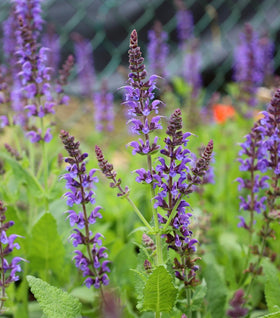

Bring home long-blooming perennial color.
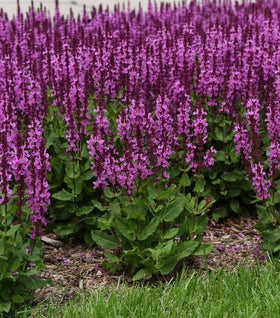
Salvia is one of the most useful flowering perennials for creating a garden that looks organized, colorful, and alive. Its vertical flower spikes rise above lower mounds of foliage, adding height without taking up the space of a large shrub or sprawling perennial. That shape gives garden beds a stronger visual rhythm and helps break up rounded flowers and broad foliage. Plant salvia in repeating groups, and the spikes lead the eye through the landscape, creating a finished look that works equally well in traditional borders, relaxed cottage gardens, and modern foundation plantings.
The flowering season is another major reason to shop for this collection. Many hardy perennial salvias begin blooming in late spring or early summer and continue in flushes through summer. When faded flower stems are removed, established plants can produce a second or even third round of spikes. This repeat performance helps fill the seasonal gap between spring-flowering shrubs and late-summer perennials. It also gives homeowners a longer return from the same planting space, rather than relying on flowers that peak briefly and then disappear.
Salvia works well in the ground, but compact selections can also add structure to larger patio containers. Their upright blooms make a strong centerpiece or supporting accent when paired with trailing annuals and softer foliage. Containers must drain freely, especially in regions with frequent summer rain, because salvia performs better with slightly dry roots than with soil that remains saturated. In garden beds, it can be planted individually as an accent, repeated in ribbons, or massed for a stronger block of flower color.
This collection is especially valuable for gardeners who want ornamental beauty with practical landscape benefits. Salvia attracts beneficial pollinators, adds aromatic foliage, handles sunny exposures, and is often passed over by deer and rabbits. No flowering perennial is completely maintenance-free or deer-proof, but Salvia provides a strong combination of visual impact and garden resilience for homeowners, landscapers, and avid perennial gardeners.
Find the right flower color and garden size.
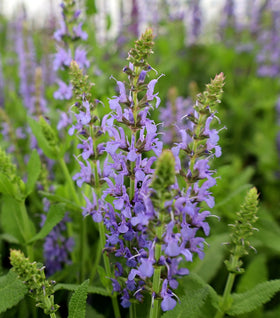
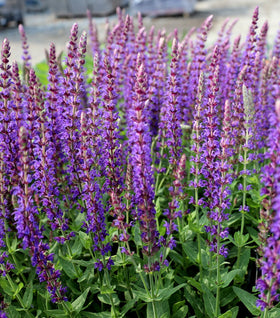
Salvia is best known for dense spikes of small tubular flowers held above the foliage. Blue and violet-purple are classic colors, but perennial cultivars also offer soft pink, rose, white, and deeper blue-purple tones. Dark stems and colorful flower bracts can make some selections appear even richer from a distance. The upright spikes create a very different effect from the broad flowers of coneflowers, daisies, and roses, making salvia an excellent contrast plant in mixed borders.
Most popular perennial salvia selections maintain an upright, clump-forming habit. Compact cultivars may remain around 12 to 18 inches tall, while many familiar border varieties mature between approximately 18 and 30 inches. Larger forms can approach 3 feet tall and about 2 feet wide. Growth is generally moderate to fairly quick once plants are established, and healthy clumps often become fuller during their first few growing seasons without spreading through aggressive underground runners.
The foliage contributes to the collection’s appeal even when the plants are not flowering. Leaves are commonly green to gray-green, lightly textured, and aromatic when brushed or crushed. This fragrance is typical of the mint family and may help make salvia less appealing to browsing deer and rabbits. The low foliage mound also keeps beds looking grounded, while the taller flowering stems create vertical movement above it.
Salvia is an herbaceous perennial, so the top growth usually dies back after a hard frost in colder climates and returns from the crown in spring. Many commonly sold meadow sage and woodland sage cultivars perform well across USDA Zones 4 to 8, although exact hardiness varies by selection. Their reliable return, manageable mature size, and repeated flowering make them useful building blocks for both new planting plans and established perennial gardens.
Place salvia where the flowers perform best.
Full sun is the best choice for most salvia plants. A location receiving at least six hours of direct sunlight encourages heavier flowering, compact growth, and stronger stems. Some selections tolerate partial shade, but they may produce fewer spikes, stretch toward available light, or open in the center as the season progresses. In very warm regions, light afternoon protection may be acceptable, but deep shade is generally not a good match for the hardy perennial salvias in this collection.
Drainage is just as important as sunlight. Salvia performs well in average garden soil, sandy soil, gravelly beds, and moderately dry locations as long as excess water can move away from the roots. It is less successful in low areas, heavy compacted clay, or beds that stay wet after rainfall. Improving heavy soil with organic matter and planting slightly high can help, but consistently waterlogged sites should be reserved for plants that naturally prefer wet conditions.
Space most perennial salvias approximately 18 to 24 inches apart. Compact selections may be placed a little closer, while cultivars expected to reach 2 feet wide should receive additional room. Proper spacing allows each clump to develop naturally, improves airflow, and gives gardeners easier access for cutting back faded spikes. When planting in groups, measure from the center of one plant to the center of the next rather than from the edges of the nursery pots.
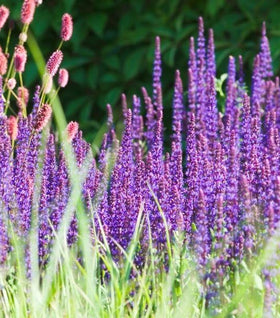
Use salvia along sunny walkways, in foundation beds, around patios, and through pollinator-friendly borders where the flowers can be viewed up close. It is particularly effective when repeated in groups of three or more. Pair it with yellow coreopsis for strong contrast, pink or white roses for a classic combination, or ornamental grasses for movement and late-season texture. Salvia can also form a colorful pollinator corridor beside fences, vegetable gardens, and other areas where attracting bees and hummingbirds is beneficial.
Keep the flower spikes coming.
Plant salvia in spring or early fall when temperatures are moderate, and roots have time to establish before periods of extreme heat or cold. Dig a hole about as deep as the root ball and as wide as the container, then position the crown near the surrounding soil level. Water thoroughly after planting and continue watering regularly during the first growing season. Once established, many perennial salvias tolerate occasional dry conditions, but they flower best when they receive supplemental water during prolonged drought.
Avoid keeping the soil constantly wet. Root and crown problems are more likely in saturated ground, particularly during cool winter weather. Water near the base of the plant rather than repeatedly wetting the foliage, and allow the upper portion of the soil to begin drying between waterings. Mulch can help regulate moisture and reduce weeds, but keep heavy mulch from piling directly against the crown.
Salvia is a light feeder. A thin layer of compost or a modest application of balanced slow-release fertilizer in spring is usually enough for established plants growing in average soil. Excess fertilizer can encourage soft foliage, weaker stems, and fewer well-formed flower spikes. Plants growing in very rich conditions may also become more likely to flop as summer progresses.
Cut faded flower stems back toward the basal foliage after the first major bloom flush. This quick trim improves the plant's appearance and often stimulates new leaves and additional flower spikes. If the entire plant becomes open or untidy, it can be reduced more substantially to the lower foliage. Leave healthy basal leaves in place through the growing season, then remove old top growth in late winter or early spring before new shoots become active.
Salvia generally experiences few serious problems when grown in full sun and well-drained soil. Aphids, whiteflies, spider mites, and mealybugs may occasionally appear, while crowded or damp plants can develop powdery mildew, rust, fungal leaf spots, stem rot, or root rot. Good spacing, sensible watering, and prompt removal of damaged growth reduce most problems. Common ornamental sages are not generally treated as invasive and typically grow as defined clumps, although regional guidance should always be checked when planting unfamiliar species near natural areas.
Several Salvia species are considered non-toxic to dogs and cats, and Salvia plants are commonly recommended for pet-friendly gardens. However, any plant material can cause digestive discomfort if a pet consumes enough. Gardeners should also avoid assuming that an ornamental salvia is edible simply because culinary sage belongs to the same genus. Use only correctly identified culinary species in the kitchen.