
Deutzia Shrubs for Abundant Spring Flowers & Pollinator Appeal
Spring-blooming shrubs that fill beds fast with graceful, flower-covered branches.
Deutzia shrubs are one of the most satisfying ways to get that “spring is here” feeling in a landscape, because when they bloom, they don’t dabble. Many deutzias burst into dense clusters of small, starry white or pink flowers for a strong spring show, often lasting a couple of weeks or more, depending on weather and variety.
What makes them a confident buy is how straightforward the success recipe is: give them sun to part shade, decent drainage, and one important habit—prune right after flowering, because many deutzias set next year’s buds on old wood. Do that, and you get a shrub that stays full, flowers reliably, and can play multiple roles (low groundcover-style mounds, foundation shrubs, or arching accents) without turning into a high-maintenance project. Reinforced by the We Grow Together Promise, you can plant now and shape later, without second-guessing.
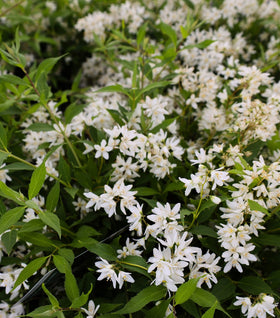
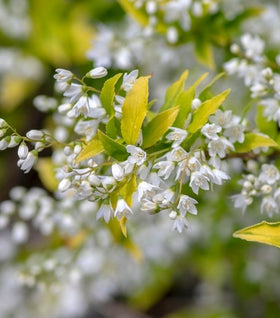

Spring flowers that make borders glow.
Deutzia is a spring-flowering workhorse that gives you maximum bloom impact with a naturally graceful habit, perfect for front-yard beds where you want instant seasonal excitement. The flowers are typically small but produced in heavy clusters, creating that “covered in bloom” look that reads from the street and makes a landscape feel fresh and cared for.
This collection is especially useful because deutzia can solve different design needs: compact selections can act like a flowering groundcover or low foundation shrub, while larger forms can provide arching structure and seasonal mass in mixed borders. That versatility makes it easy to repeat one shrub “theme” across the yard while varying height and footprint by placement.
If you’re planting for a polished look, use deutzia in small drifts (3–5 plants) so the bloom reads as one intentional ribbon rather than a single “dot” in the bed. It’s a simple designer trick: repetition turns a pretty shrub into a landscape statement.
Pearl buds, arching branches, clean texture.
Deutzia’s signature look is a fountain of arching stems that carry lots of bloom along the branches, followed by tidy green foliage that keeps the shrub useful after flowering. Flower color varies by variety (often white, sometimes pink), but the overall effect is consistent: spring abundance, then a clean, shrub-shaped presence through the growing season.
Mature size depends on the type, but many common landscape forms fall into an easy-to-plan range, from compact shrubs around a couple of feet tall and wide up to medium shrubs that can reach several feet in both height and spread. This is why deutzia works so well near foundations and along walkways: you can choose a size class that fits the space without relying on constant shearing.
Growth is typically steady and shrub-like rather than “wild,” and the plant’s natural structure looks best with selective pruning instead of hedge-trimmer shaping. If you let it keep its arching form, you’ll get more flowers and a more graceful silhouette year after year.
Sun or part shade, easy placement.
Most deutzias flower best with plenty of light; full sun is ideal in many climates, but they can also tolerate partial shade, which is a big advantage for beds that get morning sun and afternoon shade. In hotter summer regions, some guidance notes the value of afternoon shade for comfort and performance.
They prefer moist, well-drained soil, and they’re generally adaptable once established as long as the planting site isn’t chronically soggy. If your soil is heavy, improving drainage (a slight berm, amended planting area, or choosing a higher spot in the bed) helps keep roots healthier and growth more consistent.
For spacing, plan with the mature width in mind: compact types often look best spaced roughly 2–3 feet apart, while larger shrubs typically need closer to 4–6 feet to mature without crowding. Giving plants breathing room also improves airflow, helping foliage stay cleaner throughout the season.
Prune once, enjoy for years.
The most important care detail is the timing of pruning. Many deutzias bloom on old wood, so the best time to prune is immediately after flowering. This protects next year’s flower buds while letting the shrub produce fresh growth through summer.
Pruning style can be simple: after bloom, shorten flowered stems to shape, and every couple of years, consider removing a few older stems at the base to keep the shrub vigorous and open. This “renewal” approach helps maintain bloom quality and prevents the plant from getting twiggy or unkempt over time.
Notable cautions are refreshingly manageable. Deutzia is generally not considered toxic to pets/children in common horticultural references, and ASPCA lists slender deutzia (Deutzia gracilis) as non-toxic to dogs, cats, and horses. Still, it’s always wise to discourage chewing on any landscape plant. Also note that if you prune too late (summer), you risk cutting off next spring’s flowers, so that “right after bloom” window is the confidence move.