
Daylily Plants for Colorful Blooms & Easy-Care Landscapes
Reliable summer color that thrives in real-life landscapes
Daylilies (Hemerocallis) are the definition of dependable: bold blooms that pop open day after day, arching green foliage that reads clean from the curb, and a toughness that makes them a favorite for homeowners and pros alike. Most daylilies bloom in early-to-mid summer (often June–July), while rebloomers and “everblooming” types can keep the show going longer—sometimes cycling through late spring into late summer depending on variety and climate. That’s why daylilies are such a smart purchase when you want a bed to look “done” without needing constant attention: they shine in borders, foundation plantings, and mass drifts where repetition creates instant design. Give them sun, a bit of breathing room, and reasonable soil drainage, and they’ll settle in, thicken up, and reward you with seasons of color.
Here’s how to pick the right strategy: use daylilies in groups for maximum impact, mix bloom times to stretch the season, and treat maintenance like a once-in-a-while tune-up, not a weekly job. A simple deadheading habit keeps things tidy, and dividing clumps every few years can restore vigor and bloom if plants get crowded. We back your planting success with the We Grow Together Promise, so you can choose confidently and plant with a plan.
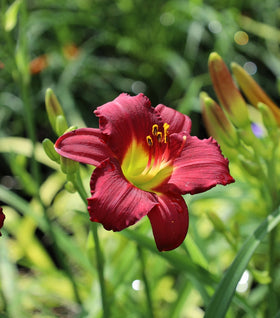


Get effortless summer color that comes back bigger each year.
Daylilies are among the easiest ways to create a landscape that looks full and colorful without becoming high-maintenance. Their strap-like foliage forms a clean, arching mound that reads “finished” even before flowers open, and once bloom season hits, you get a rolling parade of blooms, each flower lasts a day, but established clumps produce lots of buds for weeks of color. For homeowners, that means dependable curb appeal; for landscapers, it means reliable performance in high-visibility beds.
They also solve layout problems beautifully. Need a tidy edging plant along a walkway? Daylilies create a soft, uniform line. Need a mid-border filler that won’t get swallowed by shrubs? Many varieties sit in that just-right height range. Need a big sweep of color that looks intentional from the street? Plant them in repeating groups so the eye reads rhythm and continuity. Daylilies are widely used this way because they tolerate a wide range of typical garden conditions once established.
And daylilies let you mix “impact now” with “better later.” A new planting can look great the first season, but the real magic is how clumps mature, more fans, more scapes, more bloom. When you plant multiples, you’re not just purchasing plants; you’re purchasing a future border that thickens into a fuller, more expensive-looking garden over time.
See the blooms, mature size, and rebloom potential up front.
Bloom timing is one of the biggest reasons daylilies stay so popular. Many classic daylilies bloom in June and July, while rebloomers can flower more than once a season—or keep producing on and off through late spring and summer, depending on cultivar and region. That means you can plan your display: choose early, mid, and late bloomers for a longer season, or lean on rebloomers for steady color.
Mature size varies by variety, but daylilies generally fall within a practical landscape range that works almost anywhere, typically 1–3 feet tall, with a clumping spread that fills in nicely. This makes them flexible for front-to-mid border placement, and it’s why they’re often used as the “bridge” plant between shorter perennials and taller shrubs. When planning, think about the mature clump, not the pot: give them room to expand, and you’ll get stronger bloom and cleaner foliage.
Growth rate is usually steady and satisfying: daylilies establish, then build. If a clump starts blooming less or looks crowded, it’s often a sign it’s time to divide—commonly recommended every three to five years (sometimes sooner if you want faster multiplication). This isn’t “extra work,” it’s the daylily trick for getting free plants and renewed flowering while keeping beds tidy and vigorous.
Plant for sun, spacing, and strong repeat bloom.
Daylilies are sun-lovers, typically performing best in full sun to partial shade, with at least several hours of direct light; more sun usually means more blooms. In hotter regions, a touch of afternoon shade can be helpful, but too much shade can reduce flowering. If your goal is heavy bloom, prioritize your brightest bed that still has decent soil moisture through summer.
Spacing is the quiet “pro move.” Many daylilies do best when planted with enough room for airflow and clump expansion—often about 18–24 inches apart (adjusting for variety size and the look you want). This spacing helps clumps fill in without becoming a crowded mat, and it keeps foliage drying faster after rain or irrigation—one of the simplest ways to reduce disease pressure in humid spells.
Daylilies also shine in functional placements: mass them on slopes for easy seasonal color, run them along foundations for a clean, repeatable look, or cluster them near patios where you’ll enjoy the blooms up close. Plant in drifts of three, five, or more for a designed effect, single plants can look lonely, while groups look like a plan.
Keep maintenance simple with deadheading, division, and cautions.
Daylily care is refreshingly straightforward. Deadheading spent blooms keeps the planting looking neat, and removing finished flower stalks after bloom helps focus the plant on roots and next season’s growth. For foliage cleanup, many gardeners cut plants back after the first frost or once leaves yellow; a fall cutback can also reduce places for pests and diseases to overwinter, leaving beds cleaner going into spring.
Division is the best “once-every-few-years” maintenance step. If bloom count drops, clumps feel crowded, or it’s been several seasons since you last split them, dividing can restore vigor and give you more plants for new areas. Common guidance is to divide in early spring before strong growth or in fall after flowering (ideally with time before hard frost), then replant promptly and water in well.