
Itea Shrubs for Fragrant Blooms, Brilliant Fall Color & Wildlife Value
Fragrant summer blooms and blazing fall color—especially in moist, tricky spots.
Itea shrubs (Virginia sweetspire) are one of those rare landscape wins that feel custom-made for real yards. They’re happy in moist soil, they tolerate clay and even “problem” areas that stay damp, and they still deliver a clean, intentional look that works in polished foundation beds or more natural, woodland-style borders. In late spring to early summer, typically somewhere in the May-to-July window, depending on cultivar and region, you’ll see cascading white flower spires that bring fragrance and a steady stream of pollinators. Then, just as the garden shifts into fall, the foliage lights up with standout fall color, turning a dependable green shrub into a true seasonal moment.
Here’s why I trust it as a “plant it and enjoy it” pick: itea is flexible on light (full sun to part shade, even tolerating heavier shade), it’s low-maintenance once established, and it gives you a big payoff without demanding perfect soil. The main thing to know is pruning timing—Virginia sweetspire blooms on the previous season’s wood, so if you ever need to shape or reduce size, prune right after flowering (not in late summer, fall, or early spring). Also plan for its natural habit: it can sucker and slowly form a broader colony, which is fantastic for massing and erosion-prone edges, but something to manage if you want crisp boundaries. And of course, you’re backed by the We Grow Together Promise.
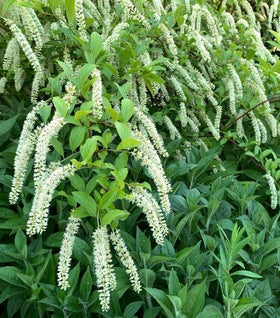
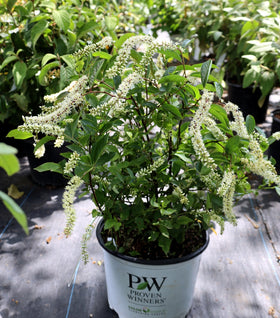

Fragrant bloom that carries summer beds.
Itea earns its spot because it shows up when many spring shrubs are finished: expect bloom in late spring into early summer, with white flower spires that can read “fresh” for weeks and bring real sensory value near paths and patios. It’s a strong choice for gardeners who want a shrub that does something beyond staying green—fragrance, flowers, and that satisfying “the garden is in motion” feeling from pollinators working the blooms.
This is also a problem-solver shrub for moisture. Where other flowering shrubs complain, downspout-adjacent beds, low spots, rain-garden edges, and heavier soils. Virginia sweetspire is widely recommended as a dependable performer, tolerating wet soils and clay while still looking intentional in a designed landscape. That means you can stop fighting the site and start using itea as the anchor that makes the whole planting feel confident.
Design-wise, itea is easy to use because it can be both structured and natural. Plant a few in a foundation bed for a soft screen and summer fragrance, or mass them along a property edge for a relaxed, native-leaning look. If you want fast visual fullness, plant in small drifts; if you want a more open, airy silhouette, space them a bit wider and let the arching branches show off their form.
Fall color that turns heads.
The fall show is one of Itea’s biggest selling points: many selections are known for rich autumn color, and it’s often highlighted as a standout feature right alongside the flowers. That’s a big deal for landscapes that need to look good beyond summer. Itea gives you a second peak season without replanting a thing, helping beds stay “in season” as the rest of the yard winds down.
Mature size depends on the selection, but Virginia sweetspire is commonly listed in the 3–5 foot range for both height and spread in many references, with other sources noting that it can reach larger dimensions (often up to 4–8 feet) in ideal conditions. The practical takeaway is simple: choose the size class that fits your bed, and you’ll get a shrub that looks full and graceful without becoming a pruning project.
You’re also getting a habit that works beautifully in layers, arching branches, a “soft mounding” look, and a footprint that can widen over time via suckering. For large beds and naturalistic plantings, that gentle colony-forming tendency can be a feature; for tighter foundation lines, it just means you’ll occasionally pull or prune suckers to keep edges crisp.
Sun or shade, even in wet soil.
Itea is wonderfully adaptable in light: it can grow in full sun to full shade, with many guides pointing out that you’ll usually see the best flowering and fall color when plants get a solid half-day of sun (often 4–6 hours), especially in part shade conditions that avoid the harshest late-day heat. This flexibility is why itea works in mixed-light yards, sunny edges, dappled understory zones, and the in-between spaces where other shrubs are hit-or-miss.
Moisture is where itea really shines. It’s repeatedly recommended for medium-to-wet soils and is even suggested for rain gardens, with tolerance for wet soil and clay noted in multiple references. If you’ve got a spot that stays damp after storms, this is a shrub that can make that condition look intentional instead of messy, especially when planted in a drift that reads like a planned solution.
For spacing, use the mature spread as your guide: a realistic planning range for many plantings is about 3–5 feet on center for standard forms, adjusting tighter for quicker massing or wider for more individual definition and airflow. If you’re planting compact cultivars, scale spacing down accordingly so you get a full look without waiting years for the bed to knit together.
Easy care with a smart prune window.
Virginia sweetspire care is straightforward: water regularly during establishment, then rely on its natural toughness in moist sites once roots are established. Avoid over-fertilizing—multiple references caution that pushing excess growth isn’t the goal here; steady, healthy growth and good flowering are. In most landscapes, the “care” is really just site-fit: moisture, light, and enough room for mature shape.
Pruning is the one detail that separates “pretty” from “perfect.” Itea blooms on the previous season’s wood, so pruning is best done right after flowering, before next season’s buds form later in the summer. If you prune at the wrong time (late summer, fall, or early spring), you can reduce the next bloom cycle, so treat post-bloom pruning as the confidence move for shaping and size control.