

Edible Berry Bushes for Fresh Fruit & Homegrown Harvests
Fresh-picked flavor at home, plus four-season landscape beauty
If you want a garden that feeds your family and upgrades your curb appeal, berry bushes are the sweet spot. Today’s compact, easy-to-grow varieties fit into far more spaces than most people expect—front-yard beds, mixed shrub borders, raised beds, even big patio pots—so you don’t need a “mini farm” to harvest real fruit. Blueberries can look surprisingly polished as a low hedge, chokeberries bring reliable fall color and clusters of dark fruit, and raspberries turn a simple trellis or fence line into a summer tradition. Expect spring flowers that draw pollinators, followed by colorful berries that bring everyone to the garden—kids, neighbors, and yes, the birds too.
The secret to better harvests is matching the right berry to the right conditions. Blueberries are happiest in acidic soil. Give these plants room to breathe (spacing matters), keep them evenly watered while they establish, and prune on the right schedule so you don’t accidentally cut off next season’s fruiting wood. And because soft berries can attract hungry pests close to harvest time, consistent picking and quick cleanup go a long way toward protecting your crop.

Blueberries
6 products
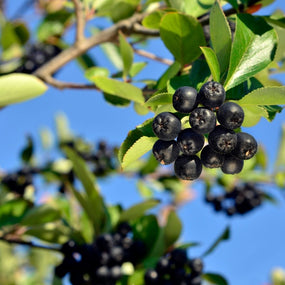
Chokeberries (Aronia)
2 products

Elderberries
4 products

Grape Vines
4 products
Turn a sunny corner of your yard into a berry-producing destination.
Berry bushes make it easy to plant with purpose: you get edible harvests, spring bloom, summer interest, and often excellent fall color—without replanting every year. They’re also surprisingly “landscape-friendly.” Blueberries, for example, can be tidy, well-behaved shrubs that look right at home near an entry walk or along a driveway, while chokeberries bring a classic shrub shape with showy seasonal change. Even raspberries can be kept neat when trained on a simple trellis, turning a utilitarian edge into a place you’ll actually enjoy walking to in summer.
This collection is built around berry types that work for real homes: blueberries, raspberries, and chokeberries (aronia). Each one brings a different “win”—fresh snacking fruit, preserves-ready harvests, or wildlife value—so you can plant a small mix and get more weeks of interest than a single crop would offer. If you’re tight on space, compact selections can thrive in large containers (with consistent watering), and if you have room to plant in-ground, a small row can quickly turn into a family tradition: pick, rinse, eat, repeat.
Berry bushes also add movement and life to the yard. Spring flowers bring in pollinators, and ripening fruit draws birds—sometimes too successfully—so netting can be worth it when berries start coloring up. The payoff is a landscape that doesn’t just look pretty; it becomes interactive. It’s the kind of planting that gets kids outside, gives homeowners a reason to check the garden daily, and turns an ordinary summer day into “go grab a handful.”
Enjoy spring flowers, summer harvests, and fall color in one planting.
Berry bushes pull double duty: ornamental in the landscape and productive in the garden. Blueberries typically offer clean foliage, spring bloom, and a harvest window that depends on variety—often summer—followed by strong fall color in many selections. Chokeberries (aronia) bring clusters of spring flowers and then dark fruit that colors up later, paired with standout red-to-burgundy fall foliage. Raspberries add that classic “pick-and-eat” experience, and with modern breeding, there are compact and thornless options that make home growing feel far less intimidating than the wild bramble patches of childhood.
Mature size and growth rate vary by berry type, but most home-friendly plantings fall into a manageable range with smart placement. Chokeberry commonly lands in the 3–6 ft range, forming a substantial shrub that can be used as a screen layer, a back-of-bed anchor, or a naturalistic mass. Blueberries can range from compact “patio” habits up to larger shrubs, depending on type, and raspberries grow as canes that expand over time—meaning they’re best treated like a dedicated row or a trained feature along a support. Plan for the mature footprint up front, and you’ll get a planting that looks intentional instead of overgrown.
Bloom window and fruit timing are part of the fun because they stack across the season. Chokeberry commonly blooms in spring (often April–May in Mid-Atlantic guidance, extending into May–June in other references), then sets fruit that matures later, with fall color following. Blueberries bloom in spring and set fruit that ripens over summer depending on variety, while raspberries can be summer-bearing or fall-bearing depending on type. Mixing a couple of berry types is an easy way to stretch “garden excitement” across more weeks of the year.
Plant them where they thrive for bigger harvests and easier picking.
Sunlight is your biggest yield lever. For blueberries, consistent sun (often cited as full sun with many hours of direct light) supports stronger growth and better fruiting, while raspberries and blackberries generally perform best in full sun, with some guidance noting that light afternoon shade can help in hotter conditions. Chokeberry is flexible, handling full sun to partial shade, which makes it a great “bridge plant” between sunnier edges and slightly shadier borders. Match the plant to the light you actually have, and you’ll get more flowers, better fruit set, and fewer headaches.
Spacing is where home growers win or lose in the long term. Blueberry spacing commonly ranges from 3–5 ft for smaller needs up to 6–8 ft for larger highbush types, depending on variety and your row plan. For caneberries, Maryland guidance commonly places red raspberries around 2 ft apart in-row, black/purple raspberries around 3 ft, and blackberries around 3–4 ft. Chokeberry often works well with 4–5 ft spacing for hedging or massing, depending on how dense you want the planting.
For best results, think “access + airflow.” Give yourself room to walk and pick, and avoid crowding that traps humidity. Caneberries benefit from a simple support (fence, trellis, or wire) to keep fruit off the ground and make harvest cleaner. Blueberries can be used as an edible hedge line along a walkway, and chokeberries can anchor a mixed border where you want a reliable shrub shape with fall payoff. If birds are frequent visitors, plan ahead for netting or place plants where covering them is easy once fruit starts ripening.
Grow with confidence using the right soil, water, and pruning plan.
Blueberries are the “soil-specific” star of the group: they prefer acidic conditions, commonly cited in the pH 4.5–5.5 range, and many growers need to amend soil before planting to hit that target. If your native soil isn’t naturally acidic, container growing is a very workable solution—use an acidic mix, keep moisture steady, and you can still harvest well without fighting your yard’s pH. Chokeberry is far less picky, tolerating a wider range of soils, while raspberries appreciate well-drained ground and consistent moisture during establishment.
Pruning timing is the difference between “lots of berries” and “where did my berries go?” Blueberries are commonly pruned during dormancy—often November through March, with many guides favoring late winter for clarity and bud management. Caneberries are different: after fruiting, remove spent floricanes (the canes that already fruited) at ground level, then thin and shape the remaining canes during the dormant season, depending on the type. If you’re not sure which kind you have (summer-bearing vs fall-bearing), follow the plant’s label and prune accordingly—because the fruiting habit determines what wood should stay.