
Weigela Shrubs for Colorful Blooms, Foliage & Pollinator Appeal
Spring blooms, colorful foliage, and an easy shrub shape that always looks intentional.
Weigela shrubs are a “plant it, love it” classic, fountain-like branches loaded with tubular blooms in late spring into early summer, plus a naturally tidy habit that fits right into foundation beds and sunny borders. They’re especially satisfying when you want a shrub that looks generous and full without constant fuss: give it bright light, leave it room to arch, and it will reward you with a strong spring show that’s easy to see from the street. Many selections are also known to offer a lighter repeat bloom later in the season, so your bed can get a second burst of color as summer rolls on.
The biggest success “secret” is pruning timing. Weigela blooms on old wood, which means the right time to shape is right after flowering—wait too long, and you risk trimming off next year’s buds. The good news is pruning is simple: a light post-bloom trim for shape, plus occasional removal of older interior stems to keep vigor high. With the We Grow Together Promise behind you, this is an easy way to add dependable spring flowering and a clean shrub silhouette that makes landscapes feel finished.

Spring flower power that upgrades curb appeal.
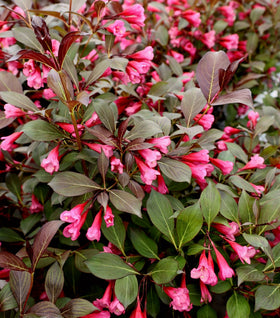
Weigela is a quick way to make beds feel “done,” thanks to its bold blooms and naturally attractive habit. In late spring into early summer, the shrub can be covered in tubular flowers that pop against the foliage, creating a strong seasonal moment for entry plantings, sunny foundations, and mixed borders. If you plant in small drifts, that spring show reads like a planned design feature instead of a single flowering dot.
This is also a great collection for shoppers who want an easy shrub to repeat across the landscape. Weigela works as a specimen, a border shrub, or a loose, informal hedge, and the arching form naturally softens hard lines like fences and corners. You can build a structure with shrubs first, then layer perennials in front, so the bed stays attractive even when flowers aren’t the headline.
Weigela tends to feel “high impact, low complexity” because it’s not a shrub that demands constant shaping. Most of the time, you’re simply letting it bloom, then doing a quick post-bloom tidy to keep the outline clean. That’s exactly the kind of maintenance rhythm homeowners and landscapers like: predictable, fast, and effective.
Tubular blooms and foliage color you can plan around.
The signature look is flowers + form: blooms held along arching stems, often in shades of pink, red, or white depending on selection, with a fountain-like outline that looks ornamental even without blooms. Many shrubs fall in the medium-size range, but cultivars can be smaller (or more compact), which makes it easier to match the plant to today’s tighter foundation beds.
Bloom timing is a key selling point. Core flowering is late spring into early summer, and some cultivars may offer a lighter rebloom later in summer into early fall. For the longest season of interest, pair the spring show with foliage-forward selections and a good pruning routine so the plant stays dense and attractive all season.
Many weigelas tolerate a range of conditions and can handle tougher urban realities, such as clay soil or air pollution (selection-dependent), which helps them perform in real yards. When you place them well, they mature into a full, layered shrub that supports the rest of the border, flowers in spring, and maintains a strong silhouette through summer.
Sunny placement that drives heavier bloom.
For best flowering and the strongest habit, plant weigela in full sun. It can tolerate partial shade, but brighter light typically delivers the showiest bloom and better overall density—especially if you want a shrub that looks full from top to bottom.
Weigela is generally adaptable to many garden soils as long as drainage is reasonable, which makes it a dependable choice for everyday landscapes. If your soil is heavy, prioritize good planting technique and avoid low spots where water lingers—healthy roots are the foundation of strong bloom and clean foliage.
Spacing depends on mature size, but think in practical ranges: compact forms can often be spaced 3–4 feet apart for a full look, while larger growers may need 5–6+ feet to allow the arching shape to develop without crowding. Airflow matters—more room helps plants stay healthier and keeps the natural fountain form looking intentional.
Easy pruning that protects next year’s flowers.
Weigela blooms on old wood, so the most important pruning rule is timing: do your main pruning right after flowering. That approach lets you shape the shrub, encourage fresh growth, and still protect next year’s buds, which form on the current season’s growth.
For long-term performance, add simple renewal pruning: remove a few of the oldest interior stems (especially as shrubs mature) to improve vigor and flowering. This keeps the shrub from getting overly twiggy or “weedy” with age and helps maintain that clean, fountain-like outline.