
Forsythia Shrubs for Brilliant Yellow Early Spring Blooms
Early spring color that wakes up the whole yard in a week.
Forsythia is that first, unmistakable sign that winter is letting go—bright blooms on bare branches, weeks before most shrubs even think about flowering. If you want a yard that looks alive early, forsythia delivers: it’s widely grown for its reliable early-to-mid spring display, it tolerates a wide range of soils (as long as drainage isn’t swampy), and it can be used in multiple ways—foundation anchors, loose screens, informal hedges, or a single “spring spotlight” plant near the entry. Size is flexible too: there are compact selections for tight beds and larger forms that can mature into big, arching shrubs, so you can shop the look you want instead of forcing one shrub to do every job.
The secret to getting that legendary flower show every year is timing: forsythia sets next year’s bloom on older wood, so prune right after flowering—never in fall or late winter if flowers matter to you. Many extension guides also note how quickly forsythia grows and how regular post-bloom pruning keeps it full, tidy, and loaded with buds, rather than turning into a tall tangle with flowers only at the top. Add in the We Grow Together Promise—clear guidance, simple steps, and confidence that you’re pruning at the right moment—and forsythia becomes one of the easiest “big impact” shrubs you can plant.
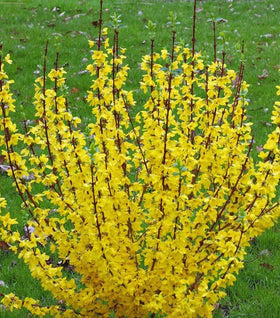

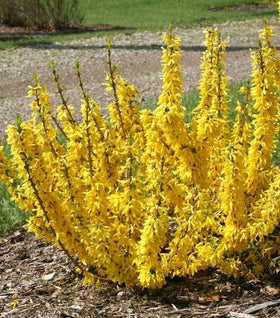
Show Off® Sugar Baby® Forsythia
$89.95
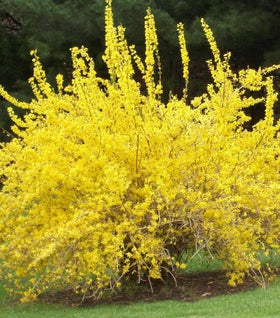
Light up spring with a burst of golden blooms.
Forsythia earns its reputation because the timing is unbeatable—flowers arrive early, often before leaves, so the whole shrub reads as pure color from a distance. That makes it a top choice for front-yard curb appeal, especially in climates where you’re hungry for spring signal after a long winter. Plant one where you’ll see it from a window, along the driveway, or near the front walk, and the season feels like it starts sooner.
In landscape design, forsythia is an easy “structure + color” tool. Use it as an informal hedge that softens property lines, as a background shrub behind bulbs and early perennials, or as a big drift on a slope where you want spring color to read as a single statement. Deer tend to leave it alone in many gardens, which makes it especially useful for high-visibility beds where repeated browsing would otherwise ruin the look.
If you love variety, this category isn’t one-size-fits-all: you’ll find classic yellow forms and also less-common white-flowering options, plus smaller, dwarf habits that fit modern foundation beds without constant pruning. That range lets you build a cohesive spring palette even if your property includes both tight planting zones and wide-open landscape space.
Pick the habit, then plan for fast, confident growth.
Forsythia can be compact or surprisingly large, depending on the variety—ranging from under two feet to ten feet or more—and it naturally forms upright-arching branches that create a fountain-like outline. That’s why it works so well as a screen or “soft wall” in the landscape: it fills space quickly and looks lush even when it isn’t in bloom.
Growth rate is part of the appeal (and part of the reason pruning matters). Extension guidance notes that forsythia grows very quickly and can become overgrown without routine pruning, sending up vigorous shoots and expanding its footprint. If you plan for that vigor—right plant, right place—you get the benefit: a fuller shrub, more flowering wood, and a stronger seasonal show.
Bloom is the headline, but the shrub’s “off-season” value is real too: green foliage fills in after flowering and creates a dense backdrop for summer perennials and fall color plants. The best-looking shrubs are the ones given room to develop their natural arching form—pruned thoughtfully, not sheared into tight boxes that reduce flowering and create twiggy congestion.
Site it for sun, airflow, and a cleaner flower show.
Forsythia blooms best with more sun—full sun to part shade is typically recommended, and more sunlight generally means better flowering. For most yards, that translates to placing it where it gets at least a solid half-day of direct light, especially in spring, while avoiding deep shade that reduces bloom density and encourages lanky growth.
Spacing should follow mature width, because crowded forsythia becomes harder to prune and less attractive over time. As a practical planning range, give compact varieties several feet and larger types enough room to reach their mature spread without pressing into neighbors—often 4–8 feet depending on the selection—so branches can arch naturally and air can move through the shrub. That airflow also helps reduce the odds of disease issues lingering in dense growth.
Forsythia can also spread by “tip rooting” (layering) when arching branches touch the ground, which can be a feature (easy filling-in on a slope) or a nuisance (unwanted expansion). If you want a tidy footprint, keep beds edged, prune low arching stems after flowering, and remove rooted tips where they land. Local guidance varies on whether it’s considered invasive in certain areas, so it’s smart to check regional advisories—especially near natural areas.
Prune once at the right time, then enjoy the payoff.
Forsythia pruning is wonderfully simple if you respect one rule: prune right after flowering. Extension publications emphasize that spring-flowering shrubs are typically pruned immediately after bloom, and forsythia specifically is pruned post-bloom so you don’t remove the flower buds that form later for next spring. If you wait until summer, fall, or winter, you’re much more likely to cut off next year’s show.
For routine maintenance, remove a portion of the oldest stems near the base after flowering to encourage fresh, vigorous shoots that will carry next year’s blooms. For badly overgrown shrubs, the extension guidance describes a multi-year renewal approach (removing older stems over time) or a more severe rejuvenation cutback, recognizing you may sacrifice blooms while the plant rebuilds its structure. This is where the We Grow Together Promise matters most: the right cut at the right time is what turns “a wild tangle” into a blooming machine again.
Notable cautions are refreshingly manageable. Forsythia is listed as non-toxic to dogs, cats, and horses, which makes it a safer choice for pet households compared to many flowering shrubs. For plant health, the most notable issues include stem galls, twig blight, and leaf spot; recommended management commonly includes pruning out affected stems and disinfecting tools, plus keeping shrubs open to airflow so problems don’t persist season after season