
Cryptomeria Trees for Fast-Growing Evergreen Privacy
Feathery green cryptomeria evergreen screen planted in a staggered row for year-round privacy
Cryptomeria (Japanese cedar) is the evergreen that makes a landscape feel instantly more “designed.” The foliage has a soft, feathery look that catches light and movement, so it never feels flat, whether you’re building a living fence, framing an entry, or creating a layered evergreen border with a tall backdrop and compact front edge. It’s also wonderfully versatile: the same plant group includes strong upright pyramids for screening and smaller, rounded forms that tuck neatly into foundation beds and containers.
The success recipe is refreshingly consistent: give cryptomeria sun to part shade, keep the soil on the acidic side, and prioritize good drainage with steady moisture while roots establish. It’s generally considered low-maintenance once placed well, and most of the “pro look” comes from spacing correctly so plants can hold their natural form, then doing only light shaping when needed. If you’re planting for a privacy line, plan your spacing from the start so you get density without crowding stress later. You’re backed by the We Grow Together Promise.

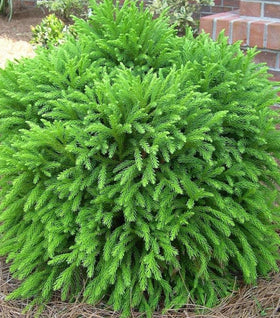

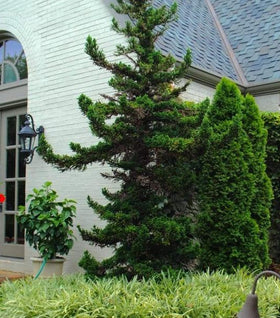
Elegant privacy that looks custom-planted.
When you want privacy without a stiff, flat hedge look, cryptomeria is a standout. The foliage is fine-textured and layered, which creates a softer “living wall” that still reads upscale and intentional from the street. Upright selections are especially effective along fences and property lines, where they can filter wind and views year-round while keeping a clean, tapered silhouette that doesn’t feel bulky at the base.
This collection also makes it easy to build layered privacy, one of the best ways to make screening look like design. Use taller cryptomeria as the backdrop, then echo the texture in front with compact forms to soften edges and fill gaps near the ground. That layered approach improves curb appeal immediately: you get depth, contrast, and a finished look even before plants reach full height.
Spacing is where privacy becomes predictable. For large upright screen types, a practical hedge spacing is often in the 10–15 ft range (depending on the cultivar’s mature width and the density you want), while compact/dwarf forms are commonly spaced closer—often around 3–5 ft, to create a full mounded mass without waiting years. If you want a faster knit-in screen, plant toward the tighter end; if you want maximum airflow and strong individual form, give more room.
Feathery foliage and forms for every landscape scale.
Cryptomeria is all about texture: soft sprays that look refined in modern landscapes and classic in traditional plantings. Color is typically rich green, and many selections are chosen specifically for dependable winter presence (with some cultivar-to-cultivar variation in winter bronzing). This is the kind of evergreen that upgrades the feel of a bed even when nothing is blooming, because foliage and form carry the design through every season.
The growth rate is generally described as medium overall, with several popular landscape selections considered fast growers under the right conditions. Mature size varies widely by cultivar: some upright types can mature into tall privacy trees, while compact forms stay small and rounded for tight beds and containers. As one reference point, ‘Radicans’ is described as a fast grower with a mature size of around 40–45 ft tall and 15–20 ft wide, which is exactly why spacing and siting matter when you’re planning a screen.
Bloom isn’t the point here; structure is. Like many conifers, cryptomeria produces cones rather than showy flowers, and its landscape value lies in the year-round evergreen framework: screening, framing, and texture. That’s why it’s so useful for homeowners and landscapers alike: it creates instant “bones” for beds and holds the design together while seasonal plants do their rotating show.
Sun-smart placement for thicker growth.
Cryptomeria grows well in full sun and also performs in partial shade; brighter light typically supports denser growth and stronger screening, while partial shade can be a good fit in yards with mixed exposure. If your goal is a privacy wall, prioritize more sun when possible, and keep plants consistently watered during the first year so roots establish quickly.
Soil conditions matter more than fertilizer. Multiple horticultural sources emphasize acid soil and good drainage for best performance, with consistent moisture as a positive (especially during establishment). If your site is heavy or tends to stay wet, improve drainage (raised planting line, amended berm, or choosing a higher spot) before planting, because “wet feet” is one of the most common causes of conifer decline over time.
For functional placement, think like a designer: line tall cryptomeria along a fence for screening, then repeat compact forms along the front edge of the same bed to create a cohesive evergreen story. Dwarf varieties are also commonly recommended for containers or rock-garden style planting where you want evergreen texture in a smaller footprint—just ensure the container drains well and doesn’t stay saturated.
Easy care with a few key watch-outs.
Watering is the main “care lever” early on: keep the root zone evenly moist while plants establish, then transition to deep watering during prolonged dry spells (site dependent). Once established, cryptomeria is often described as moderately drought-tolerant, but it generally performs best with steady moisture rather than extreme wet/dry swings.
Pruning is usually minimal; most cryptomeria look best when allowed to hold its natural form. If you do shape, light pruning in late winter/early spring (or selective trimming to maintain a leader and clean outline) is a safer approach than heavy shearing, especially on upright screen types where you want a strong, tapered profile. When you plant with correct spacing, you’ll prune far less.