
Gardenia Shrubs for Fragrant White Blooms & Evergreen Beauty
Evergreen shine and unforgettable fragrance for warm-season borders.
Gardenias are the shrubs you plant when you want the front walk to feel like summer. That glossy evergreen foliage looks polished year-round, and when the blooms open, the fragrance is the kind that makes people stop and ask, “What is that?” Most gardenias prefer bright light but appreciate protection from harsh afternoon sun in hotter climates, think morning sun and afternoon shade, plus soil that drains well and stays consistently, lightly moist. When you give them those basics (light + moisture + drainage), they become an easy “anchor shrub” for foundations, entry beds, and patio borders where you want beauty that’s not seasonal-only.
The confidence move with gardenias is treating them like the acid-loving evergreens they are. They perform best in organically rich, acidic soil (commonly cited around pH 5.0–6.5), and containers can be a smart shortcut if your native soil runs alkaline. Pruning is also all about timing: many recommendations emphasize pruning after flowering and avoiding late-season pruning that can remove developing buds. Keep an eye out for the common “sticky leaf” culprits too—sap-sucking pests like whiteflies can lead to honeydew and sooty mold, so you stay ahead of cosmetic issues before they snowball.


Fragrance that transforms entry beds.
Gardenias are a sensory upgrade: evergreen structure plus intensely fragrant white blooms that turn ordinary foundation plantings into “walk-up wow.” They’re especially effective near doors, gates, and patios because the fragrance travels, so you don’t need a huge shrub mass to feel the impact. In design terms, they act like a premium evergreen hedge or anchor, but with a flowering payoff that shows up when warm weather arrives.
Gardenias are also practical for homeowners who want evergreen polish without constant clipping. Gardenias are woody, broadleaf evergreens, so they hold their form and shine year-round, helping beds look intentional even outside bloom season. When you repeat them in a line, they can read as a soft, flowering screen; when you tuck one near a corner or stoop, it works like a “signature plant” that elevates the whole bed.
If you’re planting for long-term curb appeal, the biggest success factor is matching gardenias to the right microclimate. They appreciate consistent moisture and protection from extreme heat stress, which is why morning sun + afternoon shade is often recommended in hotter regions. Put them where irrigation is realistic (or where soil holds even moisture), and they’ll reward you with thicker foliage and more reliable bud development.
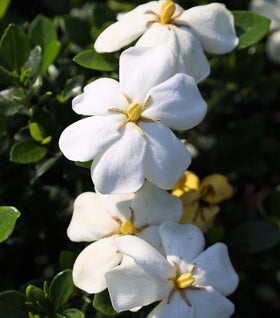
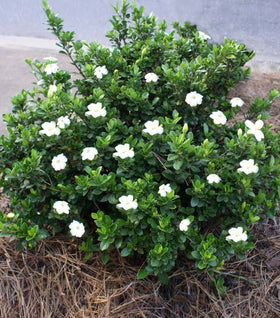
Glossy leaves and creamy white blooms.
Gardenia foliage is a feature on its own, dark green, thick, and glossy, so the shrub looks “finished” even when it’s not flowering. The blooms are typically creamy white and highly fragrant, which is why gardenias are often described as classic foundation shrubs and premium landscape accents in warm-season gardens.
Bloom timing varies by variety and climate, but many gardenias are valued for warm-season flowering, with pruning guidance often tied to “after flowering” to avoid removing next buds. The practical takeaway: expect a strong seasonal bloom window, and treat pruning like a post-bloom tune-up rather than a frequent shaping routine.
Mature size depends heavily on cultivar; some stay compact for containers and tight foundations, while others grow larger for screens and informal hedging. That range is a win for shoppers: you can choose a shrub that fits the bed now and still fits it years later, rather than relying on aggressive pruning to “make it work.”
Sun, shade, and soil that keep buds on.
Light is the bloom lever. Many care guides recommend bright light with some protection from intense afternoon sun in hot climates, because stress can contribute to leaf scorch and bud drop. Aim for several hours of sun (often morning sun) and then a cooler, brighter shade later in the day if your summers run hot.
Soil is the other make-or-break: gardenias prefer organically rich, well-drained, acidic soil, commonly cited around pH 5.0–6.5. If your soil is alkaline, containers can make it dramatically easier to maintain the right pH and drainage profile, which often translates to better foliage color and more reliable flowering.
Spacing should follow the mature width of your chosen variety, but a good rule is to avoid crowding. Gardenias appreciate airflow, which also helps reduce pest pressure and sooty mold buildup associated with sap-sucking insects. If you’re planting a line, give each plant enough room to fill out without branches constantly pressing together.
Easy care with a few key non-negotiables.
Water consistently, especially during establishment and during hot, dry stretches—gardenias don’t like drying out, and moisture swings can cause stress and bud issues. Many extension-style resources emphasize regular watering for best flower production, paired with well-drained soil so roots stay healthy.
Pruning timing is the big confidence move. Multiple guides advise pruning after the shrub has finished flowering and avoiding late-season pruning (often called out as a risk for next-season bud loss). If you need to shape, do it promptly after bloom and well before cool-season bud set becomes a factor.
Know the common pest story so it never surprises you: whiteflies and similar insects can produce sticky honeydew, which encourages sooty mold on leaves. The mold is usually a symptom of the insect problem rather than the primary problem, so controlling the pest and cleaning up honeydew is the path back to glossy foliage.