
Arborvitae Shrubs for Compact Hedges & Year-Round Structure
Privacy, structure, and four-season green—without the high-maintenance routine.
Arborvitae shrubs are the fastest way to make a yard feel more private and more “finished” at the same time. They grow in naturally dense, evergreen forms, often narrow and upright, so you can line a property edge, frame a front entry, or soften a fence with green that stays put all year. Depending on the type, you’ll find compact globe shapes for foundation beds and taller, columnar forms for screens, which makes it easy to match the right silhouette to the job instead of forcing one plant into every role.
The best results come from a simple formula: consistent moisture while roots establish, well-draining soil, and a little patience as plants knit into a hedge. Once established, growth is typically steady rather than wild; many popular narrow forms average around a foot of growth per year, so you get reliable progress without constant shearing. When you do want to prune, timing matters: late winter to early spring is a common sweet spot before new growth starts. And through it all, you’re backed by the We Grow Together Promise—so you can plant with confidence, not guesswork.
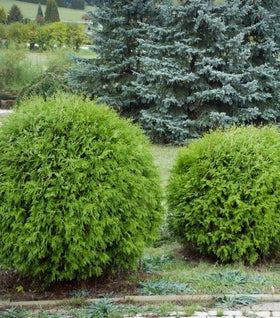

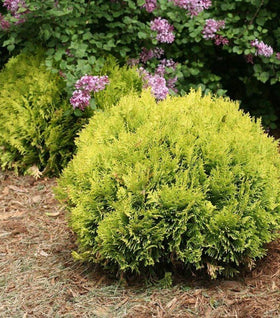
Anna's Magic Ball® Arborvitae
As Low As $60.95
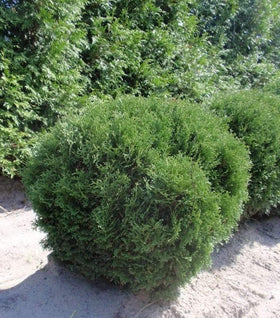
Hetz Midget Globe Arborvitae
As Low As $32.95

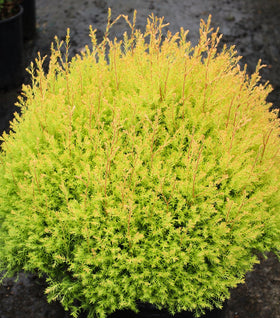
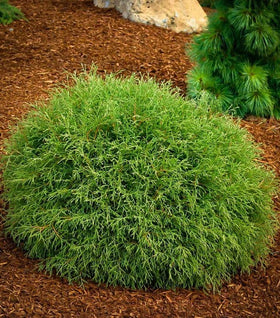
Mr. Bowling Ball Arborvitae
As Low As $32.95

Instant privacy with evergreen screens.
If your goal is “make my backyard feel like mine,” arborvitae is the classic answer for a reason: dense foliage, vertical growth, and year-round coverage. Used in a line, they create a living wall that looks natural and softens hard edges, such as fences, sheds, and neighboring sightlines, while still feeling clean and intentional in modern landscapes.
This collection works for both small-space solutions and large perimeter projects because arborvitae comes in a range of sizes and shapes. Dwarf and globe forms can anchor foundation beds and tighten up corners, while taller columnar types build real privacy without eating the whole yard. That flexibility is why arborvitae shows up in both homeowner “curb appeal” plantings and landscaper-style screening plans.
For hedges, spacing controls the timeline. Many narrow, screening-style arborvitae are commonly planted about 3–4 feet apart on center for a seamless privacy hedge as plants mature (tighter for faster fill, wider for more individual definition and airflow). If you plan spacing around the mature width, you’ll get a hedge that looks full without overcrowding stress later.
Dense green columns and mounds in every size.
Arborvitae shrubs are prized for their dense foliage and naturally tidy habit, fan-like sprays that stack into a full look from top to bottom. Many popular upright forms mature in a narrow footprint (often just 3–4 feet wide), which makes them ideal for tight side yards, along driveways, or anywhere you need privacy without sacrificing usable space.
Mature size and growth rate vary by selection, but a common planning range for narrow, upright types is roughly 10–15 feet tall and 3–4 feet wide, with steady, controlled growth around ~12 inches per year once established (site and care dependent). That “moderate” pace is a feature: it’s fast enough to see progress, but not so fast you’re constantly fighting size.
Color and texture can vary, too; some options stay deep emerald, while others lean golden or bronzy in winter (a normal seasonal shift for some evergreens). If you want a hedge that looks tailored, choose a consistent form and repeat it; if you want more designer character, mix shapes intentionally (globes in front, columns behind) so the planting still feels organized.
Planting spots that make them thrive.
Most arborvitae perform best in full sun to partial shade, and you’ll typically get the thickest growth and best screening in brighter light. In deeper shade, plants may thin out and grow more slowly, so if privacy is the priority, give them your sunniest “fence line” real estate whenever possible.
Soil and water are the make-or-break basics. Arborvitae appreciate consistently moist soil during establishment, but they do not like waterlogged conditions. Too much water and poor drainage can lead to root problems and decline. A rich, well-draining soil profile and smart irrigation (like drip/soaker hoses) help keep moisture consistent without drowning roots.
For placement, think function: line them for privacy, stagger them for a thicker screen, or use smaller forms to tighten up foundation beds and entry plantings. If your site is exposed to winter wind or road salt, plan protection, winter burn and discoloration are common evergreen issues in harsh winter exposure, and windward sides can show the most damage.
Simple care for a flawless hedge.
Pruning is optional for many arborvitae shapes, but it’s a powerful tool when you want a cleaner hedge line. A common recommendation is to prune in late winter to early spring before new growth starts; that timing supports a neat look without forcing tender late-season growth that’s vulnerable heading into winter.
Watering strategy matters most in the first year: keep the root zone evenly moist while plants establish, then transition to deep, less frequent watering as roots expand (adjusting for weather and soil). Mulch helps conserve moisture and buffer temperature swings, which is especially helpful for new plantings that haven’t yet fully rooted in.
Know the big watch-outs so you can stay ahead of them. Bagworms are frequently cited as a major arborvitae pest; winter hand-picking/removal of bags can reduce next season’s pressure, and early intervention is far easier than trying to recover a heavily defoliated plant. Spider mites and winter burn can also be issues, especially in stressed or exposed hedges, so good watering habits, airflow, and wind protection pay off.