
Pink Houseplants for Colorful Foliage & Tropical Indoor Beauty
Real pink color for shelves, desks, and bright windows.
Pink houseplants do something few décor choices can: they soften a room and make it feel alive. This collection leans into true pink—pinstripes, blush margins, rosy undersides, and candy-colored variegation—without asking you to become a full-time plant caretaker. Expect a mix of patterned calatheas, pink-tinted rubber trees, trailing vines, and a few flowering show-offs like anthurium and lipstick plants, so you can build a layered look (upright + mounding + cascading) even in a small space. Many of these perform best in bright, indirect light, which is perfect for “near a window, not in the sunbeam” placements that homeowners and office growers actually have.
Care-wise, think consistent—not complicated. Keep most in an airy potting mix with drainage, water when the top inch or two dries (a little more often in active growth, a little less in winter), and rotate the pot every week or two to keep the color balanced. A light trim at the right time keeps pink tradescantia fuller, and a late-winter prune can keep rubber trees from outgrowing the room. You’ll also want to know the “fine print”: some are pet-safe (many calatheas and hoya), while others are toxic if chewed (anthurium, kalanchoe, many ficus). We’ll help you choose confidently, troubleshoot quickly, and grow proudly under the We Grow Together Promise.
Turn any room into a pink paradise.
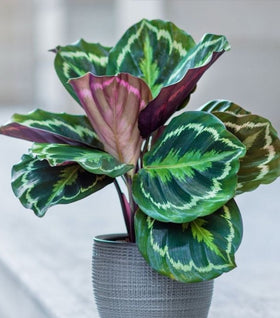
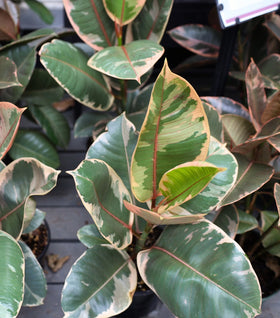
Pink foliage reads like “fresh flowers,” but it lasts—day after day, season after season. The plants in this collection deliver pink in different ways: pinstripe leaves (calathea ornata), pink-and-cream marbling (ficus ruby), rosy edges on thick, glossy leaves (hoya krimson queen), and bold color accents (red anthurium). That variety lets you style intentionally: one hero plant on the floor, a patterned plant at eye level, and a trailing accent spilling off a shelf.
This is also a practical palette for real homes. Many “pink” houseplants hold color best in bright, indirect light—so you’re not forced into harsh full sun that scorches leaves or fades patterns. If your space is lower light, you can still lean on options that tolerate indirect shade, then reserve the brightest spot for the most color-hungry varieties.
Use them in containers or mixed indoor planters the same way you’d design a landscape bed: combine leaf sizes, textures, and heights for contrast. Pair narrow, upright foliage (like the rattlesnake plant’s long leaves) with broader leaves (rubber tree) and a trailing plant (tradescantia or lipstick plant) to make a small corner look curated instead of cluttered.
And yes—these can be “gift plants” that don’t feel disposable. Several choices are long-lived tropical foliage plants when kept warm, evenly watered, and out of drafty cold spots. That means you’re not just purchasing color; you’re investing in a plant that can mature with your space.
Know the color, texture, and size you’re getting.
You’ll see three main looks: patterned foliage (calatheas), variegated “paint-splashed” leaves (ficus and hoya), and flowering accents (anthurium, kalanchoe, holiday cactus, lipstick plant). Calathea ornata, for example, is prized for its pinstripe pattern and performs best in bright, indirect light with higher humidity—great for kitchens, bathrooms, or any room where a humidifier lives.
Mature size ranges are a big deal indoors, and this collection spans from compact to statement scale. Rattlesnake plant commonly grows around roughly 18–30 inches tall and 12–24 inches wide indoors, depending on pot size and conditions—large enough to feel lush, small enough to fit on stands and low tables. Rubber plants can become true indoor “trees,” often reaching roughly 6–10 feet with time in the right conditions, making them ideal when you want height without a large footprint.
Growth rate also varies—use that to your advantage. Tradescantia is known for quick, trailing growth and responds beautifully to regular pinching, while Hoya is often steadier and rewards patience with thicker vines and the potential for blooms under bright, indirect light and a careful watering rhythm.
Seasonal interest isn’t only for outdoor gardens. Holiday cactus can bloom after a period of short days, typically flowering from late fall into winter, while many indoor flowering plants (like anthurium) perform best and bloom more reliably when they receive sustained bright, indirect light. If your goal is “pink all year,” build around foliage color and treat blooms as an occasional bonus.
Place them where they’ll thrive fast.
Start with light: bright, indirect light is the sweet spot for most pink-leaved showpieces—enough brightness to keep variegation crisp, but filtered so leaves don’t scorch. Place pots a little back from a sunny window or use a sheer curtain if the light is intense. For plants like lipstick plant and many anthuriums, good indirect light strongly influences flowering, not just growth.
Plan spacing based on mature width and airflow, not the nursery pot size on arrival. A rattlesnake plant that can spread 12–24 inches wide will look best with at least that much “elbow room” from neighboring foliage, while a rubber plant heading toward a multi-foot canopy needs open space above and around it so you’re not constantly moving furniture later. As a simple indoor rule: leave several inches between pots for air circulation, then increase spacing as plants size up.
Use placement to unlock functional benefits, too. Humidity-loving calatheas often perform better in naturally humid rooms (bathrooms/kitchens) or near a humidifier, while tougher foliage plants can serve as low-fuss desk companions. If you rotate plants seasonally—brighter in winter, slightly farther from the glass in summer—you’ll avoid stress from temperature swings and keep color stronger.
If you move plants outdoors for summer, keep them in containers and treat clippings responsibly—especially with trailing tradescantia types. In warm climates, wandering-jew/inchplant relatives have documented invasive potential, so it’s smart to keep them contained and avoid letting fragments root into beds or natural areas.
Keep care simple and feel confident.
For most plants here, success comes down to three habits: drainage, timing, and consistency. Use a pot with drainage holes, water thoroughly, then let the top inch or two of soil dry before watering again (most growers overwater, especially in winter when growth slows). Several in this mix—like rubber plants and aglaonema—explicitly benefit from reduced watering during slower seasons and steady warmth above chilling temperatures.
Pruning is straightforward and should match the plant’s rhythm. Pinch or trim tradescantia during spring and summer to prevent legginess and encourage a fuller, bushier look. Rubber plants can be pruned in late winter to manage size and encourage branching, while anthuriums can be cleaned up as blooms and older leaves fade—any time you see decline. Hoyas generally need minimal pruning; focus on training and patience rather than frequent cutting.
Fertilizing and “extras” should support growth, not force it. A light, balanced feed during the growing season is typically plenty for foliage plants, and strong light remains the #1 driver of vibrant variegation. If color is fading, correct light first; if leaves are dropping, check watering and temperature swings next.
Finally, familiarize yourself with the cautions so you can shop and place plants confidently. Calatheas are widely regarded as pet-safe, while many popular pink-accent plants are toxic if chewed—anthurium and kalanchoe are notable examples, and several ficus can irritate pets as well. On the pest side, keep an eye out for spider mites, mealybugs, and scale—calatheas and ficus can be susceptible—so a quick weekly leaf check (especially under leaves) prevents small issues from becoming big ones.