
Columbine Plants (Aquilegia) for Spring Color & Hummingbird Appeal
Whimsical spring bloomers that light up shade gardens and lure hummingbirds
Aquilegia, better known as columbine, brings that “storybook” look to real-life gardens: nodding, spurred blooms in jewel and pastel tones, held above airy foliage that feels light and natural. Most columbines bloom from late spring into early summer, and they’re famously good at bridging the gap between early spring color and the start of summer perennials. They’re also a favorite for pollinator gardens, especially for hummingbirds, and they fit beautifully in cottage borders and woodland edges where you want flowers that feel effortless, not overly formal.
The win with aquilegia is how “easy” it can be when you plant it where it’s happiest: sun to partial shade (often best with some afternoon protection), and a well-drained soil that doesn’t stay soggy around the crown. After flowering, a simple cutback to healthy basal leaves can freshen the plant and sometimes encourages another flush of growth, while deadheading helps keep the planting tidier and can reduce heavy self-seeding. Keep an eye out for leaf miner trails and crowded, damp conditions that invite mildew—most problems shrink fast with airflow and cleanup. We back your success with the We Grow Together Promise.
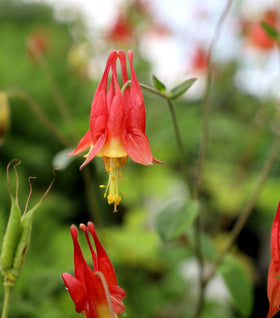
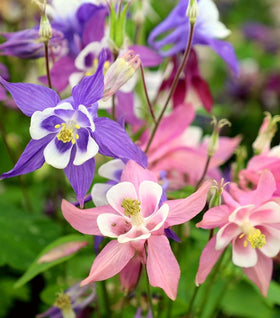
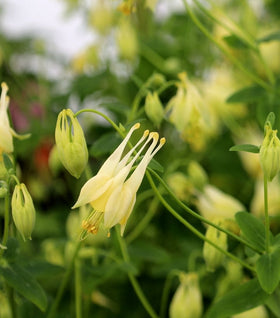
Bring hummingbird-ready spring color to shady spaces.
Columbine is a smart “shade upgrade” because it adds real flower power where many plants lean foliage-only. Blooming from late spring through early summer, aquilegia gives you a cheerful, floating look that reads beautifully in filtered light, under open trees, beside porches, along north or east exposures, and at the edge of woodland beds.
The flowers are built for pollinators: the distinctive spurs hold nectar, and many aquilegia varieties are well known for attracting hummingbirds, as well as bees and butterflies. If you want a garden that feels alive in spring, columbine is one of the easiest ways to create that motion and activity without turning the bed into a high-maintenance project.
Design-wise, Aquilegia is a natural “connector” plant, soft enough to blend between bolder perennials, yet distinctive enough to stand on its own in drifts. It’s especially effective in repeating clusters, where those nodding blooms create a rhythmic, meadow-like feel that still looks intentional from the street.
Know the bloom timing and what you’re getting.
Aquilegia typically blooms in spring through early summer (often late spring into early summer), with timing influenced by local climate and variety. Many gardeners extend the show a bit by removing spent blooms, which can also help keep the planting looking crisp as spring transitions into summer.
Mature size generally falls within a highly usable range for borders, often 1–3 feet tall, with a narrower spread depending on the type. That scale makes columbine ideal for front-to-mid border placement, where it can peek through later-emerging perennials without overwhelming them.
Growth habit is typically clump-forming with a relatively light, airy footprint, and many aquilegias will self-seed if happy. That’s a feature if you enjoy a naturalized look, but it’s worth planning for: deadhead if you want fewer volunteers, or let some seed drop if you’d love a gentle “columbine stroll” through the garden over time.
Plant in bright shade or morning sun for best results.
Most columbines perform best in full sun to partial shade, and they’re often happiest with morning sun and some afternoon protection—especially in warmer areas where summer heat can push them toward early dormancy. If your summers run hot, that dappled woodland edge can be a perfect sweet spot.
Soil should drain well, because soggy conditions around the crown can contribute to decline. Aim for soil that holds moisture evenly but doesn’t stay wet, and use organic matter to support steady growth—especially for woodland-style plantings that you want to look lush without constant watering.
For spacing, plan for both airflow and coverage. A practical range for many Aquilegia plantings is roughly 10–18 inches apart, adjusting wider for larger types and tighter for smaller selections or faster “filled-in” looks.
Keep it easy with deadheading, cleanup, and simple cautions.
Deadheading right after bloom keeps plants tidy, and many guides suggest cutting stems back to healthy basal leaves after flowering to refresh foliage and sometimes encourage a second flush of growth. If foliage looks tired later in the season, a late-summer to early-fall cutback can also promote a fresher rosette that carries better into cooler weather.
Common issues to watch for are leaf miners (those pale, winding trails in leaves), aphids, and occasional powdery mildew—problems that tend to worsen when plants are crowded, or foliage stays damp. The best prevention is simple: give plants space, water at the base, and remove declining leaves rather than letting them sit and harbor issues.