
Rhododendron Shrubs for Bold Spring Blooms & Evergreen Beauty
Evergreen structure and show-stopping spring blooms for shade-friendly landscapes.
Rhododendron shrubs are the kind of “anchor plant” that makes a landscape feel established: broadleaf evergreen foliage through winter, then big, memorable flower trusses that light up the garden in spring (timing varies by type and climate, but the show is typically late spring into early summer). They’re especially powerful in layered designs, under tall trees, along north/east-facing foundations, or anywhere you want evergreen mass that still delivers a true flowering moment.
The key to confidence with rhododendrons is matching them to what they naturally want: dappled shade (often with protection from hot afternoon sun), moist but well-drained acidic soil, and careful watering so roots never sit in soggy ground. Many guidance sources also recommend planting the root ball slightly high to improve drainage, and pruning only after flowering if you need to shape, because pruning at the wrong time can cost you next year’s buds. You’re backed by the We Grow Together Promise.


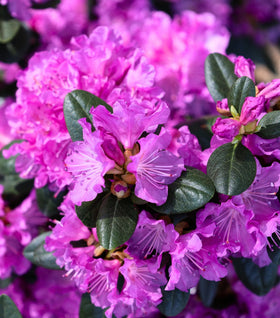
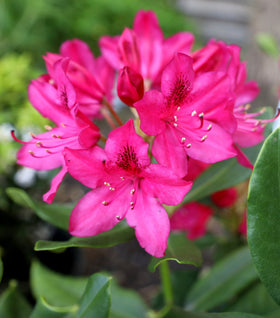
Evergreen curb appeal with spring flower power.
Rhododendrons deliver year-round value: glossy evergreen leaves keep beds looking full and intentional in every season, then spring bloom turns the shrub into a focal point. In foundation plantings, they read “classic and finished,” and in woodland borders, they create that layered, natural look that still feels polished from the street.
This collection works well for both homeowners and landscapers because rhododendrons can be used as single statement plants or repeated in drifts for a designer effect. Grouping multiple shrubs creates a stronger visual mass and helps you build a consistent evergreen backbone, so the landscape doesn’t rely solely on perennials for structure.
If you’re planting in areas with deer pressure, plan accordingly—some rhododendrons are frequently browsed in many regions, so placement and protection can matter for long-term success. The payoff is worth it: when sited well, rhododendrons mature into a long-lived evergreen framework that improves year after year.
Big bloom trusses and glossy leaves that look premium.
Rhododendron flowers are produced in dense clusters (“trusses”) that typically open in spring, creating a bold color moment that’s hard to replicate with smaller-flowered shrubs. After bloom, many guides recommend deadheading spent flower clusters (especially on rhododendrons) to support next year’s flowering and keep plants tidy.
Mature size varies widely by species and cultivar, from more compact landscape shrubs to larger forms, so the smartest “low-maintenance” move is choosing a size that fits your bed at maturity. When the right plant is matched to the right space, you get a clean, natural silhouette without the constant pruning that can thin plants out over time.
Growth rate is generally slow-to-moderate for many rhododendrons, which is a feature in foundation landscapes: you’re building lasting structure, not chasing a fast hedge. That steady pace also makes site prep (soil acidity + drainage) more important than “quick fixes” later.
Planting spots that make rhododendrons thrive.
Light is a major success factor: many extension references describe rhododendrons as happiest in dappled shade, protected from hot afternoon sun, since intense exposure can scorch foliage and increase stress. If you can give morning sun with afternoon shade—or filtered light under a high canopy, you’ll typically see healthier leaves and better long-term performance.
Soil and drainage are non-negotiable. Rhododendrons prefer moist, well-drained, acidic soil, and they’re repeatedly noted as poor candidates for dense clay unless it’s amended—because root rot becomes a real risk when water can’t move through the root zone. Planting the root ball slightly above ground level is commonly recommended to help prevent drainage problems.
For spacing, use mature width as the guide so shrubs aren’t jammed together. Airflow reduces humidity around foliage and helps limit problems like leaf spot and other stress-related issues; it also gives you room to reach in for deadheading and light shaping after bloom.
Simple care that protects next year’s blooms.
Water consistently during establishment, then maintain steady moisture rather than oscillate between drought and saturation. Avoid overwatering and over-fertilizing, both of which are commonly flagged as causes of stress and decline, and focus instead on soil prep, mulch, and drainage so the plant can do its job without constant intervention.
Pruning timing is the big confidence move: if you prune, do it after flowering. Multiple reputable sources also caution against late-season pruning (often after mid-summer) except for removing broken or diseased wood, because it can reduce the next season’s flower set.