
Native Perennials for Pollinators, Wildlife & Lasting Garden Beauty
Plant What Belongs Here For More Blooms, More Pollinators, And Less Fuss
Native perennials are the best kind of “smart landscaping” because they do two jobs at once: they make your garden more beautiful, and they make it more resilient. These are plants that evolved with local seasons, soils, and wildlife—so once they’re established, many need less watering, fewer inputs, and less constant babysitting than finicky ornamentals. If you’re buying native perennials online, you’re usually chasing a specific outcome: long bloom seasons, better pollinator activity, tougher performance in heat and drought, and a garden that looks intentional from spring through fall.
At Garden Goods Direct, we make native perennials easy to shop for by focusing on real, plantable favorites—like asters, echinacea, rudbeckia, and other native-friendly staples—so you can build beds that fill in, flower reliably, and support bees and butterflies where it counts. We pair fast shipping with practical guidance (spacing, sun exposure, watering cadence) so your native planting succeeds the first time—backed by the We Grow Together Promise.

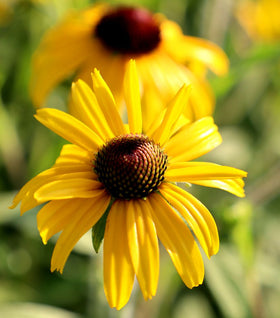
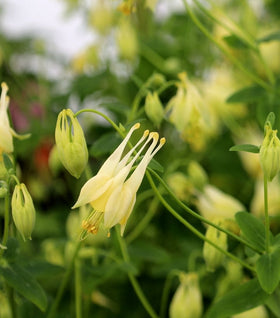

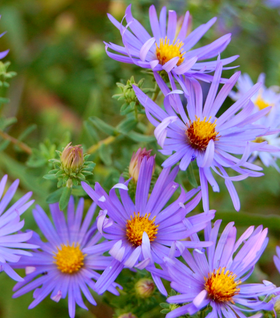


Bleeding Hearts Heliopsis
$29.95





Cheyenne Spirit Coneflower
As Low As $18.95


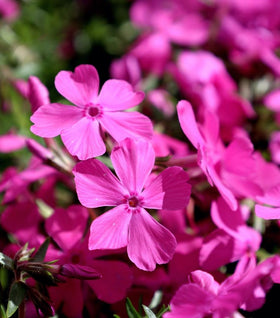
Drummond’s Pink Creeping Phlox
As Low As $16.95



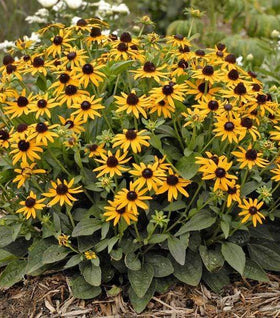
Goldsturm Black Eyed Susan
As Low As $18.95


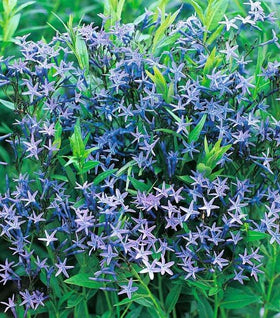
Hubricht’s Bluestar (Amsonia hubrichtii)
As Low As $29.95
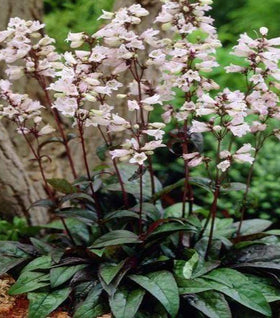
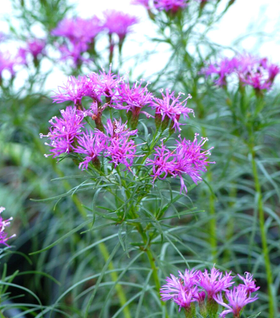


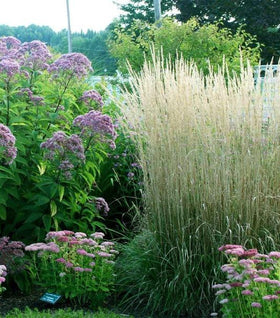
Karl Foerster Feather Reed Grass
As Low As $29.95
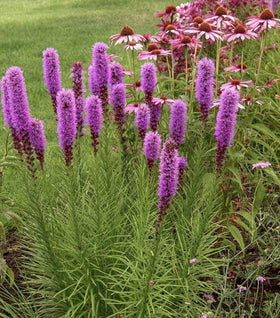


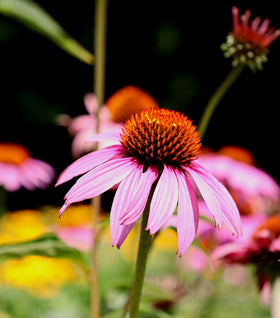

Buy native perennials that thrive where you live.
Native perennials belong here because they’re built for real-world conditions—hot spells, heavy rain events, imperfect soil, and the seasonal swing that makes many landscapes a challenge. Many native plants have deep roots that help store water, reduce runoff, and support healthier soil over time, which is exactly what homeowners and landscapers want when they’re tired of replanting the same struggling spots. When you shop native perennials for sale, you’re not just buying flowers—you’re buying adaptation.
This collection also answers a common buying question: “What should I plant that will actually last?” Native perennials are often lower-input once established and can require fewer fertilizers and pesticides than turf-heavy approaches, which makes them a strong fit for customers who want beautiful beds without constant weekly maintenance. They’re especially valuable for new beds, renovation projects, and property edges where you want plants that settle in and get better every year.
And yes—native perennials are absolutely design-forward. You can build a clean, modern look with repeating drifts, or a naturalistic planting that feels like it belongs to the land. Either way, natives help your landscape look more “finished,” longer, with less effort.
Get more blooms and more pollinators per square foot.
If the goal is pollinator power, native perennials are one of the most direct ways to get it. The USDA and Xerces both emphasize planting native species because they provide nectar/pollen resources, supporting a diversity of pollinators. Xerces also provides region-specific native plant lists to help match plants to their specific locations. That matters because a native garden isn’t just pretty—it’s a functioning habitat.
Visually, natives give you layers: daisy-style flowers, airy umbels, spikes, and seedheads that keep the garden interesting even after peak bloom. Many also bring multi-seasonal value—pollinator flowers in summer, seeds for birds later, and strong winter texture if you leave the stems standing. (That’s not “messy”; that’s wildlife support with style.)
From a buying standpoint, this is where natives shine: you can shop for color, height, bloom window, and purpose (bees, butterflies, rain gardens, low-water beds) and build a planting plan that looks curated and performs harder than a random mix of “pretty plants.”
Plant them in sun, shade, and problem spots.
Native perennials are incredibly versatile when planted with intention. Use sun-loving natives in wide-open beds and meadow-style borders. Use shade-tolerant natives to bring life under trees and along north-facing edges. Use deep-rooted natives on slopes and runoff-prone areas to help stabilize soil and reduce erosion—an approach echoed in federal guidance that recommends deeper-rooted/native plantings for slope stabilization.
Spacing is your planning superpower. A practical range for many perennial natives is 12–24 inches apart, depending on mature width and whether you want quick fill or more “specimen spacing” for distinct clumps. Cluster the same species together for easier pollinator foraging—NRCS specifically recommends grouping the same flowers for efficient foraging. That simple layout tweak can make a native bed look more designed and function better.
These plants also play well with others. Native perennials can be the flowering layer beneath shrubs, the color layer in front of evergreens, or the main event in a dedicated pollinator garden. If you want a bed that looks great now and grows into itself over time, natives are a smart, scalable way to plant.
Keep success simple with low-input care.
Native perennials are not “no care,” but they are “less drama” when you start right. Plant in the correct light, prioritize drainage, and water consistently during establishment—then taper off as the roots grow deeper. Many native plant resources note reduced fertilizer needs and generally lower water demand compared to turf-heavy landscapes, especially once plants are established.
Fertilizing should be minimal: too much nitrogen can cause floppy growth and fewer flowers. Instead, focus on compost, mulching, and letting plants adapt to your site. For pruning, the easiest approach is seasonal cleanup: cut back in late winter/early spring if you prefer a tidy look, or leave stems standing longer for winter interest and habitat value—then clean up before new growth starts.
The best part is the long game: many natives improve each year as their roots deepen and clumps mature. Buy native perennials online once, plant with a plan, and you’ll have a garden that blooms, feeds pollinators, and looks like it belongs—supported by the We Grow Together Promise.