
Pieris Shrubs for Colorful Foliage, Spring Blooms & Evergreen Beauty
Evergreen structure with early spring flowers and fiery new growth
If you want a shrub that looks “put together” all year and still delivers a true spring moment, Pieris is one of my go-to picks. It’s a broadleaf evergreen that keeps your beds and foundation plantings full through winter, then flips the switch with dangling clusters of bell-shaped flowers in early spring. And when that new growth flushes in coppery-red tones, it’s like your landscape wakes up in full color—without you having to replant anything. Pieris shrubs are also a smart choice for the kind of spots that frustrate people: bright shade, filtered sun, woodland edges, and protected courtyards where you want evergreen structure that doesn’t feel heavy or boring.
Here’s how to win with Pieris: think “acid-loving, moisture-consistent, and well-drained.” Give it rich, organic soil, keep it evenly moist while it establishes, and avoid soggy ground that can lead to root problems. Pruning is refreshingly simple, too—because Pieris blooms on old wood, you shape it right after flowering so you don’t sacrifice next year’s buds. With fast shipping, real horticultural support, and the We Grow Together Promise, you can plant Pieris with confidence and enjoy that evergreen-plus-spring-bloom combo for years.


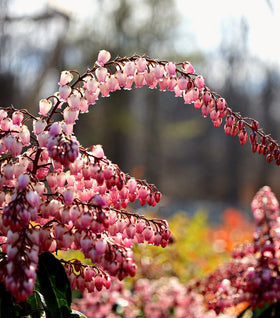

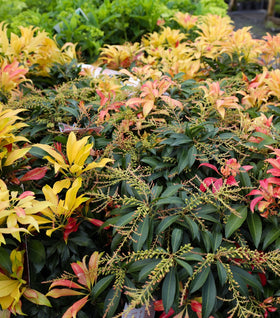
Evergreen curb appeal that still brings a real spring show.
Pieris shrubs earn their spot in the landscape because they do two jobs at once: they hold structure all year, and they still flower when spring arrives. Japanese pieris (Pieris japonica) is widely grown as a broadleaf evergreen with drooping racemes of lily-of-the-valley-like flowers in early spring, and those bead-like buds often show up ahead of bloom for extra winter interest. That means you’re not just planting “a spring bloomer”—you’re planting an evergreen backbone that keeps beds from looking empty in the off-season.
This is also a collection built for real-life landscapes, not just showcase gardens. Many Pieris cultivars stay naturally tidy and slow-growing, which is exactly what you want near entries, along walkways, and in foundation beds where maintenance time is limited. And because Pieris can handle full sun to partial shade (with a preference for some shade in warmer climates), it gives you flexibility when the “perfect” full-sun bed is already spoken for.
What makes Pieris feel premium is the detail: glossy evergreen foliage, pendulous bloom clusters, and that signature new growth that often emerges in coppery-red tones before maturing to deep green. If you’re shopping for a flowering evergreen shrub that looks intentional in every season—especially in those filtered-light areas where other shrubs can look flat—Pieris is a high-confidence choice.
Color-changing foliage, bell blooms, and sizes for every landscape.
Pieris isn’t a one-size-fits-all shrub, and that’s part of its value as a collection. The species is commonly listed maturing roughly in the 8–10 ft range (with a broader spread) when left to grow naturally, but modern landscapes often lean on cultivars that stay much more compact. That’s how you get Pieris into smaller beds, tighter foundation zones, and even larger containers—without giving up the evergreen look or the spring bloom payoff.
For example, Pieris japonica ‘Mountain Fire’ is especially noted for its fiery red new foliage and heavy spring flower clusters, with a mound that’s often around 4 ft tall by 3 ft wide over the first decade and the potential to reach roughly 6–8 ft over time. On the other end, dwarf selections like ‘Cavatine’ are often in the 2–3 ft range, which is perfect when you want the Pieris look without committing to a larger shrub footprint.
Growth rate is usually best described as slow to moderate—exactly what many homeowners and landscapers want for “set it and enjoy it” evergreen structure. Even within compact cultivars, you can find steady, controlled growth (for example, some compact variegated types are described at roughly a few inches of annual growth once established), which makes planning spacing and long-term shape much easier.
Shade-friendly planting spots that make Pieris Shine.
Start with light: Pieris japonica is commonly recommended for full sun to partial shade, with many resources noting it appreciates some shade in warmer climates and benefits from protection from harsh winter winds. In design terms, that makes Pieris ideal for filtered sun, bright shade, and those “protected but visible” locations—near porches, under high tree canopies, along woodland edges, or anywhere you want an evergreen presence without blasting sun all day.
Next, plant for health and flowering by giving Pieris room to breathe. Practical spacing depends on the mature width of the cultivar you choose, but a simple rule is to space for the adult plant so airflow stays strong (which helps reduce disease pressure). Many standard Pieris japonica plantings are planned in the ballpark of several feet between shrubs because mature plants can be 6–8 ft wide, while compact cultivars can be spaced closer based on their smaller spread.
Pieris also shines in functional placements. Use it as an evergreen “anchor” in foundation beds, a focal point in shade borders, or a repeating rhythm in mixed shrub plantings where you want winter structure and spring bloom in one plant. And because many cultivars keep a naturally rounded habit with minimal shaping, Pieris is an easy way to get that high-end, layered look without constantly shearing shrubs into submission.
Simple care that protects blooms and keeps plants thriving.
Pieris care is all about getting the soil and moisture right. NC State’s guidance emphasizes moist, well-drained, acidic soil enriched with organic matter—think the same general conditions that make other acid-loving evergreen shrubs happy—and that “well-drained” part matters because waterlogged soils can set the stage for serious root issues. If you mulch to hold moisture and moderate temperature, keep mulch off the stem and avoid burying the crown—Pieris wants consistent moisture, not soggy roots.
Pruning is where many people accidentally lose next spring’s flowers—so the timing matters. Because Pieris sets flower buds on old wood, the safest approach is to prune right after blooms fade in spring (or simply deadhead spent flower clusters) and avoid late-season pruning that can remove next year’s buds. In most landscapes, Pieris needs very little pruning beyond cleanup, shaping, and occasional thinning for airflow.