
Clethra Shrubs for Fragrant Blooms & Native Pollinator Gardens
Sweet Summer Fragrance And Pollinator Power For Sun, Shade, And Moist Soils
Clethra (summersweet / sweet pepperbush) is the shrub you plant when you want your garden to feel like summer, with spicy-sweet fragrance, busy pollinators, and blooms that show up when a lot of spring shrubs are long finished. It typically flowers in mid-to-late summer (often July into August, depending on region), with upright, bottlebrush-like spikes that perfume the air along paths, patios, and backyard seating. It’s also a rare win for those tricky landscapes where soil stays consistently moist: instead of fighting that condition, clethra leans into it and performs.
What makes Clethra feel like a “smart purchase” is how forgiving it is in the right spot, part shade to sun, moisture-retentive soils, and a simple pruning window because it blooms on new growth. Cut back in winter or early spring when you want to shape or refresh it, then let it do its thing. And if you’re building a naturalistic edge, clethra can slowly spread by suckers, creating a fuller thicket; if you want a tidier outline, just remove those suckers at the base. Backed by the We Grow Together Promise, it’s an easy way to add fragrance, pollinator value, and real late-season color.
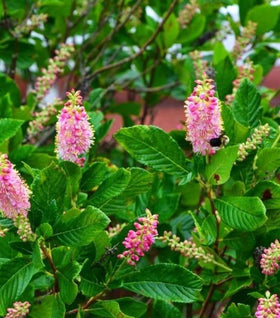

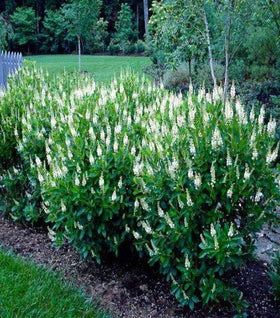
Turn damp areas into fragrant garden moments.
Clethra is a go-to solution shrub for beds that stay evenly moist, low spots, downspout-adjacent borders, rain-garden edges, and woodland margins where many flowering shrubs struggle. Instead of sulking, it blooms and perfumes the air, giving you a real “walk-by payoff” in summer when you’re outside the most.
It’s also a strong choice for mixed-light landscapes. Many references note that clethra handles part shade well, so you can bring fragrance and flower power into areas that get filtered sun under trees or morning sun with afternoon shade. That’s a big deal for homeowners who want more than “just green” in shaded borders.
Used in groups, clethra can function as a soft screen, a border shrub, or a naturalistic mass that looks intentional without looking formal. That flexibility is why it shows up in pollinator gardens, sensory gardens, and “easy-care” landscape plans where performance matters as much as beauty.
Spicy-sweet blooms and lush summer texture.
The signature feature is fragrance: highly aromatic flower spikes that draw bees and other pollinators in droves. Flower color varies by selection (often white, sometimes pink), but the overall effect is consistent, upright racemes that stand out against clean green foliage in the heart of summer.
Bloom timing is a major selling point. Many regions see clethra peak in mid-to-late summer (commonly July through early August in warmer areas), which helps keep borders interesting after early-season shrubs are done and before fall color fully arrives.
Mature size depends on cultivar, but summersweet clethra is often listed around 5–8 feet tall and 4–6 feet wide for common forms, with a rounded, shrub-like habit that fills space without constant shearing. Many selections also deliver attractive fall foliage color (often yellow to golden tones), adding another season of interest.
Plant it where moisture and light cooperate.
Clethra is happiest in moisture-retentive, acidic-to-neutral soils that don’t dry out too quickly, and it’s widely recommended for moist sites where other shrubs struggle. It tolerates sun to partial shade, with part shade often ideal when summers run hot and dry, especially if you’re not irrigating regularly.
Spacing should match your goal. For a fuller mass or informal hedge, plan roughly 4–6 feet between standard forms (closer for compact cultivars), so each plant can reach mature width without crowding, and airflow stays strong around foliage.
Clethra is also a smart “edge plant” for woodland borders and water-adjacent areas: place it where you’ll catch the fragrance, near a path, patio, gate, or seating zone, and let it become the summer cue that tells you the garden is in its prime.
Easy pruning and confidence-building care.
Because clethra blooms on new growth, pruning is simple: shape and thin in winter or early spring without sacrificing the season’s flowers. That makes it a great choice for gardeners who want predictable results and don’t want to stress about “did I just cut off next year’s buds?”
Water consistently during establishment, then keep an eye on moisture in dry spells. Clethra performs best when the root zone doesn’t swing from soggy to bone dry. If your soil dries quickly, mulch helps conserve moisture and keeps roots cooler, which supports better flowering and less stress in summer heat.