
Cherry Laurel Shrubs for Fast-Growing Evergreen Privacy
Fast, Dense Evergreen Privacy With Glossy Leaves And Spring Blooms
Cherry laurel is the “get it done” evergreen hedge—dense, glossy, and fast enough to turn an open view into real privacy without waiting forever. It’s a classic choice for screening because it grows thick, tolerates a wide range of light (including partial shade to full shade in many settings), and stays green year-round. If your goal is a clean, premium-looking hedge line along a fence, driveway, or property edge, cherry laurel delivers that polished backdrop that makes the rest of the landscape look more intentional.
Buying cherry laurel online is easiest when you shop with a plan: pick the mature height you want, space it correctly, and commit to a simple early watering routine while roots establish. Cherry laurel performs best in moist, well-drained soil (it doesn’t love soggy feet), and once established it’s often described as tolerant of tougher conditions. Order with confidence: fast shipping, clear guidance, and real horticultural support—backed by the We Grow Together Promise.
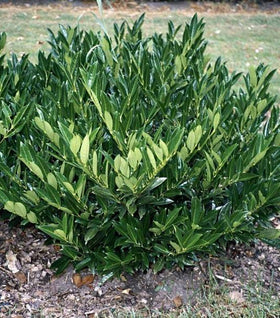


Plant cherry laurel for instant privacy impact.
Cherry laurel is a smart purchase when privacy is the assignment and you want an evergreen hedge that looks substantial, not wispy. It’s widely grown as a dense screening shrub, with dark green foliage that reads “finished” in every season. For homeowners, that means better backyard comfort. For landscapers, it means a reliable hedge option that scales from small side-yard screens to long property lines.
It’s also a practical “replace the fence” plant. A cherry laurel hedge gives you softness and depth—while still creating a visual barrier. And because many selections can be pruned and maintained at a chosen height, you can keep the look tailored without the fuss of shaping every week.
If your goal is fast coverage, cherry laurel is often described as a fast grower in favorable conditions, making it a strong choice when you want privacy sooner rather than later.
Get glossy evergreen foliage and spring flower style.
Cherry laurel brings that rich, broadleaf-evergreen look—big, glossy leaves that create a dense wall of green. In spring, it can add fragrant white flowers, which is a nice bonus for a plant most people buy primarily for screening.
Visually, this shrub works in both formal and relaxed landscapes. Keep it tightly pruned for a clean hedge line, or let it grow a bit more naturally for a softer screen that feels less rigid. Either way, the foliage is the main event: strong color, strong coverage, and a texture that pairs well with hydrangeas, grasses, and flowering perennials.
One honest note for planning: cherry laurel is a vigorous shrub, and some types can reach substantial sizes over time, so selecting by mature height/spread matters as much as selecting by zone.
Plant a hedge that fills in fast and stays thick.
Cherry laurel performs best in moist, well-drained soil and handles a wide light range—often doing well from full sun into partial shade (and in many landscapes, even deeper shade). It’s also noted as tolerant of salt spray in some guidance, which can be useful for exposed sites.
Spacing is where the hedge either becomes a masterpiece or a headache. A practical planting range for cherry laurel hedges is often 3–6 feet apart, depending on the cultivar and how quickly you want the hedge to knit together. Tighter spacing creates faster coverage but increases competition; wider spacing can reduce long-term maintenance and improve airflow.
For quickest results: plant in a straight line, keep spacing consistent, water reliably through the first season, and mulch to stabilize moisture (while keeping mulch off the trunk base).
Keep maintenance easy with smart watering and pruning.
The care routine is simple when you anchor it to two rules: avoid soggy soil and prune at the right time. Cherry laurel is commonly described as preferring fertile, well-drained soil and can struggle in overly wet conditions. Water consistently during establishment, then shift toward deeper, less frequent watering as roots expand.
For pruning, many guides recommend trimming after flowering to shape and maintain a hedge, with additional light pruning possible into mid-summer (then easing off before first frost to avoid tender new growth going into cold). For older, overgrown plants, renewal pruning can be done gradually by removing a portion of older stems over multiple seasons.
Safety note for pet/child households: cherry laurel leaves contain cyanogenic glycosides (toxic if ingested), so place and manage accordingly. With the right site, spacing, and a simple pruning rhythm, cherry laurel becomes the kind of evergreen screen people hope for—backed by the We Grow Together Promise.