
Spruce Trees for Evergreen Privacy, Structure & Year-Round Color
Bold evergreens for privacy, wind protection, and four-season structure.
Spruce trees are the “instant backbone” evergreens, strong pyramids, crisp needles, and a classic silhouette that makes a yard feel established fast. This category includes multiple looks and scales (from big screening trees to more compact, ornamental forms), so you can build a windbreak at the property line, frame an entry with symmetrical evergreens, or add a single statement conifer that looks sharp in every season. Spruces share the same core appeal: year-round green structure and a canopy that gives your landscape clean lines even when perennials and flowering shrubs are between shows.
The secret to success is matching spruce to the right site: full sun, steady moisture while establishing, and soil that drains well (spruces don’t love “wet feet”). When you plant with spacing that allows airflow, you also reduce disease pressure—especially needle cast, which thrives when trees are stressed or crowded. If you’re in a humid region and want long-term reliability, it’s also smart to choose spruce types known to be more tolerant of needle cast rather than forcing a poor fit. You’re backed by the We Grow Together Promise.
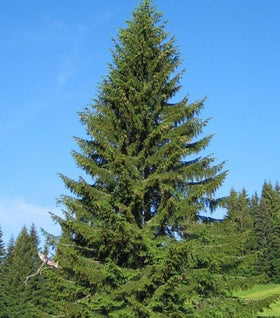
Norway Spruce
As Low As $29.97


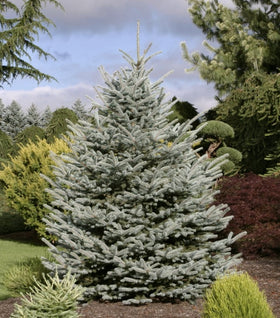
Fat Albert Colorado Blue Spruce
As Low As $64.95
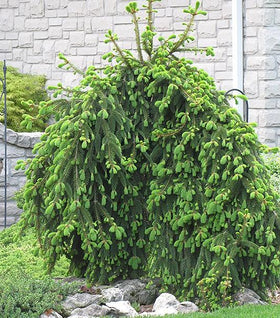

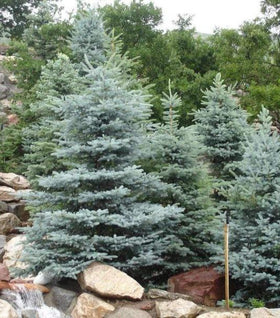

Privacy and windbreak power that looks polished.
Spruce trees are a top-tier choice when the goal is a real screen, something tall, evergreen, and visually dense that changes how your property feels. A row of spruces can block views, soften traffic noise, and cut winter wind, turning an exposed yard into a more comfortable outdoor space. For the most natural-looking screen, stagger plantings (two rows offset) instead of forcing a single tight line, this creates depth and thickness while still giving each tree room to stay healthy.
They also bring “architectural structure” that reads instantly from the street. The strong pyramidal outline gives you a clean backdrop for flowering beds, and it’s one of the easiest ways to make seasonal color pop, spring blooms, summer perennials, and fall foliage all look brighter against a consistent evergreen wall. If you’re designing a layered bed, spruce is the tall anchor; you can then build mid-layer shrubs and a front edge of perennials for a landscape that looks intentional year-round.
Spacing controls the timeline. Many spruces can reach a mature width of around 20–25 feet, depending on species and site, so planting too close can backfire; crowding reduces airflow and increases disease risk. For screens and windbreaks, common planning ranges you’ll see include roughly 16–25 feet between trees (and similar between rows for double-row windbreaks), adjusted to your species and the density you want.
Needle color, cones, and classic spruce form.
Spruces deliver that unmistakable conifer look: short, needle-shaped leaves arranged around twigs, plus cones that add seasonal character. The big visual differences come down to species and cultivar; some are deep green and fast-growing for windbreaks, some are prized for their silvery-blue needles, and others have a softer green with a refined, tight habit. That’s why this collection works whether you’re planting for “utility” (privacy/wind protection) or for “design” (color contrast and form).
Mature size and growth rate vary widely, so the smartest purchase is choosing the scale that fits your property. Many landscape spruces are medium- to large-evergreens; some can mature into very tall trees, while others are chosen specifically to remain more compact. If you’re planting near the home, plan around mature spread so the tree can keep its natural outline without becoming a constant pruning project.
Growth is often best described as steady once established, and establishment is where you “earn” the future. With consistent moisture and weed/grass control around the base, some windbreak-oriented spruces can put on meaningful height in the first five years. That early momentum is exactly why first-year watering and a wide mulch ring (kept off the trunk) pay off so well with spruce.
Plant it in full sun for dense, healthy growth.
Full sun is the density maker for spruce. Planting in shade commonly leads to poorer growth and a thinner look, and it can set the stage for stress-related issues that are harder to fix later. If you want a tight, full screen from top to bottom, spruce up your sunniest planting line and avoid sites boxed in by buildings or heavy canopy.
Soil should be moist but well-drained, and many disease resources emphasize that stressed trees are more likely to struggle with needle cast. A practical, repeatable rule: avoid low pockets that stay wet, improve drainage in heavy soil, and water consistently during establishment so roots expand without drought stress. Healthier, less-stressed trees are simply more resilient over time.
For spacing, think airflow first, then “screen speed.” If you plant too close, you may get quick early density but pay for it later with disease pressure and lower-branch decline. A strong planning approach is to space based on mature width (often 20–25 feet for large spruces), then use a staggered second row if you want faster visual thickness without suffocating the trees.
Easy care with smart disease and pest awareness.
Pruning is usually minimal for spruce; most look best when allowed to retain their natural pyramid shape. When you do prune, focus on removing dead, damaged, or diseased branches and improving airflow, and avoid pruning when foliage is wet to reduce disease spread. If needle cast is a known issue in your region, sanitation (removing symptomatic material) and spacing/airflow are part of the long-term strategy.