
Heuchera Plants for Colorful Foliage & Shade Garden Texture
Coral bells for showy foliage that makes shade gardens look finished
Heuchera, better known as coral bells, is the “make it look designed” plant for shade and part shade. Even when flowers aren’t the main event, the foliage absolutely is: mounding clumps in rich, saturated colors that hold the garden together from spring through fall, and often with evergreen or semi-evergreen presence in milder winters. If you’ve got a spot under trees, along a shaded walkway, or at the edge of a woodland bed that needs reliable color without constant fuss, coral bells are one of the quickest ways to get there.
They’re also wonderfully flexible. Many heucheras prefer part shade (especially protection from hot afternoon sun), but plenty can handle more sun with attentive watering. Your best results come from matching light to your climate and giving them well-drained soil so crowns don’t sit wet. A simple seasonal cleanup, snipping tired leaves and old flower stalks, keeps them looking crisp, and smart spacing helps reduce common issues like leaf spot, rust, or powdery mildew. We back your planting success with the We Grow Together Promise.
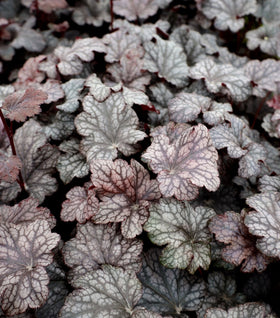
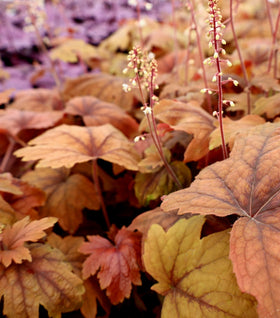
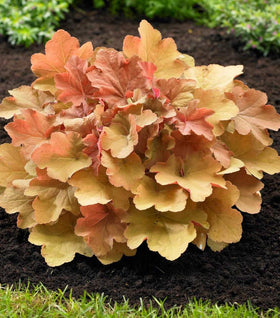
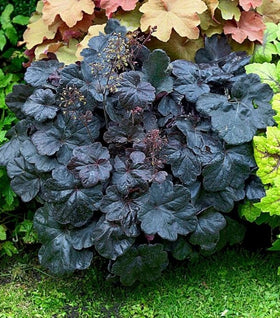
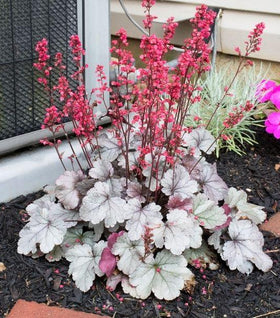
Dolce® Silver Gumdrop Heuchera
$44.95


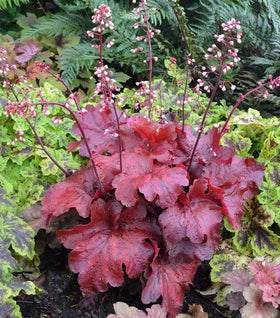
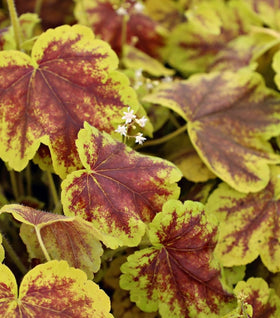

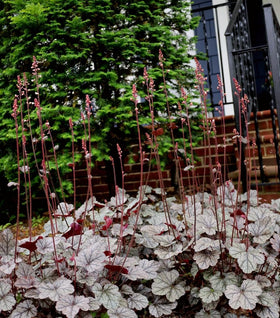
Turn shady spaces into color-rich garden moments.
Coral bells are the rare shade-friendly perennials that deliver strong color even when blooms are minimal because their foliage is the feature. That’s a big deal in real landscapes: shade beds often need texture and leaf color to look “done,” and heuchera gives you that in a neat mound that pairs easily with ferns, hostas, hellebores, and spring bulbs.
They also play beautifully in containers, where a single plant can act like a living accent—brightening a porch pot, anchoring a mixed planter, or adding contrast beside flowering annuals. Because many types stay compact, they’re easy to repeat along a walkway or mass in a drift for a professional, cohesive look.
And the payoff isn’t just springtime. Many selections hold their foliage color for months, giving you a long season of interest that doesn’t rely on perfect bloom timing. If you’re designing a woodland garden, heuchera is one of the most dependable “bridge plants” between early spring and the high summer garden.
Get the foliage, flowers, and mature size you’re expecting.
Most heucheras are clump-forming perennials, typically forming a basal mound up to a foot tall, with airy flower stems that rise above the foliage in late spring and early summer on many varieties. That habit makes them ideal for the front of borders and for weaving between larger shade plants without creating a messy tangle.
Color range is one of the main reasons people collect coral bells, greens, silvers, bronzes, oranges, burgundies, and near-black tones exist across cultivated selections—and that variation gives you design freedom without changing your care routine. When you want contrast in shade (where flowers can be less consistent), foliage color is a reliable design tool.
Growth is usually steady rather than aggressive, with plants improving as clumps mature. If you want faster “filled-in” results, plan on repetition and thoughtful spacing—heuchera looks best when each mound can hold its shape rather than being crowded into a tight mat.
Nail the light and spacing, and Heuchera will reward you.
Part shade is often the sweet spot, morning sun with afternoon shade is a classic setup—because it supports strong foliage color without scorching. Some heucheras can handle full sun with adequate moisture, but in hot, dry conditions, full sun can lead to leaf scorch, so site selection is one of the biggest “easy button” choices you can make.
Soil matters most at the crown: aim for moist, well-drained soil with organic matter, and avoid soggy, poorly drained sites where crown and root problems are more likely. If your soil is heavy, improving drainage and avoiding overwatering will do more for long-term success than almost anything else.
For spacing, a practical range for many landscape coral bells is about 12–24 inches on-center, depending on the mature width of the cultivar. Wider spacing improves airflow and helps reduce foliar disease pressure, especially in humid summers, while still letting you achieve a full, layered look as plants grow.
Keep care simple with a quick cleanup and smart watch-outs.
Water consistently while plants establish, then aim for even moisture rather than repeated drought-to-drench cycles. Many coral bells are fairly forgiving once established, but they look best (and keep better leaf quality) when they’re not stressed, especially in warm weather.
Pruning is mostly grooming: trim off tired or damaged leaves as needed, cut spent flower stalks after bloom, and do a more thorough cleanup in late winter/early spring so fresh growth shines. If clumps get woody or crowded over time, division can refresh vigor and keep the planting looking young.