
Hosta Plants for Lush Foliage & Lasting Shade Garden Beauty
Lush Shade Texture That Fills In Fast For Borders, Beds, And Under Trees
Hostas are the “instant upgrade” for shade—big, bold foliage that makes a garden look finished even when flowers aren’t doing much. If you’ve got a north side that feels flat, a walkway that needs softness, or a tree line that’s begging for a clean, intentional edge, hosta plants do the job with almost unfair efficiency. You’ll find proven favorites like Blue Angel, Sum and Substance, Guacamole, Frances Williams, Patriot, and Albomarginata—each chosen for standout leaf color, strong habit, and that lush look that reads expensive in a shade bed.
Buying hostas online should feel easy, not like a guessing game. We help you choose the right size and color for your space, then we back it up with practical guidance—how far apart to plant for faster coverage, how to keep watering simple, and what to watch for with slugs and deer. (Hostas can be browsed by deer, so planning ahead matters.) With fast shipping, expert support, and the We Grow Together Promise, you can plant once and enjoy that thick, cool shade texture for years to come.
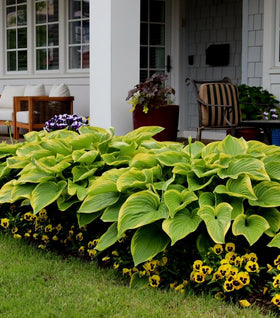


Gold Standard Hosta
As Low As $36.95
Our Hostas make shade look designed.
Hostas belong here because they solve the biggest shade problem with one confident purchase: empty space. Under trees, along foundations, and in side yards, hostas create a lush, continuous layer that feels intentional—like a landscape plan, not a collection of “what survived.” GGD’s hosta lineup focuses on shade-loving favorites with strong foliage presence, so you can build a bed that looks full even before the rest of the garden catches up.
They’re also one of the best “repeat plants” you can use. A single variety repeated down a walkway reads clean and professional. Mixed varieties (blue + gold + variegated) give that curated, botanical-garden feel—especially when you layer in ferns, heuchera, or astilbe for contrast. Either way, hostas make shade beds feel calmer and more finished because their foliage does the heavy lifting every day of the season.
And for online shopping, hostas are a smart cart builder: you can plan coverage, choose color themes, and order the quantities you need to complete the job within one planting window. If your goal is a shade bed that looks “done” this season—not three seasons from now—hostas are the fastest route.
Choose bold foliage and color you can’t fake.
Hostas are famous for their leaf variety, featuring blues, greens, golds, and crisp variegation that brightens even the darkest corners. That’s why gardeners collect them—and why designers lean on them for contrast. A blue hosta reads cool and refined next to stone or evergreens; a gold hosta lights up shade like a lantern; a white-edged variegated hosta adds structure and crispness to mixed beds.
Size range is another reason they’re so useful. Some hostas stay compact for edging, while larger types become “living boulders” of foliage. The largest hostas can get extremely large (up to several feet tall and wide), while miniatures stay under a foot, so buying with mature size in mind is the key to a bed that ages well.
You also get a seasonal bonus: many hostas bloom in summer with flower spikes that can add a softer, airy layer above the leaves (nice, but not required—foliage is the main event). If you want a plant that earns its space from spring through fall, hostas are an easy “yes.”
Plant them where they fill in fastest.
Hostas perform best in shade to part shade, and many do beautifully with morning sun and afternoon shade—especially when soil stays evenly moist. They’re ideal for under trees (where you can water consistently), along shaded walkways, and as a front layer beneath taller shrubs where they hide bare stems and soften hard lines.
Spacing is the shortcut to the look you’re buying. For quick coverage, plant based on size class. One practical spacing guideline is approximately 30–36 inches for large hostas, 18–24 inches for medium-sized types, and roughly 12–18 inches for smaller types. Plant in a staggered pattern and you’ll get a fuller, more natural “knit together” look without visible rows.
Hostas also work extremely well in containers for shaded porches and entry areas—especially when you want big texture without complicated care. Pair one statement hosta with trailing ivy alternatives (non-invasive options) or ferns for a polished shade-pot recipe that looks good all season.
Keep Hosta Plants thriving with simple, repeatable care.
Hosta care is refreshingly straightforward: consistent moisture, decent soil, and protection from the two most common headaches—slugs and browsing. Slugs are often a top pest for hostas, and many sources note that thicker-leaved hostas tend to have better natural resistance (not perfect, just better). Deer are the other reality check: no hosta is truly deer-proof, so if deer pressure is high, plan for deterrents or protective strategies.
For planting, aim for spring or early fall, when the weather is mild, to allow the roots to establish. Keep soil evenly moist during the first season, then water during dry spells—especially in “dry shade” under thirsty tree roots. Avoid harsh direct sun, which can scorch leaves and dull the color you paid for.
Long-term, hostas are a gift: they can be divided to refresh mature clumps and expand your planting over time, and many gardeners find they’re long-lived perennials when sited well. Do the basics, and you’ll get that lush, layered shade look—backed by the We Grow Together Promise.