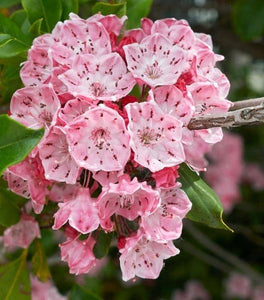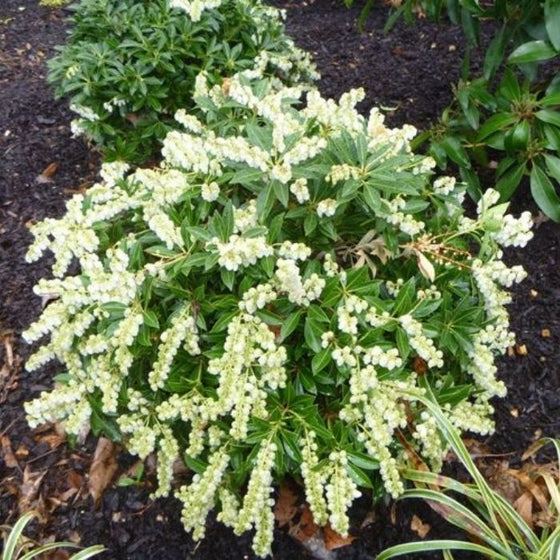


Images Depict Mature Plants
Cavatine Pieris
Pieris japonica 'Cavatine'
Cavatine Pieris is the evergreen you buy when you want a landscape that looks finished in every season—compact, glossy green structure all year, then a curtain of white bell flowers when the garden is still waking up. It’s tailor-made for foundation beds and shade borders where space is tight and performance matters, and it pairs beautifully with other acid-lovers for a layered, high-end look with low maintenance.

15% OFF SITEWIDE, USE CODE 'FALLPLANT15'
📦 Free shipping on orders over $99.
Delay shipping by leaving us a message at Checkout.
Share:


Buy Cavatine Pieris for Compact Evergreen Structure and Months of White Bells
Buy Cavatine Pieris for Compact Evergreen Color and Early Spring Flowers
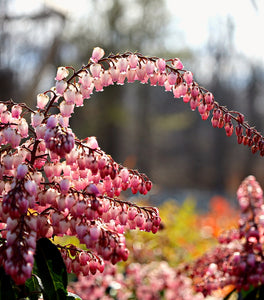
Cavatine Pieris (Pieris japonica ‘Cavatine’) is a dwarf, broadleaf evergreen that brings “instant finish” to foundation beds and shade borders—then steals the show when chains of white, urn-shaped flowers appear from late winter into spring. It’s the kind of shrub people buy online when they want dependable evergreen structure and a true early-season bloom moment, without committing to a large, sprawling pieris.
This cultivar is prized for its neat, refined appearance, with lustrous green foliage that holds year-round.
A Dwarf Evergreen Shrub That Stays Neat in Foundation Beds and Borders
Cavatine is compact and slow-growing, often listed around 2–3 feet tall and 2–3 feet wide (some references note about 2 ft tall and 3 ft wide), forming a dense, rounded mound that fits beautifully under windows and along paths. That dwarf footprint makes it a strong “design tool” shrub—easy to repeat in multiples, easy to tuck into tight beds, and easy to keep looking intentional without constant pruning.
Because it grows steadily rather than fast, it’s ideal for homeowners who want a long-term landscape plant that won’t outgrow the space. It also looks excellent planted in small groups where the flowers read as a single, bright mass in early spring.
Easy Care in Shade—Just Give It Acidic, Well-Drained Soil and Consistent Moisture
For best performance, plant Cavatine in partial sun to shade with moist, well-drained, acidic soil—the same conditions that keep azaleas and rhododendrons happy. Afternoon shade is a major advantage in warmer areas, and good drainage protects the roots from the fastest way to lose an evergreen shrub: soggy soil.
If leaves turn yellow, soil pH is often the first thing to check; Pieris can struggle in alkaline conditions. Build the planting area with organic matter, keep mulch on the root zone (not piled on stems), and maintain consistent moisture while the plant establishes.
Perfect for Shade Foundations, Front Borders, and Small-Space Evergreen Structure
Cavatine Pieris is suited for foundation plantings, front-of-border shrub layers, woodland edges, and shade gardens, wherever the evergreen texture matters year-round. Use it as a compact anchor under taller shrubs, or plant a short row to create a polished evergreen line that blooms early—especially effective near entry walks where you’ll see those bell flowers up close.
It also performs well in containers for several years when drainage is excellent, and watering stays consistent, giving patios and porches an evergreen structure with a genuine seasonal bloom payoff.
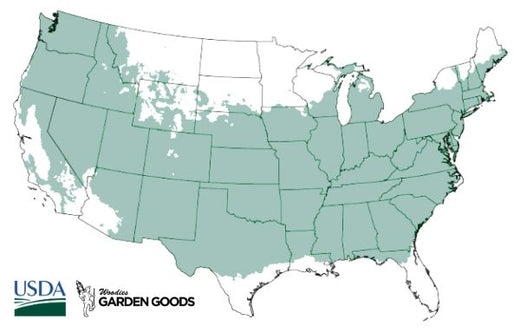
| Hardiness Zone: | 5-8 |
|---|---|
| Mature Height: | 2 to 3 feet |
| Mature Width: | 2 to 3 feet |
| Sunlight: | Partial sun to shade |
| Bloom Time / Color: | Late winter–spring; white, bell-shaped flowers |
| Soil Condition: | Rich, acidic, well-drained |
| Water Requirements: | Even moisture; “moist, not soggy” |
| Wildlife Value: | Early-season pollinator interest (bees/pollinators) |
| Resistance: | Deer Resistant |
| Landscape Uses: | Foundation beds, shade borders, woodland gardens, containers |
How to Care for Cavatine Pieris
Be sure to read our planting and care instructions for a happy and Healthy Pieris Cavatine for many years.
-v1768917918522.png?92x91)
How should I plant Pieris ‘Cavatine’?
Plant in partial sun to shade where soil drains well and stays slightly acidic. Dig a hole 2–3× wider than the root ball and set the shrub so the top of the root ball sits level with—or slightly above—the surrounding grade to prevent water from pooling at the crown. Backfill gently, water deeply, and avoid compacting soil into a hard “bowl” around the roots. Spacing and soil preparation make the difference between “survives” and “thrives.” Improve the entire planting area with organic matter, then finish with 2–3 inches of mulch across the root zone (kept off the stems). Plant in spring or early fall when temperatures are mild, and choose a sheltered spot if winter wind is a concern.
-v1768917954152.png?89x84)
How often should I water Pieris ‘Cavatine’ after planting?
Water thoroughly at planting, then keep the root zone evenly moist during the first growing season. A deep soak 1–2 times per week is a common rhythm, adjusted for heat, wind, and soil type—more frequent in sandy soils, less frequent in heavier soils that hold moisture. After establishment, water during extended dry periods—especially in summer heat or if the plant receives more sun than ideal. Consistent moisture supports better flowering and reduces stress symptoms, while chronically wet soil does the opposite—good drainage remains essential long-term.
-v1768917977070.png?90x89)
When should I fertilize Pieris ‘Cavatine’?
Feed in early spring as growth begins, focusing on soil health and acidity rather than heavy nitrogen. Pieris prefers acidic conditions; if soil trends alkaline, leaves can yellow and growth may stall, so correcting pH and building organic matter often delivers a bigger payoff than “more fertilizer.” A practical, gentle routine: top-dress with compost and refresh mulch annually. If additional feeding is needed, use a fertilizer formulated for acid-loving plants and follow label rates—steady, moderate nutrition supports dense evergreen foliage and reliable spring bloom.

When and how should I prune Pieris ‘Cavatine’?
Pruning is usually minimal—this cultivar naturally stays compact. Remove dead or damaged twigs anytime, then do shaping immediately after flowering (or lightly in early spring) to avoid cutting off next season’s flower buds. For a cleaner look, pinch or snip off spent flower clusters after bloom. Keep cuts light and selective; heavy pruning can reduce flowering. The goal is simple: maintain the tidy mound, improve airflow, and keep the shrub looking crisp year-round.