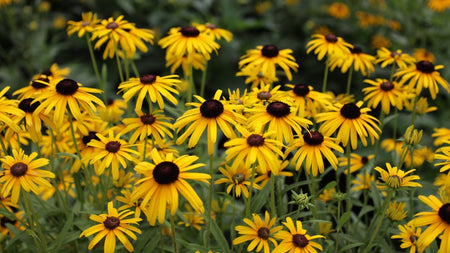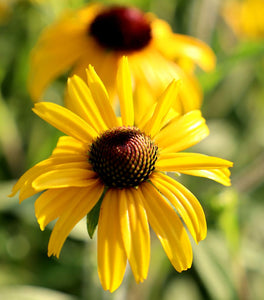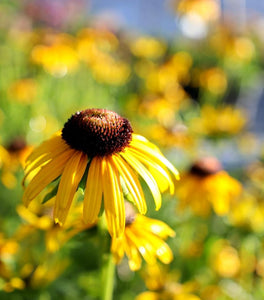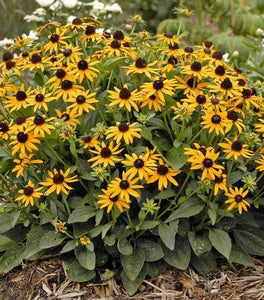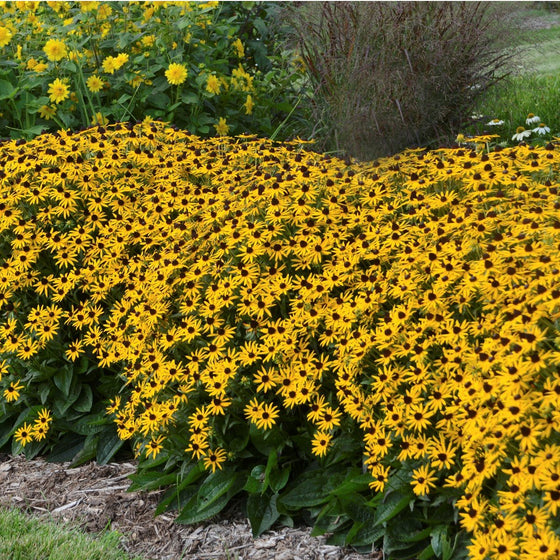


Images Depict Mature Plants
Little Goldstar Black-Eyed Susan
Rudbeckia fulgida 'Little Goldstar'
Little Goldstar is the Rudbeckia I’d reach for when the customer wants Black-Eyed Susan color but does not have room for a taller, looser plant. It stays compact, flowers heavily, and performs just as well in a sunny container as along the front of a border. Give it full sun, do not overwater it once established, and deadhead it when you want a cleaner look. It is a simple plant, but it does a lot of work in the summer garden.

15% OFF SITEWIDE SALE
Use Code 'PRIMETIME15' At Checkout
📦 Free shipping on orders over $99.
Delay shipping by leaving us a message at Checkout.
Share:



Little Goldstar Black-Eyed Susan Packs Big Color Into a Compact Rudbeckia
Classic Golden Black-Eyed Susan Blooms on a Smaller Plant
Little Goldstar Black-Eyed Susan gives homeowners the cheerful golden-yellow flowers they expect from Rudbeckia, but in a shorter, more compact form that fits easily into home landscapes. Its daisy-like blooms feature rich yellow petals surrounding dark brown center cones, creating that familiar summer-to-fall look that brightens sunny gardens, borders, walkways, and patio containers.
Unlike taller Black-Eyed Susan varieties that can feel too large for small spaces, Little Goldstar stays tidy and proportional. The flowers rise just above deep green foliage on sturdy stems, creating a full, blooming mound rather than a tall, open clump. It is a strong choice when you want reliable color near the front of a border, in a container, or repeated in groups for a clean, high-impact planting.
Long Blooming Color From Midsummer Into Fall
Little Goldstar Rudbeckia is valued for its long bloom season. In sunny gardens, it produces golden flowers from midsummer into early fall, helping bridge the gap between peak summer color and the beginning of fall perennials. This makes it especially useful with coneflowers, ornamental grasses, sedum, asters, salvia, catmint, and other late-season garden performers.
The flowers are more than just attractive in the landscape. They are also useful for fresh-cut arrangements, and the seed cones can provide seasonal interest if left standing after bloom. For the cleanest rebloom and tidiest display, remove spent flowers during the growing season, then leave some final seed heads for birds if you enjoy a more natural garden look.
A Compact Rudbeckia for Borders, Containers, and Mass Plantings
At maturity, Little Goldstar Black-Eyed Susan typically reaches 14 to 16 inches tall and wide, and some mature clumps spread wider over time. Its compact size makes it easier to use than larger Rudbeckia varieties in smaller foundation beds, narrow borders, sunny path edges, and mixed containers. It also works beautifully when planted in groups, where the consistent size creates a bright drift of yellow flowers.
Use Little Goldstar as a front-to-middle border perennial, a container thriller, a low edging plant, or a sunny color block in pollinator gardens. Its rounded habit looks especially good in repeated plantings, and its golden color pairs well with purple salvia, blue catmint, orange butterfly weed, burgundy foliage, and fine-textured ornamental grasses.
Tough, Easy Care for Sunny Home Landscapes
Little Goldstar Black-Eyed Susan grows best in full sun, where it produces the strongest flower show and most compact habit. It tolerates some light shade, but full sun produces the best blooms. Plant it in average, well-drained soil and avoid overly rich, soggy planting sites that can encourage soft growth or disease issues.
Once established, Little Goldstar is drought-tolerant and handles heat, humidity, clay soil, dry soil, and urban garden conditions better than many flowering perennials. Water regularly during the first growing season while roots develop, then shift to deeper, less frequent watering. Good air circulation and watering at the base of the plant help keep foliage cleaner through summer.
Pollinator-Friendly Blooms With Deer-Resistant Garden Value
Little Goldstar Rudbeckia is a pollinator-friendly perennial that attracts bees, butterflies, and other beneficial insects while in bloom. Later in the season, birds may feed on the seed cones if the final flowers are left standing. This makes it a practical choice for homeowners who want a garden that is both colorful and more wildlife-friendly.
It is also generally considered deer-resistant, which adds value in sunny landscapes where browsing pressure is a concern. No plant is completely deer-proof, but Black-Eyed Susans are often a dependable choice for gardens that need durable summer color. Plant Little Goldstar with other sun-loving, deer-resistant perennials for a bright, low-maintenance display that works from summer into fall.
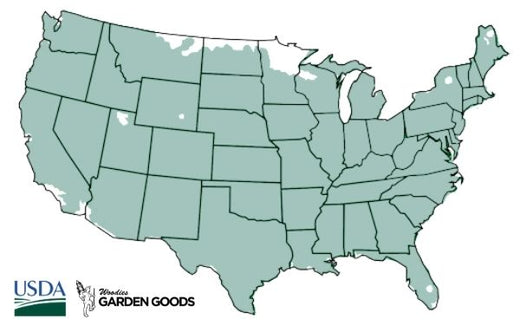
| Hardiness Zone: | 4-10 |
|---|---|
| Mature Height: | 14 to 16 Inches |
| Mature Width: | 14 to 16 Inches |
| Sunlight: | Full sun is best; tolerates light part sun |
| Water Requirements: | Water regularly after planting; dry to medium moisture once established |
| Soil Condition: | Average, well-drained soil; tolerates clay, dry soil, and urban conditions once established |
| Bloom Time / Color | Midsummer into early fall; golden-yellow petals with dark brown center cones |
| Ornamental Features | Compact size, golden daisy-like flowers, dark cones, long bloom season, sturdy stems |
| Wildlife Value | Attracts bees, butterflies, and other pollinators; seed heads may attract birds |
| Resistance | Generally considered deer resistant; drought tolerant once established; tolerates clay and dry soil |
| Landscape Uses | Sunny borders, containers, mass plantings, pollinator gardens, cottage gardens, cut flower gardens, path edging, small-space landscapes |
How to Care for Little Goldstar Black-Eyed Susan
Before you buy a Little Goldstar Black-Eyed Susan, read our care instructions to keep this plant healthy and thriving.

How should I plant Little Goldstar Black-Eyed Susan?
Plant Little Goldstar Black-Eyed Susan in full sun with average, well-drained soil. Choose a location that receives at least 6 hours of direct sun per day for the strongest flowering and most compact habit. It can tolerate clay and average garden soil, but it should not be planted in a soggy location. Dig a hole slightly wider than the root ball and no deeper than the container. Set the crown level with the surrounding soil, backfill gently, and water deeply. Space plants about 14 to 18 inches apart when planting in groups, borders, or mass plantings.

How often should I water Little Goldstar Black-Eyed Susan after planting?
Water Little Goldstar deeply after planting and keep the soil evenly moist during the first growing season while roots establish. In the first few weeks, check the soil often and water when the top few inches begin to dry. Water at the base of the plant rather than over the foliage whenever possible. Once established, Little Goldstar Black-Eyed Susan is drought-tolerant and usually performs well with dry to medium moisture. During extended heat or drought, provide occasional deep watering to support flowering and reduce stress, especially in containers or sandy soil.
-v1783432550198.png?90x89)
When should I fertilize Little Goldstar Black-Eyed Susan?
Fertilize Little Goldstar Black-Eyed Susan lightly in spring as new growth begins. A thin layer of compost or a modest application of balanced slow-release fertilizer is usually enough in average garden soil. This plant does not need heavy feeding to bloom well. Avoid high-nitrogen fertilizer or overly rich soil, which can encourage softer growth and reduce the tidy, compact habit. If your plants are flowering well and the foliage looks healthy, focus on sun, spacing, and consistent establishment watering rather than extra fertilizer.

When and how should I prune / cut back Little Goldstar Black-Eyed Susan?
Deadhead spent flowers during summer to keep Little Goldstar looking tidy and encourage continued bloom. Use clean pruners to remove faded blooms back to a healthy leaf or branching point. For a more natural planting, leave some late-season seed heads for birds. Cut the plant back in late winter or early spring before new growth begins. You can also leave stems standing through winter for seed and texture, then clean them up in spring. If a clump becomes crowded over time, divide it in spring or early fall to refresh growth.