

Images Depict Mature Plants
Sweetbay Magnolia
Magnolia virginiana
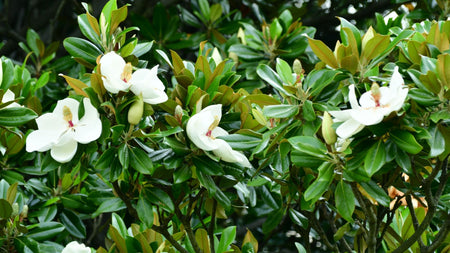
Sweetbay Magnolia is one of my favorite “right tree, right place” choices because it does what so many magnolias won’t: it blooms beautifully and actually tolerates those moist, tricky parts of the yard. The fragrance is real, the silvery-backed leaves shimmer in the breeze, and the whole tree feels like an upgrade without being high-maintenance.

15% OFF SITEWIDE SALE
Use Code 'PRIMETIME15' At Checkout
📦 Free shipping on orders over $99.
Delay shipping by leaving us a message at Checkout.
Share:


Sweetbay Magnolia Tree With Fragrant White Blooms And Wet-Soil Tolerance
Fragrant White Blooms That Make Summer Feel Like A Garden Event
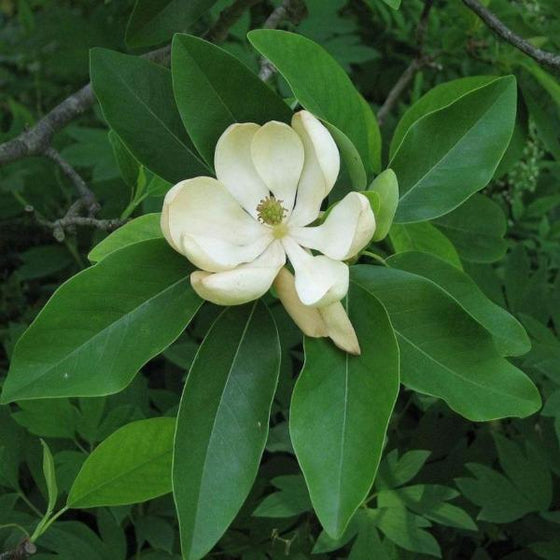
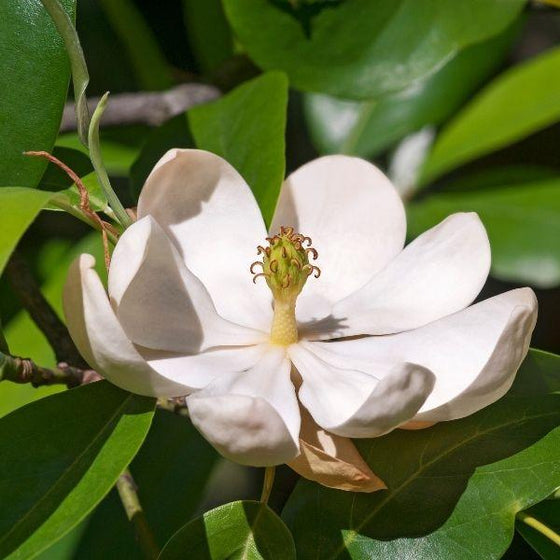
Sweetbay Magnolia is the kind of tree you plant for one reason, then realize it gives you five. In late spring into early summer, it opens creamy-white, cup-shaped flowers with a fresh, lemony fragrance that carries on warm air. The blooms feel elegant but not fussy, and they show up right when the landscape is shifting from spring to summer, giving your yard a signature moment that’s easy to notice and easy to love.
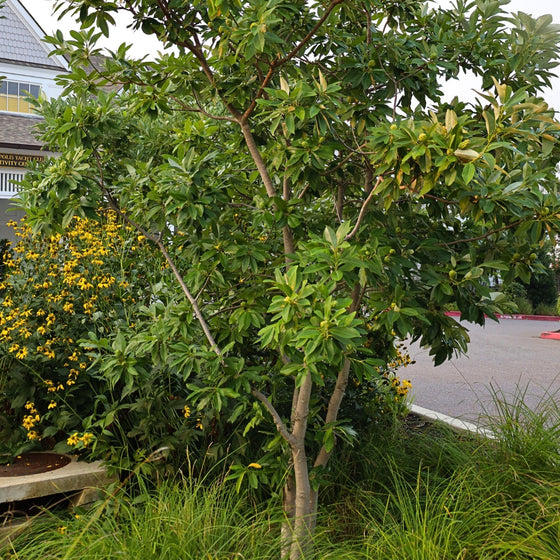
This is a perfect “near-the-house” flowering tree because the scent is best enjoyed up close. Plant it where you’ll walk past it, near a patio, along a driveway curve, or within view of an open window. It reads beautifully as a small specimen tree, but it also fits into native and woodland-edge plantings where you want fragrance and bloom without a formal look.
Silvery-Backed Leaves And A Natural Form That Looks Intentional
Even when it’s not blooming, Sweetbay Magnolia looks special. The leaves are glossy green on top with a striking silvery underside that flashes in the breeze, giving the canopy a soft, shimmering effect. That leaf detail adds movement and texture, two things that make a landscape feel designed even when the plant palette is simple.
Sweetbay can be grown as a small tree or a multi-stem large shrub, depending on how you train it. Either way, it creates a refined, natural silhouette that layers beautifully with evergreens, hydrangeas, and shade perennials. In warmer climates, it can be semi-evergreen to evergreen, while in colder zones, it’s typically deciduous—so you get either year-round foliage or a lighter winter outline that still feels graceful.
A Magnolia That Actually Likes Moist Soil And Rain-Garden Edges
If you’ve got a spot that stays damp, Sweetbay Magnolia is one of the best-looking answers. Unlike many magnolias, it tolerates consistently moist soils and can handle the conditions near ponds, low areas, and rain-garden edges, places where other flowering trees struggle. That makes it an unusually practical magnolia: you’re not forcing it into a site it hates; you’re matching it to the site it naturally thrives in.
The goal is “moist, not stagnant.” Sweetbay appreciates consistent moisture, especially during establishment, but it still performs best where water can drain, and oxygen can reach the roots. Give it sun to part shade, a mulch ring to stabilize moisture, and a spot with airflow, and you’ll have a magnolia that looks lush, flowers well, and behaves like a true long-term landscape tree.
Easy Care With Smart Spacing And Gentle Pruning
Sweetbay Magnolia rewards good planning. Spacing it correctly gives you better airflow, stronger branching, and a canopy that stays full without constant intervention. Plant it as a specimen with room to spread, or use it to anchor the back of a native bed where it can grow naturally while providing dappled shade for understory plants.
Pruning is typically minimal; this is not a tree that needs heavy shaping. The best approach is simple: remove dead, damaged, or crossing branches, and keep the structure open and balanced. With consistent watering in year one and a little patience, Sweetbay Magnolia settles in, grows steadily, and becomes one of those “why didn’t I plant this sooner?” trees.

| Hardiness Zone: | 5-10 |
|---|---|
| Mature Height: | 10 to 20 Feet |
| Mature Width: | 10 to 20 Feet |
| Sunlight: | Full sun to part shade |
| Bloom Time / Color | Late spring to early summer; creamy-white, fragrant flowers |
| Soil Condition: | Moist, acidic to neutral, organically rich; tolerates wetter soils with drainage |
| Water Requirements: | Moderate; prefers consistent moisture, especially while establishing |
| Wildlife Value | Supports pollinators; seed pods/cover can support birds |
| Resistance (deer/disease/drought/etc.) | Low disease pressure; drought tolerance improves once established; deer browsing varies |
| Landscape Uses | Specimen tree, rain-garden edges, near ponds, native/woodland borders, small-yard flowering tree |
How to Care for Sweetbay Magnolia
Before you buy a Sweetbay Magnolia Tree, make sure to read about the recommended care instructions to keep this plant healthy and thriving.

How should I plant Sweetbay Magnolia?
Plant Sweetbay Magnolia in full sun to part shade in a site with consistent moisture and room for mature spread. Dig a hole 2–3 times wider than the root ball, set the tree so the top of the root ball sits level with (or slightly above) the surrounding soil, then backfill and water deeply to settle roots. Add a 2–3-inch mulch ring around the root zone, keeping the mulch a few inches away from the trunk. Choose placement with the future in mind: give it breathing room from foundations, fences, and overhead lines. Sweetbay Magnolia is a great choice for damp areas and rain-garden edges, but avoid spots where water stands for long periods; “moist and draining” is the sweet spot for strong roots and better flowering.

How often should I water Sweetbay Magnolia after planting?
Water deeply right after planting, then keep the root zone evenly moist for the first growing season. A deep soak 1–2 times per week is a solid baseline during dry weather, adjusting for heat, wind, and sandy soils that dry faster. Water at the base so moisture goes to the roots without constantly wetting the foliage. Once established, Sweetbay Magnolia is more resilient, but it still performs best with supplemental watering during prolonged drought—especially in summer when it’s growing and setting next season’s strength. Deep, occasional watering encourages deeper roots and helps the tree hold healthier foliage and stronger blooms.

When should I fertilize Sweetbay Magnolia?
Fertilize in early spring as new growth begins using a balanced slow-release tree/shrub fertilizer, or top-dress with compost to build soil richness. Sweetbay Magnolia responds well to organic matter, which supports steady growth and helps the soil hold moisture more evenly. Avoid heavy late-season fertilizing, which can push tender growth at the wrong time. If the tree is growing steadily and leaf color looks healthy, a light spring feed plus mulch and good watering habits is usually all it needs.

When and how should I prune Sweetbay Magnolia?
Prune Sweetbay Magnolia lightly, focusing on structure rather than shaping. The best time is late winter while the tree is dormant, or right after flowering if you need to remove a problem branch. Remove dead, damaged, or crossing branches, and keep cuts clean and minimal so the tree maintains its naturally graceful form. Avoid hard pruning whenever possible—magnolias look best when their architecture is allowed to develop naturally. If you’re training it into a single-trunk tree, remove competing leaders early and gradually, and let the canopy fill in over time for the most balanced, mature look.