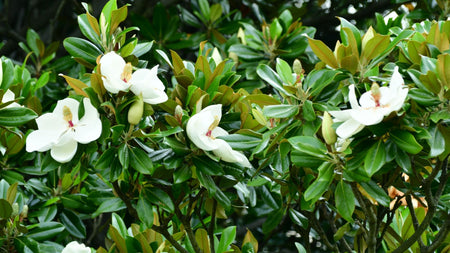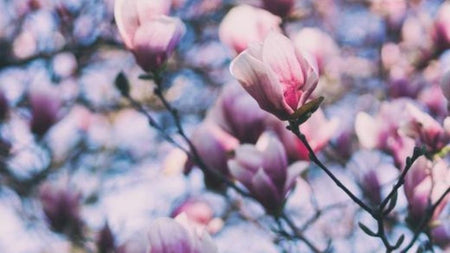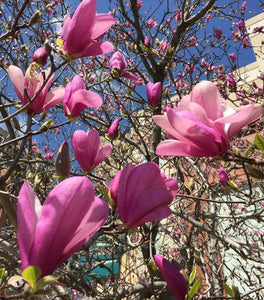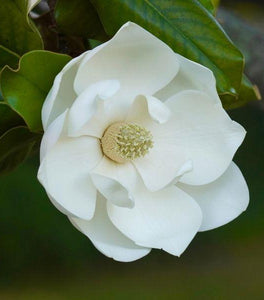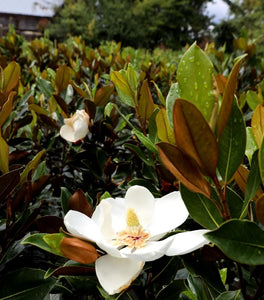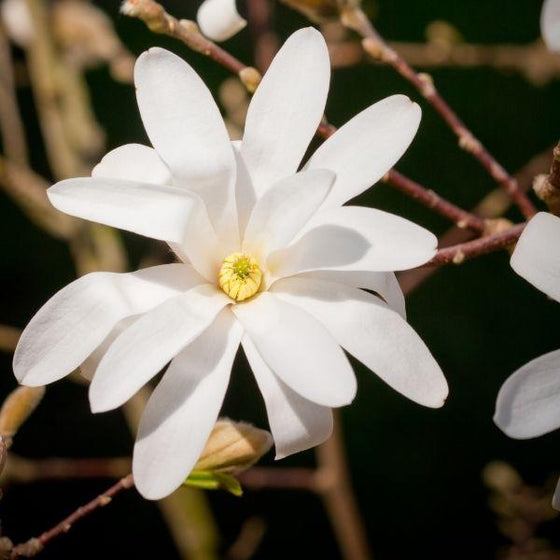
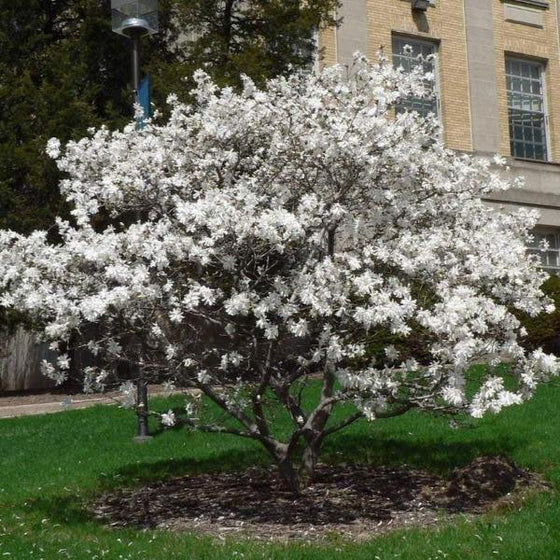
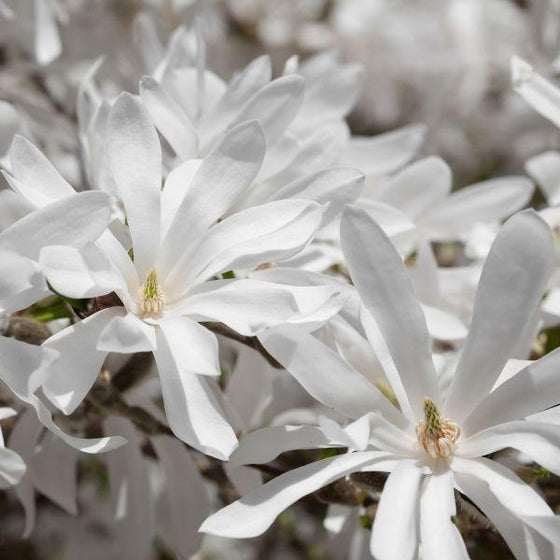


Images Depict Mature Plants
Royal Star Magnolia
Magnolia stellata 'Royal Star'
Royal Star Magnolia is one of those flowering trees that makes a landscape feel instantly more refined. I’m especially drawn to the star-shaped white blooms, the light fragrance, and the way it gives homeowners a true magnolia moment without demanding much space. For smaller front yards, entry gardens, and foundation beds where a spring focal point really matters, this is a beautiful choice that brings elegance, softness, and a whole lot of seasonal payoff.

20% Off Sitewide Sale!
Use Code 'ENDOFSEASON20' At Checkout
📦 Free shipping on orders over $99.
Delay shipping by leaving us a message at Checkout.
Share:


Fragrant White Spring Blooms on a Compact Magnolia for Smaller Landscapes
A Compact Magnolia That Delivers a Spectacular Spring Show
Royal Star Magnolia is the kind of flowering tree that makes spring feel special the moment it blooms. Its branches become covered in large, star-shaped white flowers that open before the foliage emerges, creating a clean, luminous display that stands out beautifully against the late-winter and early-spring landscape. For homeowners who want the romance of a magnolia without the size of a much larger tree, this cultivar offers an especially elegant solution.
Its compact habit is one of its biggest advantages. Royal Star Magnolia typically matures as a large, rounded shrub or a small tree, which makes it a strong fit for front yards, foundation beds, courtyard gardens, and smaller ornamental landscapes. It brings the dramatic flower display people want from a magnolia while staying much more manageable than many older or larger-growing types.
The flower form is another major reason gardeners are drawn to it. Each bloom opens with multiple narrow petals that create a soft, starry effect rather than the heavier cup shape seen on some other magnolias. That gives the tree a lighter, more refined look that feels especially graceful in close-up viewing areas near patios, walkways, and entry gardens.
For homeowners looking for a small flowering tree with strong seasonal impact, Royal Star Magnolia is an outstanding choice. It offers the classic magnolia feeling in a size and shape that works beautifully in residential design.
Fragrant White Flowers Bring Beauty and Freshness to Early Spring
One of the most appealing traits of Royal Star Magnolia is the combination of flower form and fragrance. The white blooms are not just showy. They are also lightly fragrant, which adds another layer of value when the tree is planted near a porch, front walk, or sitting area where the flowers can be enjoyed up close. That makes it more than just a visual focal point. It becomes a sensory highlight of the early spring garden.
The timing of bloom is also important. Royal Star Magnolia flowers in very early spring, often just as the garden is beginning to wake up. It tends to bloom a bit later than the straight species in many settings, which can help reduce the risk of flower damage from the very earliest warm spells. For homeowners in regions with unpredictable spring weather, that slightly later bloom habit can be a real advantage.
Because the flowers appear before the leaves, the display feels especially crisp and dramatic. The bare branches disappear behind white blooms, and the whole tree reads as a soft cloud of spring color. That effect makes Royal Star Magnolia especially useful as a specimen plant where the branching structure and flower show can be appreciated from more than one angle.
This is the kind of tree that gives the landscape a true seasonal moment. It announces spring in a way that feels elegant, clean, and memorable, which is why it remains such a favorite in smaller ornamental gardens.
A Strong Fit for Front Yards, Foundation Beds, and Specimen Planting
Royal Star Magnolia fits beautifully into home landscapes where scale matters. In a small front yard, it can serve as a signature flowering tree without overpowering the lot. Near a foundation, it softens the house's structure and provides a dramatic seasonal focal point while remaining manageable over time. It also works well in mixed beds where evergreen shrubs and perennials can support its spring display and carry the planting through the rest of the season.
Its mature size makes it especially versatile. Homeowners can use it as a single specimen in the lawn, as an anchor in an island bed, or as a flowering accent within a layered border. Because it can be grown as either a multi-stem large shrub or a small tree, it also offers flexibility in how it is shaped and styled in the landscape. That adaptability helps it fit traditional, cottage-inspired, and more refined formal gardens.
The green foliage that follows bloom gives the plant continued value through the growing season. While the spring flowers are the headline moment, the tree still contributes structure and leafy presence through summer and into fall. That helps it feel like a true landscape investment rather than a one-week wonder.
For homeowners trying to create a polished landscape with a smaller flowering tree, Royal Star Magnolia offers a rare combination of fragrance, flower power, and manageable size. It gives the planting grace and a clear sense of seasonal identity.
Easy-Care Growth with Better Performance in the Right Site
Royal Star Magnolia performs best in full sun to part shade and in moist, organically rich, well-drained soil. The strongest flowering usually comes with more sun, while some light afternoon protection can be helpful in warmer sites. Like many magnolias, it appreciates even moisture and does not respond well to extremes of prolonged drought or poorly drained soil.
Good siting makes a big difference in long-term success. A location protected from harsh wind helps preserve flower quality, and avoiding overly warm southern exposures in colder regions can sometimes help prevent buds from opening too early. Mulch helps moderate soil temperature and retain moisture in the root zone, especially during establishment.
Pruning needs are generally light. Most of the time, Royal Star Magnolia only needs minor shaping, removal of damaged branches, or occasional structural guidance after bloom. Because the natural form is already attractive, it does not need heavy pruning to remain useful in the landscape. In fact, a gentle approach usually gives the best long-term result.
For homeowners seeking a refined flowering tree that requires minimal maintenance, Royal Star Magnolia is a rewarding choice. Give it the right site, consistent moisture, and a little seasonal care, and it will return the favor with one of the prettiest spring bloom displays available for smaller gardens.
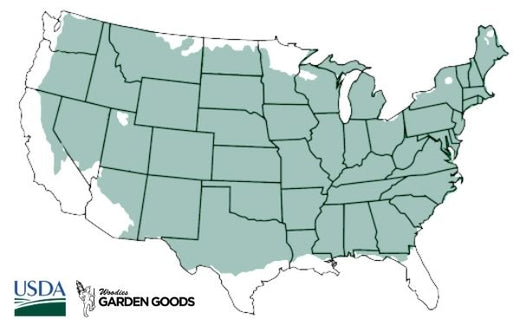
| Hardiness Zone: | 4-8 |
|---|---|
| Mature Height: | 10 to 15 Feet |
| Mature Width: | 10 to 12 Feet |
| Sunlight: | Full sun to part shade |
| Bloom Time / Color | Early spring; fragrant white star-shaped flowers |
| Soil Condition: | Moist, organically rich, well-drained soil |
| Water Requirements: | Medium; regular water during establishment and during prolonged dry periods |
| Wildlife Value | Seasonal habitat value and early pollinator support |
| Resistance (deer/disease/drought/etc.) | Low-maintenance once established; best with even moisture and protection from harsh site extremes |
| Landscape Uses | Specimen tree, foundation planting, entry garden, mixed border, courtyard garden, small-yard focal point |
How to Care for Royal Star Magnolia
After purchasing your Royal Star Magnolia, be sure to read our recommended care instructions to ensure this perennial is happy and healthy for years to come.
-v1773937454679.png?92x91)
How should I plant Royal Star Magnolia?
Plant Royal Star Magnolia in full sun to part shade in moist, well-drained soil rich in organic matter. Dig a hole about twice as wide as the root ball and no deeper than the root ball itself, then set the tree so the top of the root flare sits level with or slightly above the surrounding soil. Backfill with native soil, water deeply, and apply mulch around the base to help conserve moisture and regulate soil temperature. Choose a location with enough room for the mature canopy and with some protection from harsh wind so the spring flowers can look their best.
-v1773937477934.png?89x84)
How often should I water Royal Star Magnolia after planting?
Water Royal Star Magnolia deeply right after planting, then keep the soil evenly moist during the first growing season. The tree performs best when it does not dry out for long stretches while the roots are becoming established. Once established, continue watering during hot weather or extended dry periods, especially in summer. This magnolia prefers steady moisture rather than repeated swings between very dry and very wet soil, so even watering helps support better foliage, stronger roots, and more reliable bloom performance.
-v1773937501641.png?90x89)
When should I fertilize Royal Star Magnolia?
Fertilize Royal Star Magnolia in early spring before new growth begins if the soil is lean or growth has been weak. A balanced slow-release fertilizer or a light topdressing of compost is usually enough to support healthy growth and flowering. Avoid overfertilizing, especially with high-nitrogen products, because too much feeding can encourage leafy growth at the expense of flower performance. In good soil, moderate feeding and mulch are often all that is needed to keep the plant thriving.

When and how should I prune Royal Star Magnolia?
Prune Royal Star Magnolia only as needed and do so immediately after flowering. That timing lets you shape the tree or remove damaged branches without cutting off the buds that will produce next year’s spring display. Keep pruning light and selective, focusing on broken, crossing, or poorly placed branches. The natural habit is already graceful, so the goal is usually refinement rather than major reshaping.