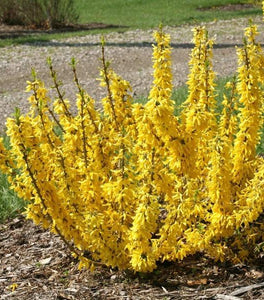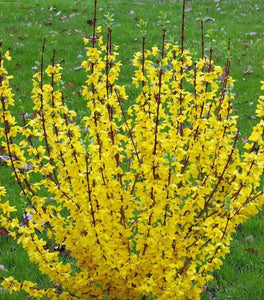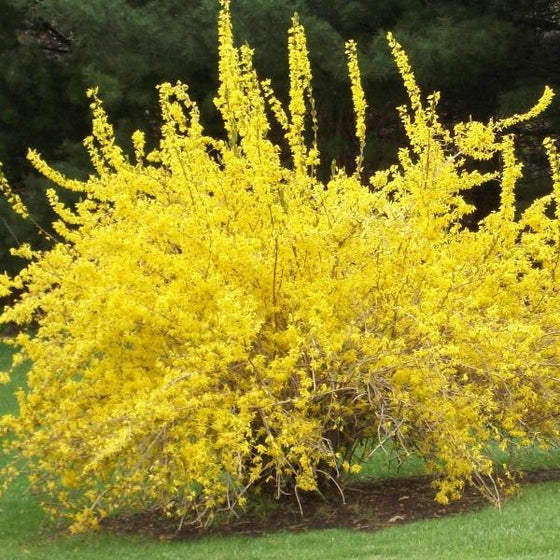
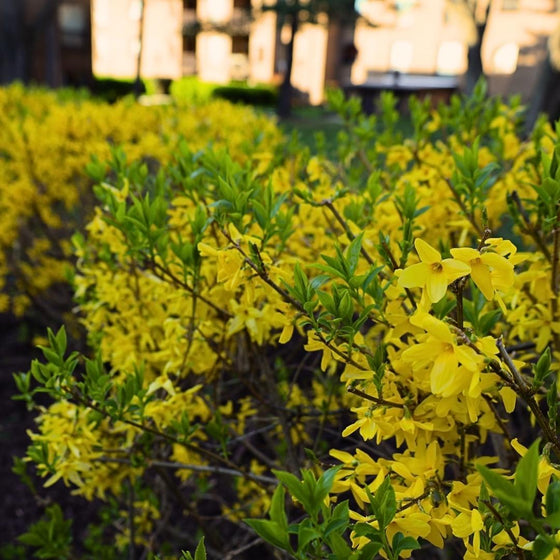
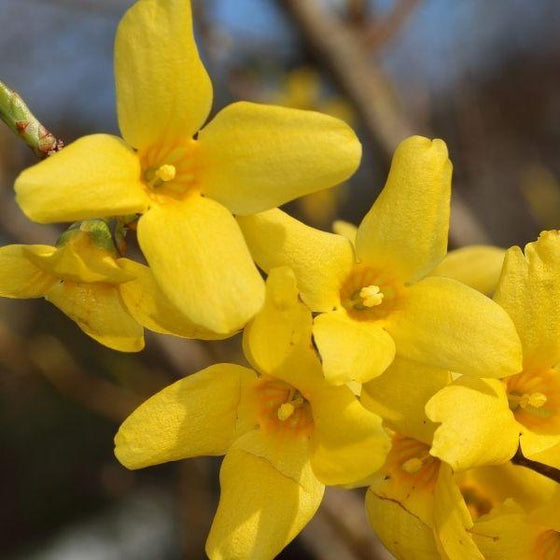
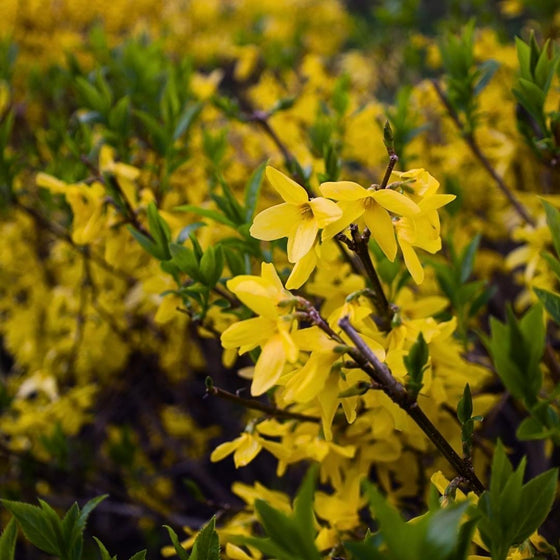


Images Depict Mature Plants
Spring Glory Forsythia
Forsythia x intermedia 'Spring Glory'
Spring Glory is the shrub I reach for when someone wants that unmistakable “spring is here” moment—fast growth, a big, bright yellow bloom show, and a hardy, deer-resistant attitude that holds up in real-life landscapes. Plant it where you’ll see it when winter’s finally loosening its grip, then prune right after bloom and it’ll keep paying you back with that wall-of-sunshine look year after year.

Save Up to 25% On Your Order! Limited Time Only!
Discount Applied Automatically At Checkout
📦 Free shipping on orders over $99.
Delay shipping by leaving us a message at Checkout.
Share:



Spring Glory Forsythia For Fast Hedges And Bright Yellow Early Spring Flowers
Instant Curb Appeal With Brilliant Yellow Spring Blooms
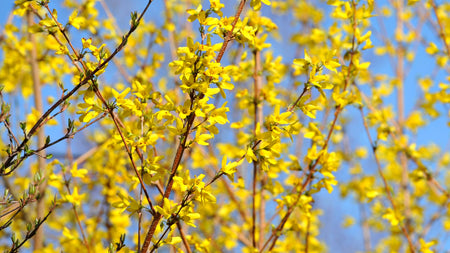
Spring Glory Forsythia is the classic “spring has arrived” shrub—an early-season explosion of bright yellow flowers that lights up the yard before most plants leaf out. When it blooms, the stems are packed with bell-like flowers that read from the street, making it one of the most satisfying shrubs for immediate curb appeal. It’s perfect for gardeners who want a bold seasonal moment that feels cheerful, nostalgic, and unmistakably spring.
That bloom timing is a big deal in real landscapes. Forsythia fills the late-winter-to-early-spring gap when beds can look flat, and it pairs beautifully with bulbs like daffodils and tulips. Plant it where you’ll see it daily—near an entry, along a driveway, or at the edge of a front border—and you’ll get that “first big color” payoff year after year. It’s also a favorite for cutting: bring a few budded stems indoors in late winter and force them in water for a vase of early spring sunshine.
Fast Growth For Flowering Hedges, Screens, And Big Borders
Spring Glory is a vigorous, fast-growing shrub that quickly becomes a substantial presence in the landscape. It typically matures around 6–8 feet tall and about 6 feet wide, with an upright, arching habit that makes it ideal for hedges, screens, and back-of-border structure. If you want a living boundary that greens up quickly and then puts on a major bloom show each spring, this is a dependable choice.
In a row, Spring Glory functions as a flowering privacy hedge in spring and a lush green backdrop for the rest of the season. As a single specimen, it creates a fountain-like silhouette that softens corners and anchors larger beds. Give it room to mature, and you’ll get better airflow, cleaner structure, and less maintenance over time. When you’re designing with shrubs at scale—property lines, big borders, or naturalized edges—Spring Glory delivers both speed and seasonal impact.
Deer-Resistant, Adaptable Performance That’s Easy To Establish
Spring Glory Forsythia is commonly considered deer-resistant, which makes it easier to trust in landscapes where browsing pressure is an issue. It’s also adaptable to a wide range of soils as long as drainage is reasonable, and it performs best in full sun to partial sun. Full sun usually means heavier flowering and stronger growth, but it can still do well with several hours of direct light in brighter part-shade sites.
The key to long-term bloom is keeping the plant healthy through the growing season. Forsythia forms next spring’s flower buds on this year’s growth, so steady moisture during establishment and during prolonged drought pays off twice—better growth now and better flowers next spring. A simple mulch ring helps stabilize soil moisture and temperature, reducing stress and improving overall vigor. Once established, Spring Glory is a tough, reliable shrub that performs well in everyday yard conditions without demanding constant attention.
Pruning That Preserves Flowers And Keeps The Hedge Full
Forsythia blooms on old wood, which means pruning timing is everything. Prune Spring Glory right after it finishes flowering in spring—this protects the buds that will become next year’s flowers. If you prune in late summer, fall, or late winter, you risk removing the very stems that were set to bloom. Keeping this one rule in mind is the difference between a shrub that flowers from the base to the tip and one that blooms only at the top.
For the best structure, do light shaping after bloom and focus on renewal pruning every couple of years: remove a portion of the oldest stems at the base to encourage vigorous new shoots. This keeps the shrub dense, reduces “twiggy” growth, and maintains strong flowering. If you’re maintaining a hedge, keep the base slightly wider than the top so sunlight reaches lower branches and the hedge stays full. With simple, correctly timed pruning, Spring Glory stays handsome, vigorous, and consistently bright in early spring.
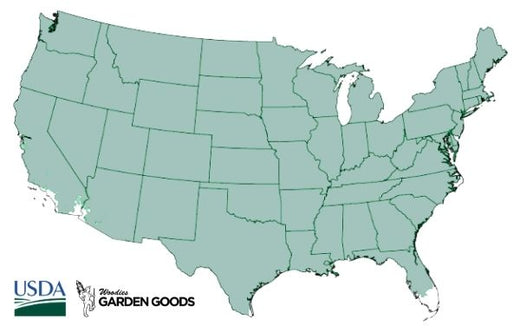
| Hardiness Zone: | 3-9 |
|---|---|
| Mature Height: | 6 to 8 Feet |
| Mature Width: | 5 to 6 Feet |
| Sunlight: | Full sun to part sun |
| Bloom Time / Color: | Early spring; bright yellow flowers |
| Pruning Season: | Prune in late spring after flowering |
| Soil Condition: | Adaptable; best in well-drained soil |
| Water Requirement: | Moderate; water well until established |
| Wildlife Value: | Early-season nectar interest when in bloom |
| Resistance (deer/disease/drought/etc.): | Deer resistant; more drought-tolerant once established |
| Landscape Uses: | Hedges, screens, borders, specimen shrub, slopes/banks, mass plantings, cut stems for forcing |
How to Care for Spring Glory Forsythia
Be sure to read our planting instructions to ensure a healthy and happy Spring Glory Forsythia plant for years to come!
-v1770930344628.png?92x91)
How should I plant Spring Glory Forsythia?
Plant Spring Glory Forsythia in full sun to part sun in well-drained soil. Dig a hole about twice as wide as the root ball and just as deep, set the shrub so the top of the root ball is level with the surrounding soil, then backfill and water deeply to settle roots. If your soil is sandy, mix in compost to help retain moisture; if it’s heavy clay, loosen the surrounding area and add organic matter to improve rooting and drainage. Finish with a 2–3 inch mulch ring to stabilize moisture and temperature, keeping mulch a few inches away from the stems. If you’re planting a hedge, stake out your line first so spacing stays consistent and the row grows in evenly.
-v1770930363401.png?89x84)
How often should I water Spring Glory Forsythia after planting?
For the first 2–3 weeks, water every 2–3 days so the root zone stays evenly moist (not soggy), especially in warm or windy weather. After that, transition to deep watering about once per week, increasing to once or twice weekly during hot, dry spells. A slow soak at the base is better than frequent light watering because it encourages deeper roots and stronger establishment. Once established, Spring Glory is more resilient, but it blooms best when it isn’t stressed the previous summer. During prolonged drought, a deep weekly soak helps support healthy new growth—which is important because this year’s growth is what carries next spring’s flower buds.
-v1770930385770.png?90x89)
When should I fertilize Spring Glory Forsythia?
Fertilize in early spring as new growth begins using a balanced, slow-release fertilizer. This supports healthy branching and leaf growth without pushing overly soft shoots. If your soil is already fertile, an annual top-dressing of compost plus refreshed mulch can be enough to keep the plant thriving. Avoid heavy fertilizing late in summer, which can encourage tender growth at the wrong time. If you’re growing Spring Glory as a hedge, modest spring feeding paired with consistent moisture helps the row fill in evenly and stay dense.

When and how should I prune Spring Glory Forsythia?
Prune Spring Glory Forsythia right after it finishes flowering in spring. Forsythia blooms on old wood, so pruning later can remove next year’s flower buds. Start by removing dead, damaged, or crossing branches, then do light shaping to maintain the size and form you want. Every couple of years, remove some of the oldest stems at the base to renew the shrub and encourage vigorous new shoots. For hedges, keep the base slightly wider than the top so sunlight reaches lower branches and the hedge stays full from bottom to top.