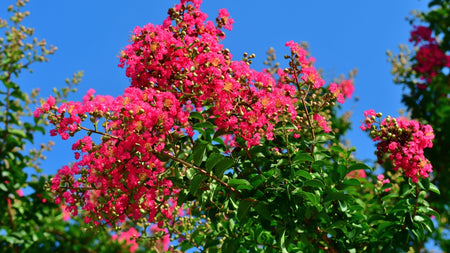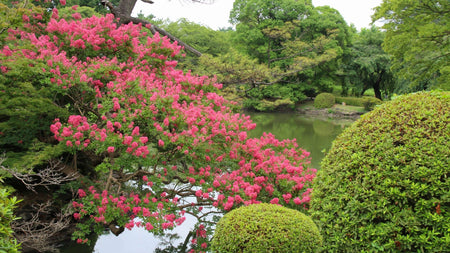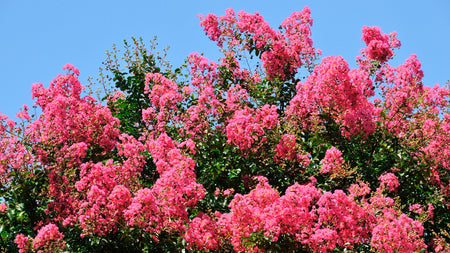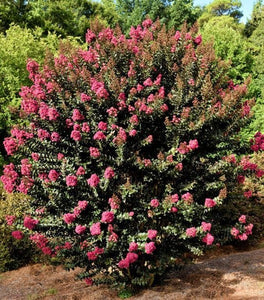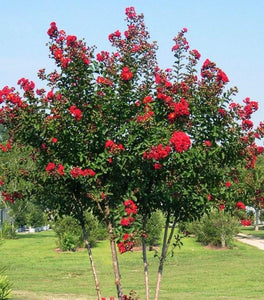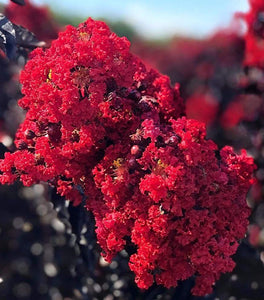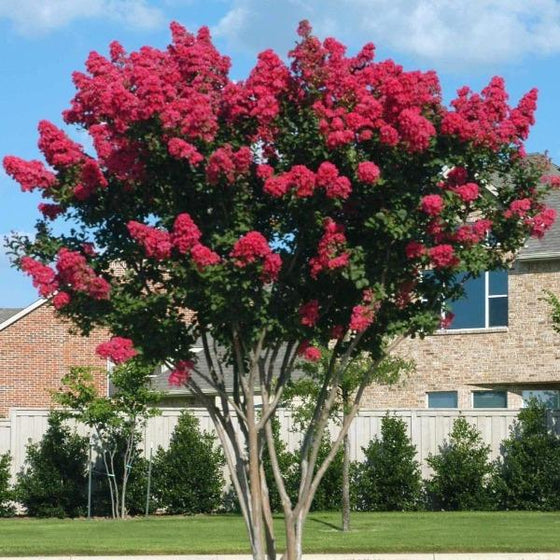
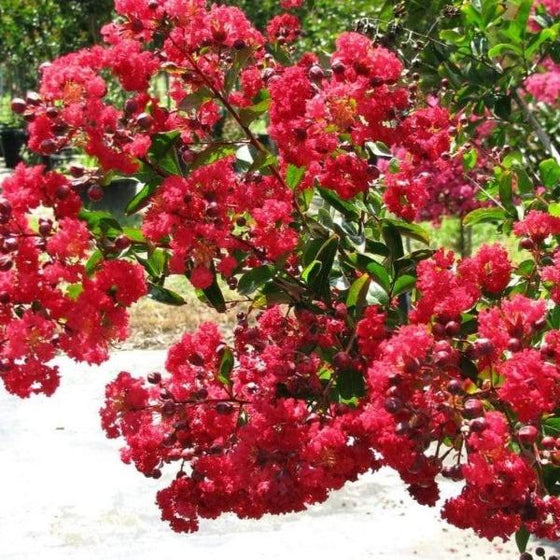
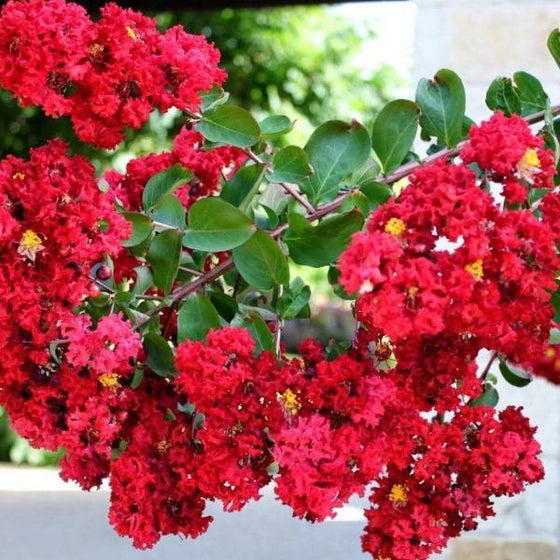
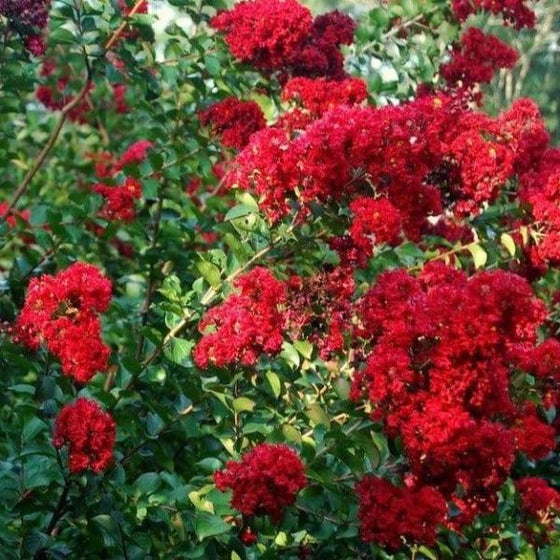


Images Depict Mature Plants
Dynamite Crape Myrtle
Lagerstroemia indica 'Whit II'
Dynamite Crape Myrtle is a great choice when you want summer color that really shows up. I like it because the red flowers are bold, the bloom season is long, and the tree has enough structure and bark interest to stay useful even when it is not flowering. It is a strong fit for homeowners who want a front-yard ornamental with real curb appeal through the hottest part of the year.

15% OFF WITH CODE PLANTING15
Save 15% Off Your Entire Order! Limited time.
📦 Free shipping on orders over $99.
Delay shipping by leaving us a message at Checkout.
Share:


Bold Red Summer Blooms and Long-Lasting Landscape Color
A Crape Myrtle With Truly Bold Red Summer Flowers
Dynamite Crape Myrtle is a standout choice for homeowners who want strong summer color that really shows up in the landscape. Its vivid red flower clusters create a bright, high-impact display that feels energetic and eye-catching, unlike many flowering trees. When the garden needs color during the hottest part of the season, this tree steps in with a bloom show that feels both classic and dramatic.
That rich red flower color is one of the biggest reasons people choose it for front yards, lawn islands, and highly visible focal-point beds. It brings a bold presence to the landscape and works beautifully where homeowners want a flowering tree that can hold its own through summer rather than peaking only in spring.
Long Blooming Color That Carries the Landscape Through Summer
One of the strongest reasons to plant Dynamite Crape Myrtle is its ability to deliver bloom over a long stretch of the warm season. Instead of flowering briefly and fading into the background, it keeps bringing color through summer when many other trees and shrubs are finished. That makes it especially useful for homeowners who want season-long curb appeal and more value from a single planting.
Its strong summer performance also makes it a smart design choice near patios, entry gardens, walkways, and outdoor living areas where the flowers can be enjoyed up close. In a mixed landscape, it helps bridge the gap between spring bloomers and fall color, keeping the garden lively when color is often harder to find.
A Small Ornamental Tree With Big Presence
Dynamite Crape Myrtle is especially practical because it offers a strong ornamental impact without becoming a massive shade tree. It typically grows as a small tree or large shrub, depending on how it is trained and pruned, which makes it a very useful choice for small to medium landscapes. It has enough presence to anchor a bed or lawn island, yet remains manageable for residential settings.
That size and flexibility make it easy to use in front-yard focal points, foundation-adjacent borders, patio plantings, and decorative landscape beds. Homeowners who want a flowering tree that feels substantial without overwhelming the space often find Dynamite a strong fit.
Beautiful Bark and Structure Add Value Beyond Bloom Time
Like many crape myrtles, Dynamite brings more than flowers to the landscape. As the tree matures, it develops attractive exfoliating bark that adds texture and character, especially in winter when the tree’s branch structure is more visible. That gives it added appeal outside the bloom season and helps it function as more than just a summer-flowering tree.
This multi-season character is part of what makes it such a rewarding ornamental. The vivid flowers may be the main attraction, but the bark, structure, and foliage help the tree remain useful and attractive for much longer. For homeowners who want a tree that does more than just bloom once, that added value matters.
Heat-Tolerant Beauty With Easy-Care Appeal
Dynamite Crape Myrtle performs best in full sun and well-drained soil. It is especially valued for strong heat tolerance and dependable flowering in hot summer conditions, which makes it an excellent choice for sunny residential landscapes. When placed in the right location, it is a very manageable ornamental tree that gives a lot of return for relatively simple care.
Once established, it becomes a dependable landscape plant with vivid bloom, attractive bark, and strong curb appeal. For homeowners who want a red-flowering ornamental tree with long summer performance and manageable size, Dynamite Crape Myrtle is one of the best options available.
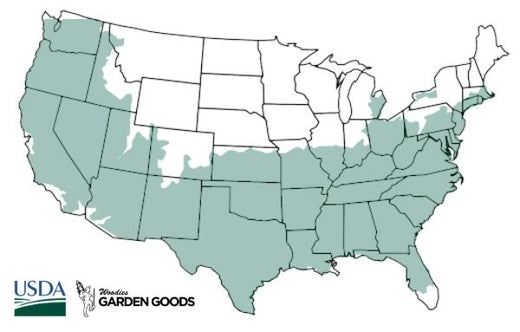
| Hardiness Zone: | 6-9 |
|---|---|
| Mature Height: | 15 to 20 feet |
| Mature Width: | 12 to 15 feet |
| Sunlight: | Full sun |
| Bloom Time / Color | Summer; vivid red flowers |
| Soil Condition: | Any well drained soil |
| Water Requirements: | Regular moisture during establishment; average moisture once established |
| Ornamental Features | Bright red blooms, exfoliating bark, attractive branching, long bloom season |
| Wildlife Value | Primarily ornamental landscape value with some pollinator interest |
| Resistance (deer/disease/drought/etc.) | Heat tolerant, easy care, and strong performer in sunny landscapes |
| Landscape Uses | Specimen tree, front yard focal point, lawn island, patio garden, ornamental border tree |
How to Care for Dynamite Crape Myrtle
Once you buy a Dynamite Crape Myrtle Tree, make sure to read about the care instructions that are recommended to keep this plant healthy and thriving.

How should I plant Dynamite Crape Myrtle?
Plant Dynamite Crape Myrtle in full sun in well-drained soil where it has room to develop its natural canopy. Dig a hole two to three times as wide as the root ball but no deeper than the root ball itself, and set the tree so the root flare sits at or slightly above grade. Choose a site with strong sunlight and good airflow so the plant can bloom heavily and grow with a healthy structure. This tree works especially well in front yards, lawn islands, and focal-point beds where the summer flowers can be appreciated from a distance and up close. It is best used where its form can develop naturally and where it has enough room to act as a true ornamental feature.

How often should I water Dynamite Crape Myrtle after planting?
Water deeply right after planting and keep the soil evenly moist during the establishment period. Deep watering is more helpful than frequent shallow watering because it encourages stronger root development and helps the tree settle in successfully during its first growing season. Once established, Dynamite Crape Myrtle is more tolerant of heat and typical summer dryness, but it still benefits from supplemental water during long dry periods. It performs best when the soil drains well and does not stay soggy.

When should I fertilize Dynamite Crape Myrtle?
Dynamite Crape Myrtle usually does not need heavy feeding. In most landscapes, a light application of balanced slow-release fertilizer in spring is enough if the tree appears to need support. Good soil, sunlight, and proper watering are often more important than frequent fertilization. Too much fertilizer can encourage excessive leafy growth at the expense of flowering. A moderate approach is usually best for a tree grown mainly for bloom, structure, and ornamental value.

When and how should I prune Dynamite Crape Myrtle?
Dynamite Crape Myrtle usually needs only light structural pruning. Remove dead, damaged, or crossing branches and preserve the tree’s natural form rather than cutting it back harshly. If shaping is needed, prune in late winter or very early spring before active growth begins. The goal is to maintain a strong framework and attractive canopy, not to over-prune a tree that already has excellent ornamental form on its own.