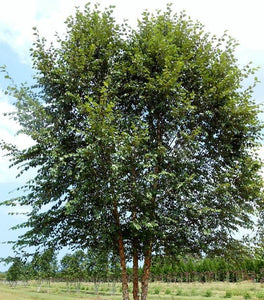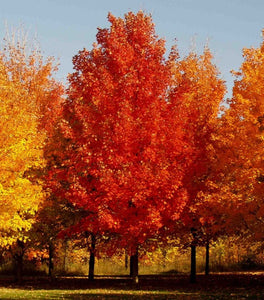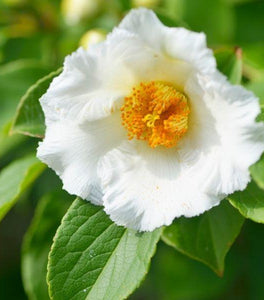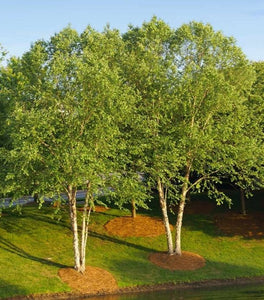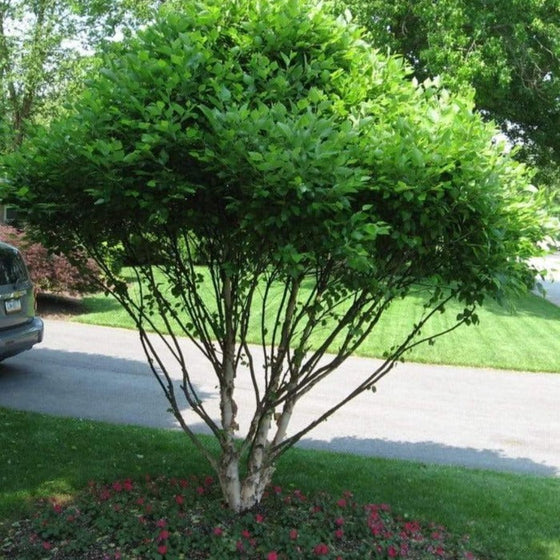

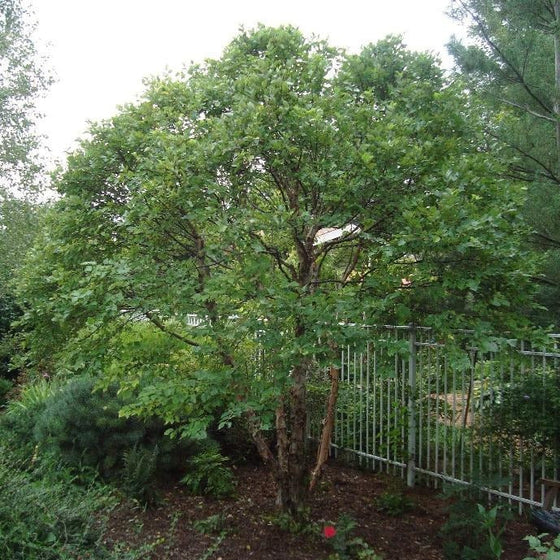
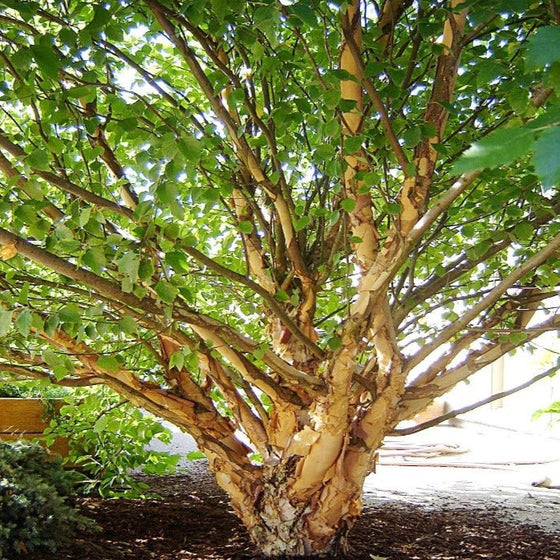


Images Depict Mature Plants
Fox Valley River Birch
Betula nigra 'Little King'
Fox Valley River Birch is one of my favorite small trees for folks who love the bark and texture of river birch but simply do not have room for a big one. You still get that peeling bark, soft natural form, and dependable four-season interest, but in a size that fits beautifully into smaller landscapes, rain gardens, and thoughtfully designed front-yard beds. For a compact deciduous tree with real personality and strong site adaptability, this one is a winner.

20% OFF SITEWIDE SALE
Use Code 'OCTOBER20' At Checkout
📦 Free shipping on orders over $99.
Delay shipping by leaving us a message at Checkout.
Share:

Dwarf River Birch Tree for Small Yards and Four-Season Interest
Peeling Bark Beauty in a Smaller, Easier Scale
Fox Valley River Birch gives you the signature beauty of river birch bark without demanding the space of a full-sized shade tree. Its exfoliating bark peels in soft tan, cinnamon, and creamy tones, creating that classic river birch texture that looks beautiful in every season. The smaller, multi-branched habit makes the bark feel even more noticeable because the structure stays closer to eye level and fits naturally into more intimate garden spaces.
This compact size changes the buying equation for shoppers who love birch but thought they did not have enough room. Fox Valley brings ornamental bark, graceful branching, and seasonal movement to courtyards, small lawns, side yards, and mixed planting beds where a standard river birch would quickly become too large. It delivers the visual character of a beloved native species in a more practical, manageable form for residential landscapes.
A Compact Tree That Adds Big Landscape Personality
Even though Fox Valley River Birch stays smaller than other river birch selections, it still brings plenty of presence to the landscape. Its rounded, multi-stemmed habit creates a natural, layered look that works beautifully in relaxed garden designs, woodland-inspired beds, and foundation islands. The foliage adds soft green texture through the growing season, and the airy branching keeps the tree feeling light and graceful rather than dense or overpowering.
That makes it especially useful in spaces where every plant needs to contribute without crowding the design. This tree can serve as a focal point, a transition plant, or a repeating accent in a more natural planting scheme. Homeowners looking for a small deciduous tree with ornamental bark and year-round interest will appreciate how Fox Valley offers the look of a specimen tree while still fitting comfortably in tighter spaces.
A Smart Choice for Wet Soils and Challenging Sites
Like larger river birch varieties, Fox Valley River Birch is especially valuable in landscapes where the soil stays consistently moist. It handles wet conditions far better than many ornamental trees, making it a strong fit for low spots, rain garden edges, swales, and other moisture-retentive planting areas. That adaptability opens up design opportunities in places where many small trees struggle to establish or perform reliably.
At the same time, this tree is not limited to wet ground alone. Once established, it can adapt to average garden conditions as long as the soil does not stay overly dry for long periods. It also shows strong tolerance for urban conditions, clay soils, and the summer heat that can challenge other birches. For shoppers who need a compact, hard-working deciduous tree that combines beauty with adaptability, Fox Valley is an easy choice.
Four-Season Appeal for Small Gardens and Thoughtful Designs
Fox Valley River Birch earns its place in the landscape year after year. Spring brings subtle catkins and fresh green leaves; summer builds a soft, textural canopy; fall adds yellow foliage; and winter reveals the tree’s peeling bark and branching structure. That four-season value makes it especially appealing for small gardens, where fewer plants need to do more visual work throughout the year.
Because it stays around small-tree scale, it can be used where standard shade trees would overwhelm the setting. It is an excellent option near patios, at the edge of a lawn, in a rain garden composition, or in front-yard beds where you want height and character without a massive canopy. Fox Valley River Birch offers a rare combination of dwarf size, native-inspired beauty, and true year-round ornamental interest.
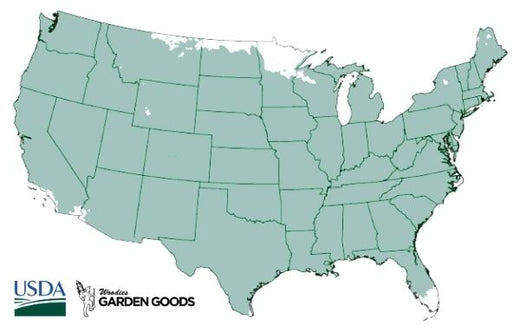
| Hardiness Zone: | 4-9 |
|---|---|
| Mature Height: | 8 to 10 feet |
| Mature width: | 10 to 12 feet |
| Sunlight: | Full sun to part sun |
| Soil Condition: | Moist, well-drained to wet soil; adaptable to clay and other average garden soils |
| Water Require: | Medium to high; prefers consistent moisture, especially during establishment |
| Bloom Time / Color | Spring catkins; flowers are insignificant, fall color is yellow |
| Wildlife Value | Provides cover and habitat value; supports a more diverse landscape ecosystem |
| Resistance (deer/disease/drought/etc.) | Low maintenance, tolerant of wet soil, clay soil, urban conditions, and heat; moderate deer tolerance |
| Landscape Uses | Small yards, rain gardens, specimen planting, mixed beds, naturalized spaces, lawn islands, moisture-retentive sites |
How to Care for Fox Valley River Birch
Be sure to read our planting instructions to ensure a healthy and happy Fox Valley River Birch for years to come!
-v1773326034584.png?92x91)
How should I plant Fox Valley River Birch?
Plant Fox Valley River Birch in full sun to part sun in a location with enough room for its mature spread and branching habit. Dig a hole two to three times as wide as the root ball and no deeper than the root ball itself, then set the tree so the top of the root ball sits level with or slightly above the surrounding soil. Backfill with native soil, water thoroughly, and mulch over the root zone to help retain moisture and regulate soil temperature. Keep mulch pulled back from the trunk base. This dwarf river birch is especially well suited to small landscape beds, rain gardens, and open planting spaces where the bark and natural shape can be appreciated without crowding nearby plants.
-v1773326062575.png?89x84)
How often should I water Fox Valley River Birch after planting?
Water Fox Valley River Birch deeply right after planting and keep the soil evenly moist while the root system establishes. During the first growing season, that usually means regular deep watering, especially during hot weather, dry periods, or in sites with faster-draining soil. This tree performs best when the root zone does not completely dry out. Check the soil several inches down before watering. If it feels dry, water thoroughly. Although river birch is known for tolerating wet areas, newly planted trees still need consistent moisture to settle in properly and develop strong roots in their new location.
-v1773326081547.png?90x89)
When should I fertilize Fox Valley River Birch?
Fertilize Fox Valley River Birch in early spring if the soil is poor or if the tree needs support for healthy growth and foliage color. A balanced, slow-release fertilizer for trees and shrubs is usually the best option, applied around the root zone rather than against the trunk. Avoid excessive fertilizing or late-season feeding that encourages tender new growth. In many home landscapes, mulch and steady watering do just as much to support healthy birch growth as fertilizer does. If the tree is growing well and the leaves look strong, light annual feeding is often enough.

When and how should I prune Fox Valley River Birch?
Prune the Fox Valley River Birch in late fall or winter while the tree is dormant. That timing is ideal for shaping, removing dead or damaged wood, and preserving the tree’s natural branching structure without adding unnecessary seasonal stress. Use a light hand when pruning. Remove crossing, rubbing, or weak branches, but avoid heavy cutting that disrupts the tree’s soft, natural form. Part of the appeal of Fox Valley is its compact, multi-branched look, so pruning should focus on cleanup and gentle refinement rather than forcing the tree into a rigid shape.