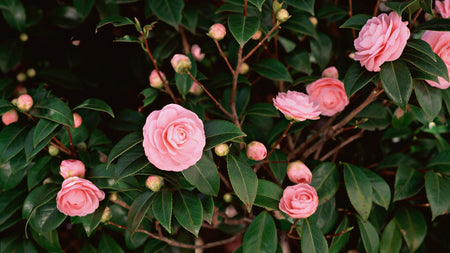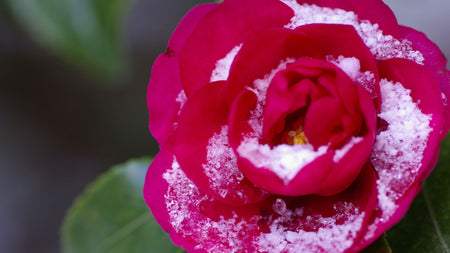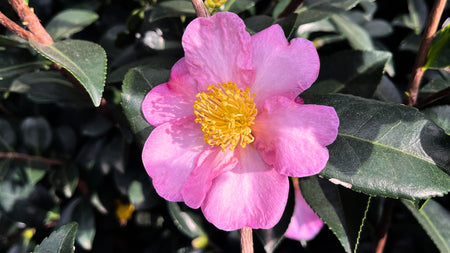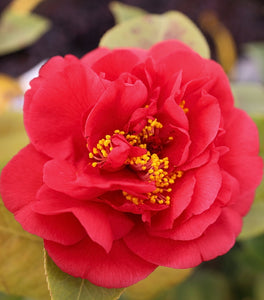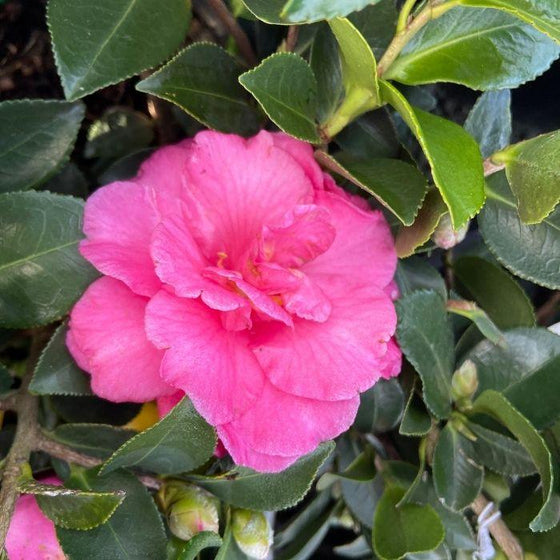
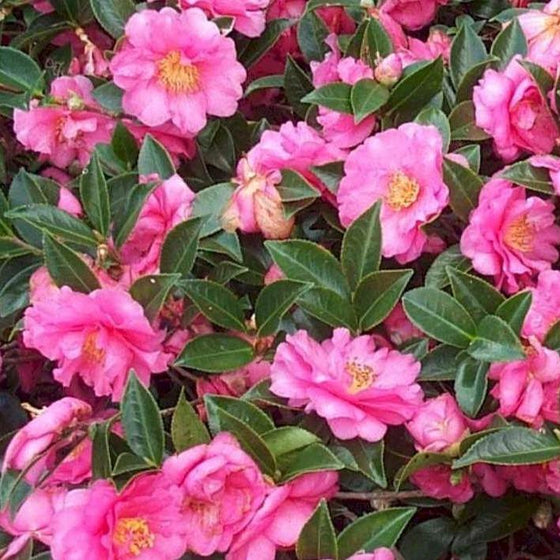


Images Depict Mature Plants
Shishi Gashira Camellia
Camellia sasanqua 'Shishi Gashira'
Shishi Gashira is my “small shrub, big payoff” camellia—because it stays compact and evergreen all year, then throws hot pink blooms in late fall to early winter when you’re starving for color. Give it well-drained soil, mulch it like you mean it, and water it well the first season so it roots in strong—after that, it’s surprisingly easy for such a high-impact plant.

20% OFF SITEWIDE SALE
Use Code 'OCTOBER20' At Checkout
📦 Free shipping on orders over $99.
Delay shipping by leaving us a message at Checkout.
Share:


Shishi Gashira Camellia For Hot Pink Fall Blooms, Compact Evergreen Form, And Easy Low-Hedge Beauty
Hot Pink Blooms That Arrive When Most Shrubs Are Done
Shishi Gashira Camellia is the kind of shrub that makes you feel like you “beat the season.” Just as summer flowers fade and the garden starts to settle down, this Camellia sasanqua lights up with a prolific flush of semi-double, hot pink blooms. The petals have a ruffled look, and the golden stamens in the center add a warm, glowing contrast. Bloom time typically runs from late fall into early winter, which is exactly why Shishi Gashira feels so special—color and cheer when the landscape is usually going quiet.
This is a camellia you plant where you’ll see it daily: near the front walk, by the porch steps, or along a path that gets regular foot traffic. The flowers show beautifully against the glossy evergreen leaves, and the plant’s low, spreading habit helps the bloom display feel full and abundant, even on a smaller shrub. In a mixed border, it bridges the seasonal gap between summer bloomers and winter structure, giving your garden a “second act” that feels intentional and elevated.
A Compact Evergreen That Fits Small Gardens And Tight Foundation Beds
One of the biggest reasons gardeners love Shishi Gashira is its naturally compact size. It typically matures around 3 to 5 feet tall and 3 to 5 feet wide, forming a dense, low mound that stays attractive without constant pruning. That makes it a perfect solution for small gardens, narrow beds, and foundation plantings where you want evergreen structure but don’t have room for a large, upright shrub.
The foliage is deep green, glossy, and leathery—exactly the kind of year-round texture that makes landscapes look finished through every season. Use it as a focal point in a mixed border, repeat it in groups for rhythm, or tuck it into an evergreen “framework” with hollies, boxwoods, or yaupon. Because the habit is spreading and densely branched, it also covers visual gaps at the front of shrub beds and helps soften edges around hardscape. It’s compact, but it never looks skimpy.
Low-Hedge And Mass-Planting Power With Minimal Maintenance
If you want a low evergreen hedge that actually flowers, Shishi Gashira is a standout. Its spreading habit and manageable height make it easy to shape into a neat, low boundary along a walkway, driveway edge, or garden bed line—without turning into a tall screen that needs constant trimming. When planted in a line, the glossy foliage provides the “green wall” effect year-round, then the hot pink blooms turn that hedge into a seasonal highlight in late fall and early winter.
It’s equally strong in mass plantings. Plant three, five, or more in a drift and you get a carpet-like evergreen effect with a concentrated bloom display that reads beautifully from the street. Maintenance stays simple: water well until established, mulch to stabilize soil moisture, and do any shaping right after the bloom period. Because it doesn’t require aggressive pruning to look tidy, it’s ideal for homeowners who want a refined look with a low-maintenance routine.
Sun, Soil, And Water Needs That Are Straightforward And Repeatable
Shishi Gashira Camellia grows best in full sun to part shade, with many gardeners preferring partial shade (especially afternoon protection) for the prettiest flowers and least stress. Think bright morning sun and softer light later in the day. That light balance supports better foliage quality and helps blooms hold up nicely as the season cools. It also makes Shishi Gashira a smart fit for the “bright edge” of a woodland garden or the gentler side of a house.
Drainage matters most. Camellias like soil that stays evenly moist but never soggy, so choose any well-drained soil and improve it with organic matter if needed. Keep a 2–3 inch mulch layer over the root zone, water consistently during the first growing season, and then shift to deep watering during extended dry spells. Shishi Gashira is also generally considered deer resistant (not deer-proof), thanks to its thick leaves—another practical reason it’s such an easy evergreen to live with.
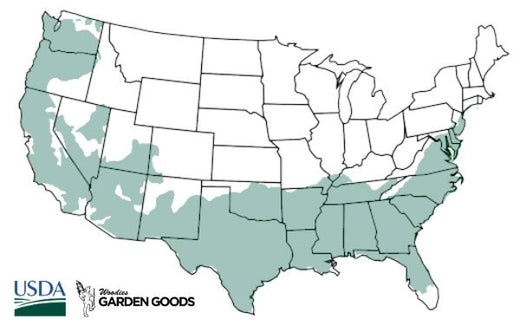
| Hardiness Zone: | 7-9 |
|---|---|
| Mature Height: | 3-5 feet |
| Mature Width: | 3-5 feet |
| Sunlight: | Full sun to part shade (partial shade preferred in hot areas) |
| Bloom Time / Color: | Late fall to early winter; hot pink, semi-double blooms |
| Soil Condition: | Any well-drained soil; prefers slightly acidic, organic-rich |
| Water Requirements: | Water well until established |
| Wildlife Value: | Pollinator interest when in bloom |
| Resistance (deer/disease/drought/etc.): | Deer resistant (not deer-proof); drought tolerant once established |
| Landscape Uses: | Low hedge, mass planting, mixed borders, foundation beds, specimen, containers, winter interest |
How to Care for Shishi Gashira Camellia
Be sure to read our planting instructions to ensure a healthy and happy Shishi Gashira Camellia for years to come!

How should I plant Shishi Gashira Camellia?
Choose a site with well-drained soil and full sun to part shade, ideally with protection from harsh afternoon sun. Dig a hole about twice as wide as the root ball and no deeper, then set the plant so the top of the root ball is level with (or slightly above) the surrounding soil. Backfill, firm gently, and water deeply to settle soil around the roots. Finish with a 2–3 inch mulch layer over the root zone to stabilize moisture and temperature, keeping mulch a few inches away from the trunk. If your soil is heavy, mix in organic matter and avoid low spots where water collects. Good drainage plus consistent moisture during establishment is the fastest path to a dense, healthy shrub and a strong bloom display.

How often should I water Shishi Gashira Camellia after planting?
Water thoroughly right after planting, then water deeply once or twice per week during the first growing season, adjusting for rainfall and heat. The goal is evenly moist soil—not soggy soil—so roots expand beyond the original root ball. A slow soak at the base is ideal because it drives water deeper and reduces stress. After the first year, water during extended dry spells rather than on a strict calendar. Check the soil a few inches down; if it feels dry, water deeply. Mulch helps keep moisture consistent and reduces the “wet/dry swing” that can stress camellias during warm spells or windy weather.

When should I fertilize Shishi Gashira Camellia?
Fertilize in early spring, using a slow-release fertilizer formulated for camellias or other acid-loving shrubs. Apply around the drip line rather than against the trunk, then water in well so nutrients move into the root zone and support healthy foliage and bud development. If you prefer a gentler approach, top-dress with compost in spring and refresh mulch to improve soil structure over time. Avoid heavy feeding late in the season, and don’t over-fertilize—too much nitrogen can push leafy growth at the expense of flowers and can make plants more stress-prone.

When and how should I prune Shishi Gashira Camellia?
Prune Shishi Gashira Camellia right after its blooming period so you don’t remove developing buds for the next season. Start by removing dead, damaged, or crossing branches, then thin lightly to improve airflow and reduce crowding. Use clean, sharp pruners and make selective cuts rather than shearing. For shaping, shorten a few longer shoots to maintain the compact, mounded form while preserving a natural look. Avoid heavy pruning—removing more than about a third at once can reduce flowering. With light, post-bloom shaping, Shishi Gashira stays dense, tidy, and bloom-ready.