

The 4 Best Privacy & Windbreak Trees | Woodie's Take
Published On: May 4, 2026
Updated On: Jul 28, 2026
Share:
A good privacy screen does more than block a view. It changes how a property feels. It softens wind, quiets the edges of a yard, frames outdoor rooms, and gives a landscape that settled, protected feeling we all want when we step outside. But the key is choosing the right evergreen for the job and spacing it properly from the start.
The four trees I come back to most often are Leyland Cypress, Emerald Green Arborvitae, American Pillar Arborvitae, and Thuja Green Giant. They all create privacy, but they do not all serve the same role.
Woodie's Picks: Four Privacy Trees for the Job
Leyland Cypress
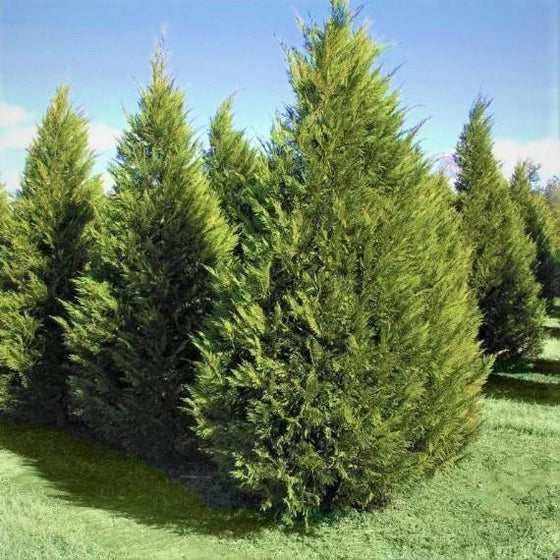
Leyland Cypress is the big, fast privacy builder. It is the tree to use when you have room and need height quickly. Leylands can create a tall, soft green wall for large properties, long boundaries, and wide-open areas where wind exposure is a concern. The mistake people make is planting them too tightly. They grow large, and over time, crowding can reduce airflow. For a healthy long-term screen, I like wider spacing—often 8 to 12 feet apart, with even more room in large windbreaks or where disease pressure is a concern. One rule of thumb: Leylands need room for air movement and should not be planted too close to structures.
Emerald Green Arborvitae
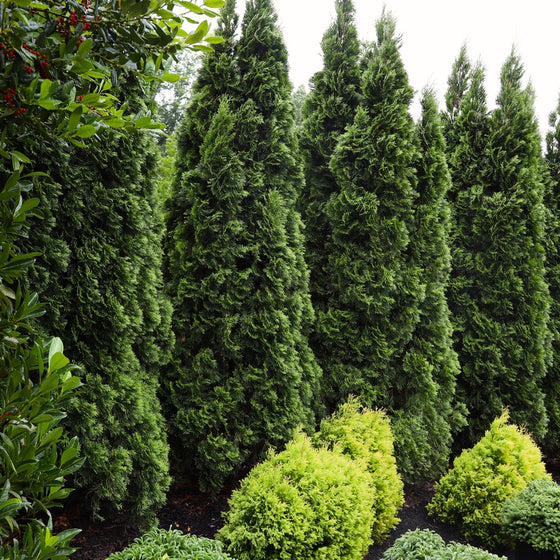
Emerald Green Arborvitae is the classic narrow privacy tree for smaller yards. It does not grow as large as Leyland Cypress or Green Giant, which makes it perfect for use along fences, patios, townhome lots, and property lines where space is limited. Emerald Green is best when you need a tidy, formal screen that stays relatively slim. For a dense hedge, spacing is usually around 3 to 4 feet apart. This gives the plants enough room to grow together without being jammed so tightly that they struggle later.
American Pillar Arborvitae
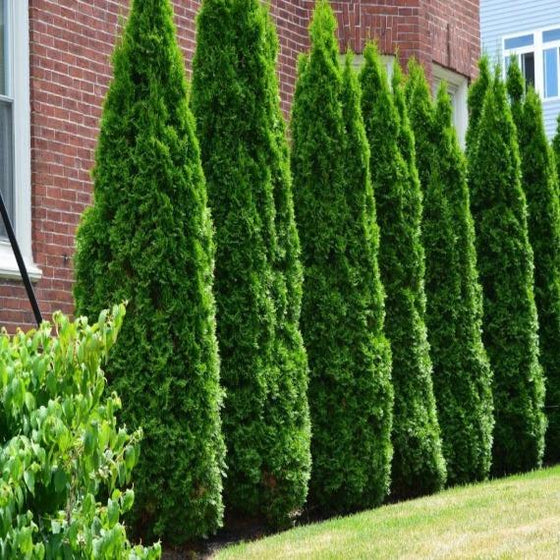
American Pillar Arborvitae is the problem-solver for narrow spaces where height matters. It has a very upright habit, making it ideal for tight side yards, between driveways, along fences, or anywhere you need vertical screening without a wide footprint. It creates a fast, clean green column effect and can be planted closer than larger trees. For a privacy hedge, 2.5 to 4 feet apart is a practical range, depending on how quickly you want coverage.
Thuja Green Giant

Thuja Green Giant is the workhorse for large, fast-growing screens. It gives you speed, height, and durability, with a broader, fuller habit than Emerald Green or American Pillar. Use Green Giant when you need a strong privacy screen, windbreak, or property-line buffer and have enough room for it to mature. For a solid screen, spacing is typically 5 to 6 feet, while 8 to 10 feet provides a more natural look with better long-term breathing room.
Spacing Matters More Than Almost Anything
When homeowners are impatient for privacy, the instinct is to plant too close. I understand it, we all want the screen now. But evergreens are long-term plants. If they are crowded from day one, they may look good quickly but struggle later with poor airflow, interior browning, root competition, and disease pressure.
A good privacy screen should grow together, not fight together.
As a general guide:
- Emerald Green Arborvitae: 3–4 feet apart for a tight screen
- American Pillar Arborvitae: 2.5–4 feet apart for narrow privacy
- Thuja Green Giant: 5–6 feet apart for a solid screen; 8–10 feet for a natural screen
- Leyland Cypress: 8–12 feet apart for a long-term hedge; wider where space allows
If you have the room, a staggered double row is even better for windbreaks. It creates depth, slows the wind more effectively, and looks more natural than a single straight line. The goal is not just a green wall—it is a living buffer.
Care During the First Few Growing Seasons
The first three years are where privacy screens are won or lost. These trees are not difficult, but they need consistency while the roots establish.
In the first season, water deeply and regularly. A slow soak is better than a quick spray. You want moisture to reach the entire root ball and the surrounding soil, so the roots can move outward. During hot or windy periods, check more often, especially with arborvitae, which can dry out faster than people expect.
Mulch is one of the best things you can do. Apply a 2–3-inch mulch ring around each tree, but keep the mulch pulled back from the trunk. Mulch holds moisture, cools the soil, reduces weeds, and protects roots from temperature swings.
Do not over-fertilize newly planted privacy trees. Let them root first. If growth looks weak after establishment, a balanced slow-release fertilizer in spring can help, but water and proper siting matter more than fertilizer.
Watch winter moisture, too. Evergreens continue losing water through their foliage in winter, especially in the wind. Going into winter dry is one of the biggest reasons arborvitae brown out. Water well in the fall before the ground freezes, especially during the first 2 to 3 years. Consider treating your newly planted evergreens with an anti-desiccant like Wilt-Pruf during the first winter.
Light pruning can help shape young screens, but don't shear aggressively. Remove damaged branches, guide the shape, and let the trees develop naturally. With Green Giant, Emerald Green, and American Pillar, little pruning is usually needed if spacing is correct. Leyland Cypress can be shaped lightly, but it should not be forced into too tight a space.
Woodie's Take
Each of these trees has a job.
Plant Leyland Cypress when you need big, fast privacy and have room to let it grow. Choose Emerald Green Arborvitae for a classic, narrow hedge in smaller spaces. Use American Pillar Arborvitae when the space is tight, but the need for height is real. Go with Thuja Green Giant when you want a fast, durable, large-scale screen or windbreak.
The secret is not just choosing the right tree. It is choosing the right tree for the right space, planting it at the right distance, and caring for it steadily through the first few growing seasons.
Do that, and you are not just planting privacy.
You are planting peace.