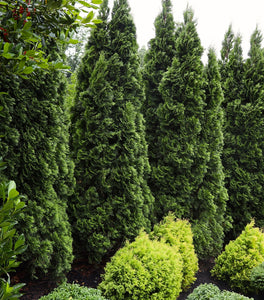
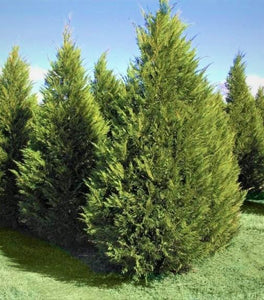
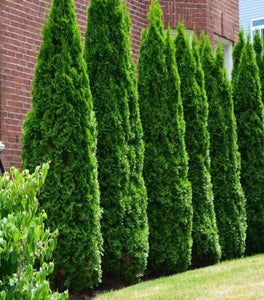
Images Depict Mature Plants
Thuja Green Giant Arborvitae
Thuja ‘Green Giant’
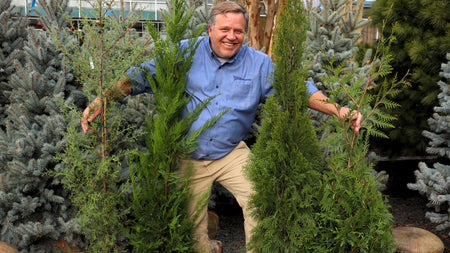
I've worked with privacy trees for decades, and Thuja Green Giant Arborvitae remains one of my favorite choices for large-scale screening. What impresses me most is how quickly it can develop into a substantial evergreen without needing constant shaping. The combination of fast growth, dense green foliage, and a naturally attractive pyramidal form makes it a terrific choice along long property lines and across expansive backyards. But here's the advice I always give homeowners: make sure you have room for the mature tree. Green Giant is not a little arborvitae that you can comfortably squeeze into a four-foot-wide planting strip. Given enough room, it is an outstanding screening tree. I also recommend paying close attention to watering during the first growing season because healthy roots are the foundation of that vigorous growth everyone wants. If I were planting a large property and wanted a tall, dependable evergreen privacy screen, Green Giant would absolutely be on my shortlist.
$15.16 with code SAVINGS20 at checkout Save $3.79
FREE Ground Shipping on orders over $49.99
This weekend only - ends Mon 11/23 at 12 PM ET
📦 Free shipping on orders over $99.
Delay shipping by leaving us a message at Checkout.
Share:

The Fast-Growing Evergreen Privacy Tree for Beautiful, Expansive Landscapes
Thuja Green Giant Arborvitae Creates an Impressive Evergreen Privacy Screen
If you're looking for an evergreen tree that combines exceptionally fast growth, substantial mature height, and dense year-round foliage, Thuja Green Giant Arborvitae deserves serious consideration. This remarkable hybrid has become a favorite for creating large privacy screens and natural property boundaries because it develops into a tall, beautifully proportioned evergreen. Its lush green branches form a full, pyramidal silhouette that provides an attractive alternative to traditional fencing. Whether you're trying to screen a neighboring property, soften a distant view, or create a secluded backyard, Green Giant offers the growth and presence needed for a substantial landscape transformation.
Unlike smaller arborvitae varieties designed for narrow planting beds, Green Giant is a full-sized landscape tree that rewards homeowners who give it adequate room. It commonly develops into an evergreen reaching approximately 40 to 60 feet tall and 12 to 20 feet wide under suitable conditions. That impressive mature size allows a row of trees to create a broad, continuous green barrier. Its naturally dense branching also provides visual interest when planted individually. For large suburban lots, rural properties, and expansive residential landscapes, Green Giant Arborvitae combines the practical benefits of privacy with the lasting beauty of a mature evergreen.
Fast-Growing Green Giant Arborvitae Delivers Privacy Sooner
One of the biggest reasons homeowners choose Thuja Green Giant is its remarkable growth rate. Under favorable growing conditions, established trees can add approximately 3 to 4 feet in height per year, making Green Giant one of the more vigorous evergreen screening options available. This growth potential is particularly valuable when planting along a newly constructed property line or replacing an old hedge that no longer provides adequate screening. Instead of waiting many years for slower-growing trees to develop substantial height, homeowners can select Green Giant for its ability to establish an impressive evergreen presence relatively quickly.
The key to realizing that growth potential is proper establishment during the first growing seasons. Newly planted trees need time to develop roots before they can consistently produce vigorous top growth. Regular watering, appropriate sunlight, and adequate soil drainage are essential during this period. As the root systems expand and the trees become established, their vigorous growth habit becomes more apparent. Green Giant is well suited to homeowners who want a fast-growing privacy hedge but also understand that healthy root development is the foundation of long-term performance. Give these trees a good start, and they can become one of the most commanding features in the landscape.
Rich Green Foliage Provides Beautiful Coverage in Every Season
Green Giant Arborvitae offers an impressive combination of dense evergreen branches and soft, richly colored foliage. Its sprays of small, scale-like leaves create a finely textured appearance that looks lush without appearing coarse or heavy. The foliage is arranged along gracefully ascending branches, giving the tree a uniform pyramidal profile from near the ground toward its pointed crown. This distinctive form adds order and structure to the landscape while creating an appealing backdrop for flowering shrubs, ornamental grasses, and perennial gardens.
One of Green Giant's most attractive characteristics is its ability to maintain a pleasing green color through the winter in many growing regions. While deciduous trees lose their foliage, leaving surrounding landscapes exposed, Green Giant continues to provide visual coverage. That makes it especially useful around backyards, outdoor living areas, and long property boundaries where privacy remains important year-round. Seasonal color may vary somewhat with climate and growing conditions, but its evergreen character provides dependable landscape structure. Homeowners looking for a living screen that remains attractive year-round will appreciate the tree's enduring greenery.
A Natural Privacy Hedge for Large Backyards and Property Lines
For homeowners with sufficient space, Thuja Green Giant is an outstanding option for creating a substantial evergreen hedge along long property lines. Its naturally broad, pyramidal habit allows neighboring trees to develop overlapping branches that form an effective visual screen. Unlike narrow arborvitae varieties, Green Giant provides both height and considerable depth, making it useful for creating privacy across a large area. A row can soften the appearance of neighboring buildings, define the boundaries of an expansive lawn, or create a more secluded setting around outdoor entertaining spaces.
A common spacing recommendation for Green Giant privacy hedges is approximately 5 to 8 feet on-center, with the final distance determined by available space, desired density, and long-term maintenance goals. Closer spacing encourages branches to meet sooner but also increases competition as the trees mature. Wider spacing allows each plant to develop more naturally. Because mature Green Giants can become 12 to 20 feet wide, homeowners should plan the planting with full-grown dimensions in mind, especially near fences, buildings, driveways, and overhead utilities. Thoughtful spacing helps create a healthier hedge and reduces the need for aggressive pruning later.
Green Giant Arborvitae Makes an Excellent Windbreak and Landscape Backdrop
Beyond privacy screening, Green Giant Arborvitae is valuable for developing large evergreen windbreaks and attractive landscape boundaries. Its substantial mature size and dense branching can help filter wind across open properties when trees are arranged in a suitable planting design. A carefully planned row also offers some reduction in direct sightlines and can soften the visual impact of neighboring structures. While no planting should be marketed as a complete soundproof barrier, a mature evergreen screen can contribute to a more pleasant and sheltered outdoor environment.
Green Giant also works beautifully as a specimen tree or as part of a large mixed evergreen planting. Its naturally symmetrical pyramidal form gives the landscape a strong vertical presence, making it an effective backdrop for ornamental flowering trees and colorful shrubs. Planting it with other evergreen species can create visual diversity while avoiding the uniform appearance of a single-species boundary. In landscapes with ample space, Green Giant becomes an attractive feature that combines practical functionality with ornamental value. Its best applications are those where the tree's eventual height and width are assets rather than limitations.
Hardy, Adaptable Arborvitae for a Wide Range of Growing Conditions
Thuja Green Giant is commonly marketed for USDA Growing Zones 5 through 9, although individual botanical references describe somewhat narrower tested hardiness ranges. The cultivar performs well in many regions where winters are cold, and summers can be warm and humid. Its broad adaptability makes it popular throughout much of the eastern United States. Green Giant generally grows best in full sun to partial shade, with six or more hours of direct sunlight preferred for vigorous growth and dense lower branching. It can tolerate some afternoon shade, particularly in hotter locations.
Although Green Giant adapts to several soil textures, good drainage and consistent moisture during establishment remain important. It generally performs well in properly managed loam and clay soils, provided the roots are not subjected to prolonged waterlogging. Avoid sites where standing water persists after heavy rain or where road salt accumulates in the soil. Applying an organic mulch layer helps conserve moisture and regulate soil temperatures. Once established, Green Giant can tolerate occasional dry conditions, but supplemental watering during extended drought helps maintain attractive foliage and sustained growth.
Naturally Pyramidal Growth Keeps Maintenance Manageable
Despite its impressive growth rate and eventual size, Thuja Green Giant has a naturally uniform pyramidal growth habit that typically requires little corrective pruning. Its branches develop in a balanced pattern, producing an attractive evergreen tree without extensive shaping. For homeowners who prefer an informal privacy screen, allowing the trees to grow naturally often produces the best appearance. This is especially true when Green Giants have been planted with sufficient spacing to accommodate their mature spread. The combination of rapid growth and relatively simple maintenance makes the cultivar attractive for large residential properties.
If a more formal hedge is desired, light trimming while the trees are young can help maintain a consistent shape. Early spring is generally a good time to remove damaged branches or perform minor corrective pruning. Avoid cutting deeply into the older, leafless interior because arborvitae do not readily regenerate foliage from bare wood. Homeowners should also remember that Green Giant can eventually become a very large tree. Selecting a smaller-growing arborvitae is usually a better solution when a planting requires frequent topping to stay within height restrictions. Proper variety selection and spacing are the easiest ways to keep long-term maintenance manageable.
A Long-Term Evergreen Investment for Privacy and Landscape Beauty
A well-planned planting of Thuja Green Giant Arborvitae can change the character of an entire property. What begins as a row of relatively young evergreen trees can gradually develop into a tall, substantial living screen that provides privacy, visual structure, and a beautiful green backdrop. Its rapid growth makes it appealing to homeowners seeking noticeable results, while its mature height provides the scale needed for larger residential landscapes. Green Giant is particularly valuable where broad screening coverage is more important than maintaining a narrow planting footprint.
When choosing Green Giant Arborvitae, the most important consideration is whether the site has enough room for its mature size. Give the trees adequate sunlight, establish a consistent watering routine, and protect young plants if deer browsing is common in the area. Although the cultivar demonstrates better deer resistance than some other arborvitae, it is not immune to damage. With thoughtful placement and proper early care, Thuja Green Giant Arborvitae offers homeowners a practical way to create impressive, long-lasting evergreen privacy while adding substantial ornamental value to the landscape.
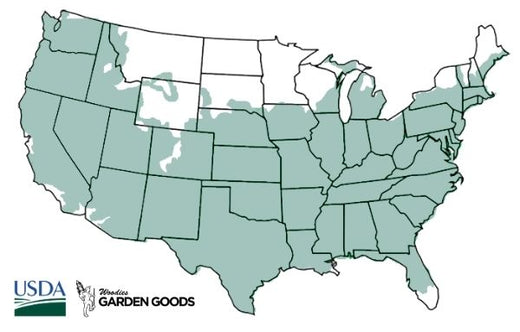
| Hardiness Zone: | 5-9 |
|---|---|
| Mature Height: | 40 to 60 feet |
| Mature Width: | 12 to 20 feet |
| Sunlight: | Full sun to partial shade |
| Foliage color: | Green throughout the year; some regional winter variation |
| Soil Conditions: | Moist, well-drained; adaptable to several soil textures |
| Water Requirements: | Regular during establishment; supplemental water during prolonged drought |
| Growth Rate: | Very fast |
| Wildlife Value | Evergreen shelter and potential nesting cover for birds |
| Landscape Uses | Large privacy hedges; windbreaks; property lines; evergreen specimens |
How to Care for Thuja Green Giant Arborvitae
Once you buy a Green Giant Arborvitae, follow the planting and care instructions below for the best outcome:

How should I plant Thuja Green Giant Arborvitae?
Choose a site with full sun to partial shade and well-drained soil, leaving sufficient room for the tree's considerable mature height and width. Dig the planting hole approximately twice as wide as the root ball, but no deeper than the root ball itself. Remove the container, loosen any tightly circling roots, and position the tree with the root flare at or slightly above the surrounding soil level. Backfill with the original soil, firm gently, and water thoroughly to eliminate large air pockets. For a privacy hedge, space Green Giant Arborvitae approximately 5 to 8 feet apart on center, depending on the desired density and available space. Keep trees sufficiently far from buildings, fences, and overhead wires to accommodate mature growth. Finish with a 2-to-3-inch layer of organic mulch, keeping it away from the trunk. Spring and early fall are excellent planting periods, although container-grown trees can be installed whenever the ground is workable and adequate water is available.

How often should I water Thuja Green Giant Arborvitae after planting?
During the first growing season, keep the root ball consistently moist but never waterlogged. Water deeply immediately after planting and check the soil regularly, particularly during hot or windy weather. Newly planted trees may need a thorough soaking once or twice a week in moderate conditions, with more frequent attention during extreme heat. Actual watering frequency depends on rainfall, soil texture, tree size, and drainage. Deep watering that reaches the entire root zone is generally more beneficial than frequent shallow sprinkling. After establishment, Green Giant Arborvitae develops some tolerance for periodic dry conditions, but supplemental irrigation remains beneficial during extended drought. Check soil moisture several inches below the surface before watering. A layer of mulch helps conserve moisture and protect roots from temperature extremes. Do not allow the soil to become excessively dry going into winter, particularly during the first few years, because evergreen foliage can experience winter drying.

When should I fertilize Thuja Green Giant Arborvitae?
If fertilization is necessary, the best time is early spring before vigorous new growth begins. Green Giant Arborvitae does not automatically require annual fertilizer when growing in reasonably fertile soil. A soil test is the most reliable way to determine whether additional nutrients are needed. Where deficiencies exist, use a balanced, slow-release fertilizer suitable for landscape evergreens, following the manufacturer's application instructions. Avoid excessive fertilizer, particularly high rates of nitrogen, because rapid, tender growth can be more vulnerable to environmental stress. Spread fertilizer over the appropriate root zone rather than concentrating it against the trunk, and water thoroughly after application. Avoid heavy fertilization late in the growing season. Proper sunlight, drainage, and moisture management generally contribute more to healthy growth than unnecessarily frequent feeding.

When and how should I prune Thuja Green Giant Arborvitae?
Thuja Green Giant naturally forms a dense, symmetrical pyramidal shape, so heavy pruning is usually unnecessary. In late winter or early spring, inspect the tree for dead, broken, or damaged branches and remove them using clean pruning tools. If maintaining a formal hedge, lightly trim the outer green growth while the plants are still young. Small, regular adjustments are preferable to aggressive corrective pruning after the hedge has become oversized. Avoid cutting deeply into old, leafless branches because arborvitae generally will not regenerate foliage from bare interior wood. When lightly shearing a hedge, keep the upper portion slightly narrower than the base so sunlight can reach the lower branches. Do not repeatedly top Green Giant simply to force a very large cultivar into a small space. Choosing an appropriately sized variety is the best long-term pruning strategy.