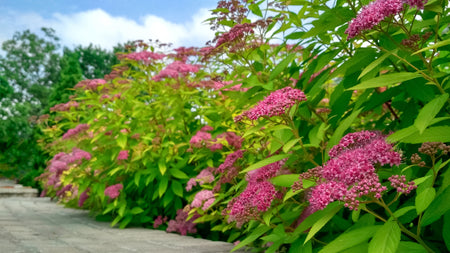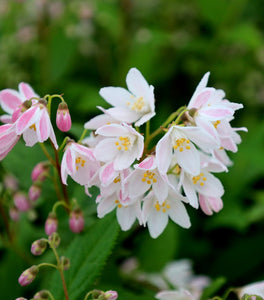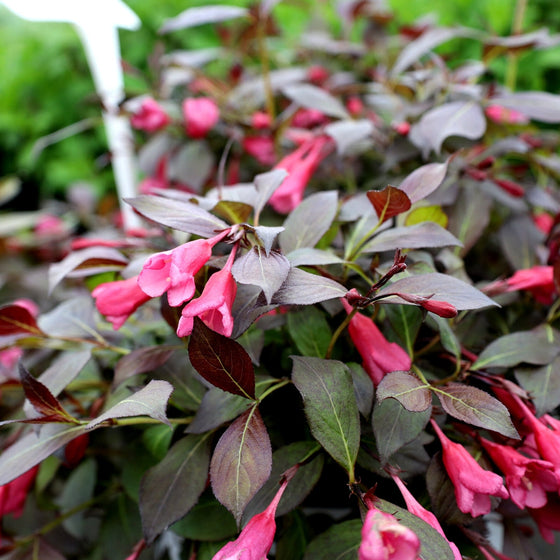


Images Depict Mature Plants
Spilled Wine® Weigela
Weigela florida 'Bokraspiwi' PP23781
Spilled Wine® Weigela is one of those shrubs I like when a landscape needs bold foliage color but the space will not handle a larger plant. The dark purple leaves carry the garden all season, the bright pink spring flowers really pop, and the lower spreading habit makes it perfect for front borders, under windows, and edging where a taller shrub would feel clumsy. For homeowners who want a deer-resistant flowering shrub with strong contrast and a smaller footprint, this is a really useful and good-looking choice.

15% OFF WITH CODE PLANTING15
Save 15% Off Your Entire Order! Limited time.
📦 Free shipping on orders over $99.
Delay shipping by leaving us a message at Checkout.
Share:


Compact Dark Foliage and Bright Pink Bloom Color for Borders, Foundations, and Smaller Gardens
A Compact Weigela with Big Foliage Contrast
Spilled Wine® Weigela is an excellent choice for homeowners who love the dramatic dark foliage of Wine & Roses® but need a shrub that fits more comfortably into smaller spaces. This dwarf selection stays wider than it is tall, which makes it especially useful for edging beds, planting under windows, and softening the front of a shrub border. It gives the landscape that same rich burgundy-purple foliage effect, but in a lower, more spreading form that is much easier to work into residential designs.
The foliage is one of its biggest strengths. Rather than fading into the background when flowers are gone, Spilled Wine® keeps its dark purple leaves throughout the growing season, so the plant continues earning its place long after the main bloom flush. That season-long leaf color gives homeowners a strong-contrast plant that can brighten lighter walls, stonework, silver foliage, and green shrubs around it.
Its low, mounded habit also adds practical value. This is not a shrub that suddenly gets too tall for the spot. It is naturally suited to places where a medium or tall shrub would feel bulky, which makes it especially effective in tighter landscapes, front borders, and lower foundation planting.
For homeowners looking for a colorful deciduous shrub that brings strong foliage impact without taking over the planting, Spilled Wine® Weigela is a very smart fit. It offers bold contrast in a size that feels easy to use.
Bright Pink Flowers Bring a Strong Spring Show
One of the biggest reasons to plant Spilled Wine® Weigela is the flower display. In spring, the shrub is covered in bright pink trumpet-shaped flowers that stand out dramatically against the dark foliage. That color contrast is what gives this plant so much ornamental punch and makes it such a strong focal point in sunny borders and foundation beds.
The main bloom comes in spring, but like many weigelas, Spilled Wine® may also produce a lighter repeat bloom in summer. That extra flowering helps extend the season of interest and gives the shrub more value than a plant that flowers once and then completely settles into foliage.
The flowers also make this shrub useful in wildlife-friendly landscapes. Weigela is well known for drawing hummingbirds, and the tubular flowers add movement and life to the garden when they open. That makes Spilled Wine® a practical option for homeowners who want a colorful shrub that also supports a more active garden.
For gardeners who want a compact shrub with a bold spring bloom display and strong foliage color the rest of the season, Spilled Wine® Weigela delivers a very satisfying balance. It adds significant ornamental value without requiring a large footprint.
A Strong Fit for Foundations, Edging, and Mass Planting
Spilled Wine® Weigela works best in landscapes where a low-spreading shrub can help define the planting without becoming too tall. It is especially effective along walkways, in front of foundations, at the edge of mixed shrub borders, and in drifts where repeated dark foliage can create rhythm and depth. Because it grows wider than it is tall, it is a much better fit for these uses than older, larger weigela cultivars.
Its mature size is one of the most important things to understand. Spilled Wine® generally reaches about 2 to 3 feet tall and about 3 to 4 feet wide, which makes it a very workable medium-low shrub for home landscapes. It is large enough to read clearly in the planting, but still compact enough for smaller spaces where a full-size shrub would be too much.
This shrub also pairs beautifully with gold foliage, blue-green evergreens, silver perennials, and flowering plants with lighter leaves or softer pink blooms. The dark foliage gives neighboring plants more pop, and the rounded spreading habit helps unify the lower layer of the border.
For homeowners trying to create a lower, more finished landscape with season-long color and manageable shrub size, Spilled Wine® Weigela is a very practical and attractive choice. It brings color, structure, and versatility without taking up much space.
Easy-Care Performance with Better Color in Full Sun
Spilled Wine® Weigela performs best in full sun, where the foliage color stays richest, and the flower show is strongest. Like other weigelas, it is easy to grow in average well-drained soil and is generally considered a low-maintenance shrub once established.
During establishment, regular watering helps the roots settle in and supports healthy top growth. Once rooted in, the shrub is fairly durable and easy to manage, which makes it a good fit for homeowners who want reliable color without a fussy care routine. It is also commonly listed as deer-resistant, which adds real value in landscapes where browsing pressure is a concern.
Pruning is straightforward. Because weigela flowers on old wood, the best time to shape or lightly shear Spilled Wine® is right after the main spring bloom. That timing helps preserve future flowering and can also encourage some lighter rebloom later in the season.
For gardeners who want a compact flowering shrub with dark foliage, strong spring color, and a simple care routine, Spilled Wine® Weigela is a rewarding option. Give it sun, room to spread, and a light post-bloom trim, and it will deliver dependable season-long impact.
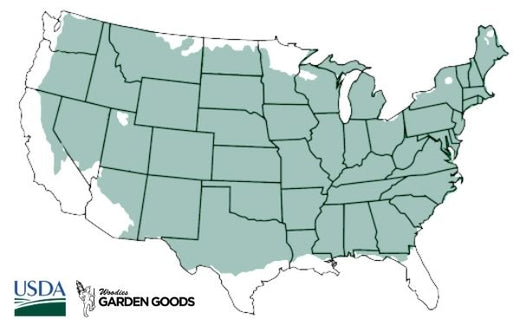
| Hardiness Zone: | 4-8 |
|---|---|
| Mature Height: | 2 to 3 feet |
| Mature Width: | 3 to 4 feet |
| Sunlight: | Full Sun |
| Bloom Time / Color | Spring with lighter summer repeat bloom; bright pink flowers |
| Soil Condition: | Average, well-drained soil |
| Water Requirements: | Moderate during establishment; average water needs once established |
| Wildlife Value | Attracts hummingbirds |
| Resistance (deer/disease/drought/etc.) | Deer resistant, easy care, compact habit |
| Landscape Uses | Foundation planting, edging, low hedge, mixed shrub border, mass planting, walkway planting |
How to Care for Spilled Wine® Weigela
Be sure to read our planting instructions to ensure a healthy and happy Spilled Wine® Weigela for years to come!
-v1774102040842.png?92x91)
How should I plant Spilled Wine® Weigela?
Plant Spilled Wine® Weigela in full sun in well-drained soil. Dig a hole about twice as wide as the root ball and no deeper than the root ball itself, then set the shrub so the top of the root flare sits level with or slightly above the surrounding soil. Full sun is especially important if you want the deepest foliage color and best flower display. Backfill with native soil, water deeply, and mulch around the base to help conserve moisture and reduce weed competition while the shrub establishes. This plant is especially well suited to front borders, foundation beds, and edging rows where the low spreading habit can be appreciated.
-v1774102064224.png?89x84)
How often should I water Spilled Wine® Weigela after planting?
Water Spilled Wine® Weigela deeply right after planting, then keep the soil evenly moist during the establishment period. In the first growing season, that usually means watering during dry spells so the roots can settle in and support healthy foliage and flowering. Once established, the shrub has average water needs and usually requires supplemental watering only during extended dry weather. Deep watering is better than frequent shallow watering, especially in full sun.
-v1774102084344.png?90x89)
When should I fertilize Spilled Wine® Weigela?
Spilled Wine® Weigela usually needs only light feeding. If the soil is especially poor, a balanced slow-release fertilizer in spring is enough to support healthy growth and flowering. Avoid overfertilizing, because excessive lush growth is not necessary for this shrub to perform well. In most landscapes, proper sun exposure and decent soil matter more than aggressive feeding.

When and how should I prune Spilled Wine® Weigela?
Prune Spilled Wine® Weigela right after the main spring bloom if shaping is needed. That timing helps preserve next year’s flower buds and may also encourage some lighter summer rebloom. Keep pruning selective and moderate rather than heavy. Most of the time, the goal is simply to refine the spreading mound, remove damaged branches, and keep the outline tidy.