

Images Depict Mature Plants
Weeping Norway Spruce
Picea abies 'Pendula'
Weeping Norway Spruce is one of those evergreens that gives a landscape instant character. It does not just fill a space; it changes the way the garden feels. The cascading habit is what makes it special, but the real value is that you can train it into something tall and elegant or let it spill naturally for a more artistic look. For a specimen evergreen with real personality, this one is hard to beat.

15% OFF WITH CODE PLANTING15
Save 15% Off Your Entire Order! Limited time.
📦 Free shipping on orders over $99.
Delay shipping by leaving us a message at Checkout.
Share:


A Cascading Evergreen with Unmatched Character
A Specimen Evergreen with Serious Personality
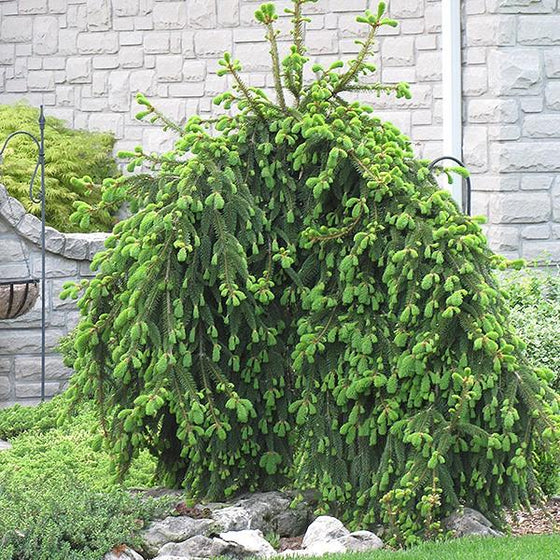
Weeping Norway Spruce is one of the most dramatic evergreen trees you can plant in the landscape. Its pendulous branches spill and drape with a sculptural quality that feels artistic and unusual, making it an exceptional choice for homeowners who want something more memorable than a typical pyramidal conifer.
This is not a background evergreen. It is a true focal-point plant, the kind of tree that immediately draws the eye and gives the garden a more collected, intentional look year-round.
A Trainable Habit That Changes the Design Possibilities
One of the most exciting things about Weeping Norway Spruce is its flexible form. When staked and trained upward, it develops into a narrow vertical specimen with cascading side branches that create a tall, elegant silhouette. When left unstaked, it tends to spread and trail, forming a low mounded or ground-hugging evergreen that can spill beautifully over walls, slopes, and raised areas.
That versatility makes it unusually useful in design. It can be shaped into a tall accent, trained along a fence, or allowed to flow naturally through the landscape, depending on the look a homeowner wants to create.
Rich Green Needles and Four-Season Texture
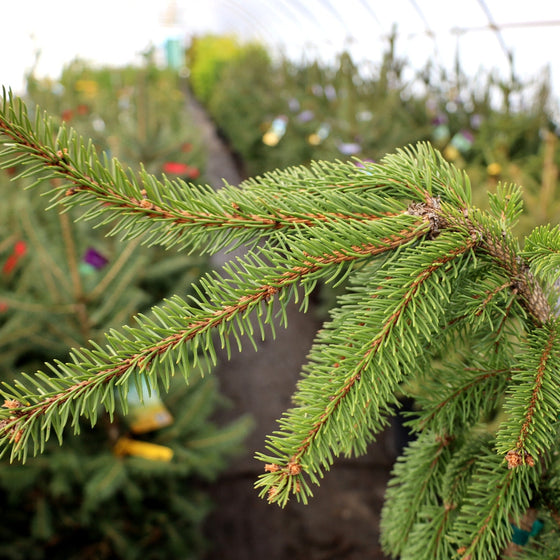
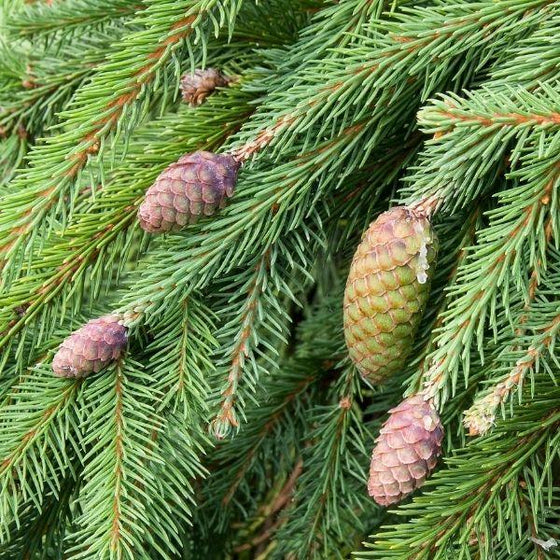
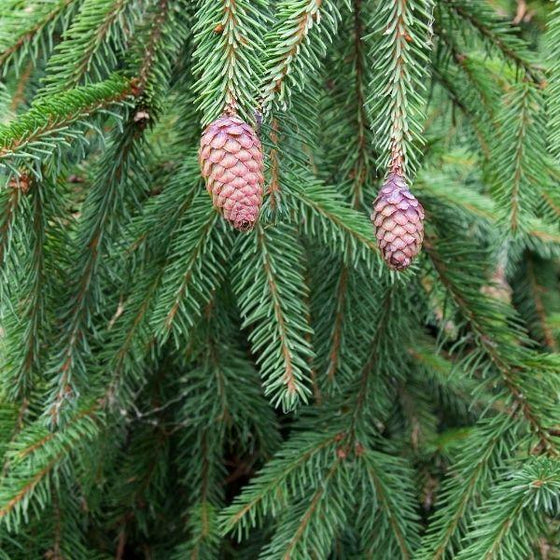
The branches are densely clothed in rich green needles, giving the plant a full, lush look year-round. Even without flowers or a dramatic seasonal color change, the foliage provides a strong evergreen texture that keeps the plant visually active year-round.
That year-round presence is part of what makes it so effective as a specimen. In winter especially, the weeping habit and evergreen color stand out beautifully when the rest of the garden becomes quieter and more structural.
Ideal for Slopes, Walls, and Statement Planting
Weeping Norway Spruce is especially effective in places where a traditional upright evergreen would feel predictable. It can be planted near retaining walls, gravel gardens, rock gardens, terraces, and Asian-inspired spaces where the draping habit adds motion and softness to the design.
It also works beautifully in open beds or near entries where a staked upright form can serve as a living sculpture. Few evergreens offer this much visual impact while also being so adaptable in their use.
Cold Hardy, Distinctive, and Worth the Space
This tree is particularly valuable in colder climates, where its hardiness and evergreen presence make it a dependable long-term landscape feature. It performs best in full sun to partial sun with well-drained soil, and once established, it can handle occasional dry periods better than many homeowners expect.
For gardeners who want an evergreen with unusual form, strong specimen value, and real architectural drama, Weeping Norway Spruce is an excellent choice. It brings texture, movement, and personality to the landscape in a way few conifers can match.

| Hardiness Zone: | 3-8 |
|---|---|
| Mature Height: | 15 feet |
| Mature Width: | 4 to 6 Feet |
| Sunlight: | Full sun to partial sun |
| Soil | Any well-drained soil |
| Water | Moderate; water regularly during establishment |
| Bloom Time / Color | Conifer; grown for foliage |
| Ornamental Features | Cascading weeping branches, rich green needles, highly sculptural trainable form |
| Wildlife Value | Provides evergreen cover and shelter for birds |
| Resistance (deer/disease/drought/etc.) | Cold hardy; moderately drought tolerant once established; deer resistant |
| Landscape Uses | Specimen tree, focal point, slope planting, wall draping, terrace garden, trained accent |
How to Care for Weeping Norway Spruce
Before you purchase your Weeping Norway Spruce, be sure to read the recommended care instructions to ensure your tree remains happy and healthy for many years to come!

How should I plant Weeping Norway Spruce?
Plant Weeping Norway Spruce in a full sun to partial sun location with well-drained soil. Dig a hole about twice as wide as the root ball and no deeper than the root ball itself, then place the tree so the root flare sits at or slightly above the surrounding soil level. This helps the roots establish properly and reduces the chance of decline from planting too deeply. Backfill with native soil, water thoroughly, and mulch around the root zone to help conserve moisture and reduce weeds. Keep mulch a few inches away from the trunk. Because this plant can be trained or allowed to spread, it is important to choose the site based on the form you want it to develop into over time.
-v1775825749262.png?89x84)
How often should I water Weeping Norway Spruce after planting?
Water Weeping Norway Spruce deeply right after planting, then continue watering regularly during the establishment period. In most landscapes, that means a deep soaking once or twice per week depending on rainfall, heat, and soil drainage. The goal is evenly moist soil while the plant develops a strong root system. Once established, it can handle occasional dry spells better, but it still performs best when not allowed to dry out severely for long stretches. Deep watering is much better than frequent shallow watering because it encourages stronger roots and better long-term performance.
-v1775825766345.png?90x89)
When should I fertilize Weeping Norway Spruce?
Fertilize Weeping Norway Spruce only if needed, especially if growth appears weak or the soil is poor. If feeding is necessary, early spring is usually the best time to apply a balanced slow-release fertilizer or compost that supports steady growth without forcing overly soft new growth. Avoid overfeeding, especially on healthy, established plants. In many landscapes, proper siting, good drainage, and regular watering during establishment are more important than aggressive fertilization. The goal is healthy evergreen growth and strong structural development.

When and how should I prune Weeping Norway Spruce?
Weeping Norway Spruce can be allowed to grow naturally or pruned and trained to shape the plant more intentionally. Late winter to early spring is usually the best time for structural pruning, while light cleanup can also be done as needed to refine the outline. If the goal is a taller upright specimen, staking and guiding a central leader is often more important than heavy pruning. If the goal is a broader, more cascading plant, light selective cuts can help encourage fullness while preserving the natural draping form that makes this tree so distinctive.