
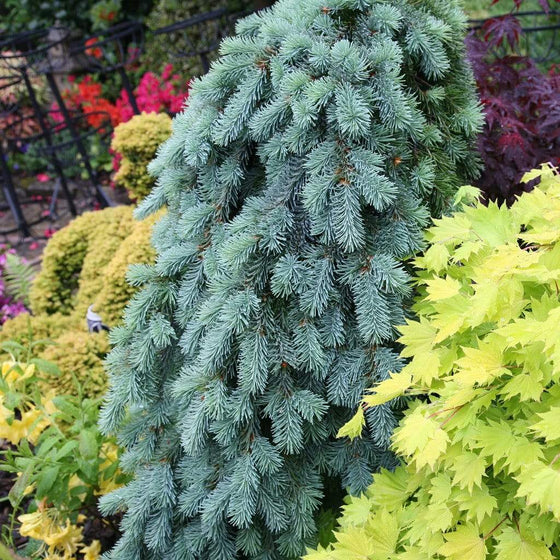


Images Depict Mature Plants
Slenderina® Weeping Blue Spruce
Picea pungens ‘Glauca Slenderina Pendula’
I've always appreciated evergreen trees that offer something truly different, and Slenderina Weeping Blue Spruce certainly fits that description. The vivid silvery-blue needles are beautiful on their own, but it's the way the branches cascade from the upright trunk that makes this tree so interesting. I particularly like using Slenderina as a specimen near a front entrance or in an open landscape bed where its unusual shape can be appreciated from several directions. Unlike a traditional Colorado Blue Spruce, Slenderina combines upright height with graceful weeping branches, giving it a much more artistic appearance. It's also relatively slow to moderate growing, so homeowners can enjoy its distinctive form without constantly pruning it. My recommendation is to give it full sun, excellent drainage, and plenty of air circulation, especially in areas with humid summers. Don't try to force it into a rigid shape—the naturally cascading branches are what make it special. For homeowners who want a dramatic blue evergreen specimen with genuine four-season beauty, Slenderina is a wonderful choice.
$63.96 with code SAVINGS20 at checkout Save $15.99
📦 Free shipping on orders over $99.
Delay shipping by leaving us a message at Checkout.
Share:


Slenderina Weeping Blue Spruce Trees for Dramatic Evergreen Color and Architectural Beauty
Create a Dramatic Landscape Focal Point with Slenderina Weeping Blue Spruce
Slenderina Weeping Blue Spruce is an outstanding ornamental evergreen for homeowners who want a truly distinctive specimen tree with exceptional year-round visual appeal. Its unusual growth habit combines an upright central leader with gracefully cascading branches, creating a beautiful silhouette that stands apart from traditional pyramidal spruce trees. The vivid silvery-blue needles provide a striking display throughout the seasons, while the flowing branches introduce movement and sculptural character. This combination makes Slenderina especially attractive in landscapes where a single ornamental tree is intended to become the centerpiece of the design.
Unlike conventional Colorado Blue Spruce trees that eventually develop broad, symmetrical crowns, Slenderina has a more restrained and irregularly weeping appearance. Its characteristic form makes it particularly effective in front lawns, ornamental garden beds, and landscape areas where its branches can be appreciated from several directions. Slenderina Weeping Blue Spruce delivers the bold color of a blue spruce with the artistic character of a weeping evergreen. Plant it where the full outline remains visible rather than crowding it between larger shrubs, allowing the cascading branches and brilliant foliage to create the dramatic effect that makes this cultivar so desirable.
Enjoy Brilliant Silvery-Blue Evergreen Color Throughout the Year
One of the greatest attractions of Slenderina Weeping Blue Spruce is its intense blue needle coloration, which creates a cool, distinctive accent in the landscape. The stiff evergreen needles display shades of silvery-blue to steel-blue, contrasting beautifully with dark green shrubs, flowering perennials, ornamental grasses, and natural stone. Unlike deciduous ornamental trees that offer color primarily during the growing season, Slenderina maintains its foliage throughout the year, providing reliable structure and color in spring, summer, fall, and winter. Its blue needles become particularly striking against snow or the bare branches of surrounding deciduous trees.
This evergreen color makes Slenderina an excellent design companion for plants with burgundy, gold, or deep green foliage. Pair it with compact evergreen shrubs to emphasize its weeping branches or position it near flowering perennials that produce warm-toned blooms. The contrast between its cool blue needles and surrounding garden colors creates a sophisticated landscape composition without requiring extensive seasonal changes. Slenderina Weeping Blue Spruce is ideal for homeowners who want a colorful evergreen tree that makes a strong visual statement in every season. Its foliage provides lasting interest even when the rest of the garden becomes dormant.
Add Graceful Weeping Branches to Formal and Contemporary Gardens
Slenderina Weeping Blue Spruce offers a unique architectural growth habit that combines vertical height with naturally cascading branches. Rather than forming a rigid, symmetrical pyramid, the tree develops an irregular upright outline accented by branches that sweep downward. This creates a sculptural appearance that works beautifully in both formal and contemporary landscape designs. The weeping foliage introduces softer lines that can balance the strong geometric shapes of buildings, stone walls, patios, and walkways, while its vivid blue color maintains a striking ornamental presence.
For contemporary landscapes, Slenderina can be used as a living sculpture surrounded by low-growing groundcovers, ornamental gravel, or minimalist plantings. In traditional gardens, it creates a beautiful accent among flowering shrubs and broadleaf evergreens. Its distinctive form is especially effective when planted individually, allowing the entire silhouette to be viewed without competition from nearby trees. Slenderina Weeping Blue Spruce brings the beauty of a specimen conifer and the artistic appeal of a weeping tree into one exceptional evergreen. The tree's upright character is part of its cultivar identity, although the final shape can vary with growing conditions and any early training.
Transform Front Yards and Entryways with an Ornamental Blue Spruce
Homeowners looking for a memorable evergreen accent will appreciate the distinctive appearance of Slenderina Weeping Blue Spruce near entrances, front lawns, and prominent landscape beds. Its rich blue needles and flowing branches immediately draw attention, creating a natural focal point that complements a wide range of architectural styles. The upright growth habit provides useful vertical interest without developing the same broad profile as many full-size Colorado Blue Spruce trees. This makes it especially appealing for ornamental settings where a substantial evergreen presence is desired but planting space remains limited.
Position Slenderina where it can mature without crowding walls, foundations, or nearby shrubs. A single specimen can anchor a large foundation bed, provide contrast beside a walkway, or introduce an evergreen focal point into an open lawn. Its weeping branches are particularly attractive when surrounded by low-growing plants that do not obscure their natural form. Slenderina Weeping Blue Spruce creates a professionally designed appearance with very little decorative assistance, making it an excellent choice for homeowners who want a distinctive landscape feature that remains beautiful through every season.
Grow a Cold-Hardy Weeping Evergreen with Simple Care
Slenderina Weeping Blue Spruce combines ornamental beauty with excellent cold hardiness and relatively straightforward maintenance requirements. Like other Colorado Blue Spruce cultivars, it performs best in full sun and soil that drains well while retaining moderate moisture. Adequate sunlight helps maintain dense foliage and strong needle coloration, while good drainage supports healthy root development. Once established, the tree can tolerate some dry conditions, although prolonged drought may cause stress, particularly during periods of high summer heat.
Newly planted trees should receive regular deep watering while establishing their root systems. Fertilization is generally unnecessary in reasonably fertile soil, and extensive pruning is rarely required because Slenderina's natural weeping form is its primary ornamental feature. Remove damaged branches as needed, but avoid heavy shearing or cutting into old, bare wood. For the best long-term results, plant Slenderina in a sunny location with good air circulation and well-drained soil. The tree generally performs better in cooler climates than in regions with prolonged hot, humid summers, where spruce health problems can become more common.
Design Four-Season Landscapes with Slenderina Weeping Blue Spruce
Few ornamental evergreens provide the same combination of color, texture, and sculptural form as Slenderina Weeping Blue Spruce. During spring, fresh growth adds subtle highlights to its already colorful foliage. Summer emphasizes the vivid blue needles against flowering perennials and ornamental grasses, while autumn creates beautiful contrast with the warm colors of surrounding deciduous trees. In winter, the cascading evergreen branches become especially prominent, providing dramatic structure when much of the landscape is dormant.
This four-season appeal makes Slenderina an excellent long-term addition to ornamental gardens and specimen plantings. Its distinctive form can anchor a mixed border, frame an important landscape view, or provide a permanent focal point in a front-yard planting. Rather than depending on flowers or seasonal foliage changes for visual interest, the tree maintains its character throughout the year. Slenderina Weeping Blue Spruce is a strong choice for homeowners who appreciate unusual conifers and want a beautiful evergreen specimen with lasting architectural presence. With thoughtful placement, it can become one of the most memorable plants in the landscape.
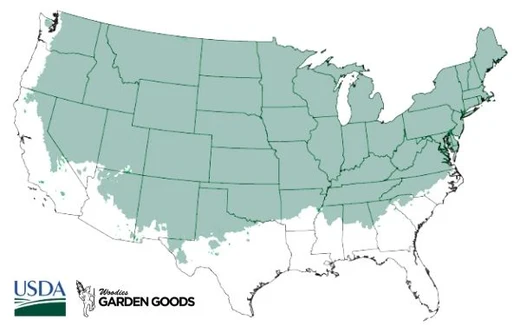
| Hardiness Zone: | 3-7 |
|---|---|
| Mature Height: | Approximately 12 to 15 feet; potentially taller with age |
| Mature Width: | Approximately 6 to 8 feet; may broaden with age |
| Sunlight: | Full sun; tolerates light partial shade |
| Soil | Well-drained; moderately moist; fertile loam; slightly acidic soil preferred |
| Water Requirements | Moderate during establishment; supplemental watering during extended drought |
| Foliage Color | Silvery-blue to steel-blue |
| Pruning Season: | Late winter to early spring for corrective pruning |
| Wildlife Value | Birds seeking evergreen shelter; limited direct pollinator attraction |
| Landscape Uses: | Specimen trees; front-yard focal points; entrance accents; ornamental borders; formal gardens; contemporary landscapes; four-season gardens |
How to Care for Slenderina® Weeping Blue Spruce
Be sure to read our planting instructions to ensure a healthy and happy Slenderina Weeping Blue Spruce for years to come!

How do I plant Slenderina Weeping Blue Spruce?
Select a location with full sun, good air circulation, and well-drained soil. Dig a planting hole approximately twice as wide as the root ball but no deeper than the root ball itself. Carefully remove the tree from its container, loosen any circling roots, and position the top of the root ball level with or slightly above the surrounding soil. Backfill with the original soil, gently firm it, and water thoroughly to eliminate large air pockets. Apply approximately 2 to 3 inches of organic mulch around the planting area, keeping it several inches away from the trunk. Allow adequate room for the tree's mature weeping branches, typically 6 to 8 feet of width or more over time. Slenderina generally develops an upright central leader, but young plants may benefit from careful training if a particular upright form is desired. Avoid crowding it against buildings or neighboring shrubs.

How often should I water Slenderina Weeping Blue Spruce?
Newly planted Slenderina Weeping Blue Spruce requires consistent moisture during the first growing season. Water deeply after planting and check the root-zone soil regularly. Water when the upper few inches begin to dry, adjusting frequency according to rainfall, temperature, soil texture, and plant size. The goal is to encourage deep root development without keeping the soil constantly saturated. Once established, Slenderina can tolerate occasional dry conditions, but it performs best when moderate soil moisture is maintained during prolonged heat or drought. Avoid frequent shallow watering and poorly drained locations. In regions with hot summers, supplemental irrigation during extended dry weather may help reduce stress and preserve healthy needle color.

What is the best fertilizer for Slenderina Weeping Blue Spruce?
Slenderina Weeping Blue Spruce generally requires little fertilizer when planted in reasonably fertile soil. If a soil test identifies a deficiency or the tree demonstrates unusually weak growth, apply a balanced, slow-release fertilizer formulated for evergreen trees in early spring. Follow the manufacturer's recommendations and avoid excessive applications. Heavy fertilization is unnecessary and may encourage soft growth that detracts from the tree's naturally refined appearance. Proper sunlight, drainage, air circulation, and establishment watering are more important than frequent feeding. Mature specimens with healthy foliage and normal annual growth often do not require additional fertilizer.

When should I prune Slenderina Weeping Blue Spruce?
Slenderina Weeping Blue Spruce is best maintained with minimal corrective pruning in late winter or early spring. Remove dead, damaged, or crossing branches with clean pruning tools. Lightly shorten an occasional branch only when necessary to maintain clearance or improve the tree's appearance. The naturally cascading branches are a defining ornamental characteristic and should be preserved whenever possible. Avoid heavy shearing or cutting deeply into bare, older wood because spruce trees generally do not regenerate new foliage from those areas. Do not remove the upright leader unless it has been damaged. Allowing Slenderina to maintain its natural weeping silhouette produces the most attractive long-term result.
Frequently Asked questions
How tall and wide does Slenderina Weeping Blue Spruce grow?
How fast does Slenderina Weeping Blue Spruce grow?
Does Slenderina Weeping Blue Spruce need staking?
Does Slenderina Weeping Blue Spruce stay blue all year?
Is Slenderina Weeping Blue Spruce deer resistant?
Can Slenderina Weeping Blue Spruce grow in full sun?
Related Blogs



Other Products you may be interested in


Customer Reviews
- Rated 5 out of 5 stars3 months agoSo cute!
Everything arrived in perfect condition, and very healthy. The packaging was great, with no broken or dead plants. I am very happy and will definitely buy more plants from Woodies Garden Goods!
KBKristi b.Verified Buyer