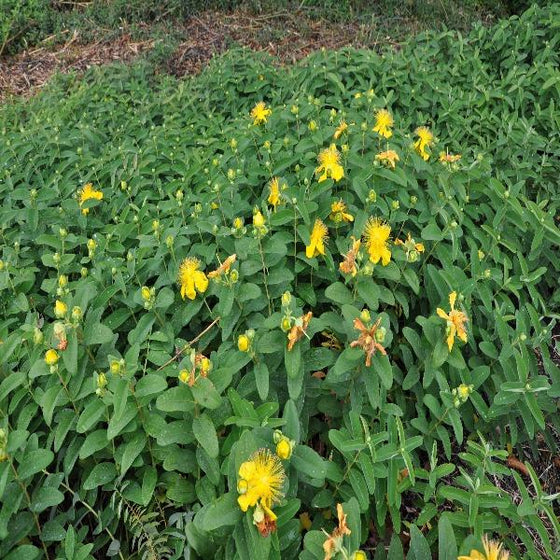

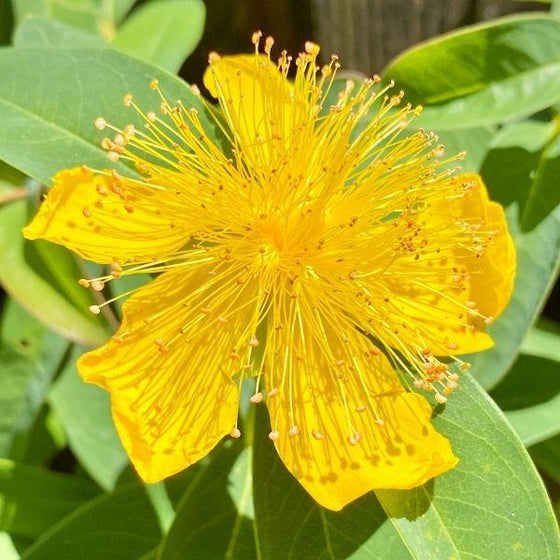


Images Depict Mature Plants
St. John's Wort Plant
Hypericum calycinum
St. John’s Wort Plant is a really useful option when you need something that can do more than just bloom for a week or two. It covers ground, handles a range of conditions, and throws bright yellow flowers over fresh green foliage in a way that feels cheerful, practical, and easy to use in the landscape.

15% OFF FOR MOTHER'S DAY
Use Code MOMDAY15 At Checkout
📦 Free shipping on orders over $99.
Delay shipping by leaving us a message at Checkout.
Share:Recommended Add-Ons



Bright yellow blooms on a hardworking spreading shrub
A cheerful flowering plant that does more than just bloom.
St. John’s Wort Plant is a low-growing flowering shrub prized for its bright yellow blooms and easygoing nature. Each flower opens with bold petals and a showy tuft of stamens in the center, giving the plant a bright, sunny look that stands out clearly against the fresh green foliage. When planted in groups, the bloom display creates a broad sweep of summer color that feels lively and natural.
Its spreading habit makes it especially useful in the landscape.
Unlike many upright flowering shrubs, St. John’s Wort Plant is often used for its ability to fill space. It spreads outward to cover open soil, soften slopes, and help tie together larger planting areas. That habit makes it a practical solution for homeowners who need both color and coverage.
Summer bloom adds reliable long-season interest.
St. John’s Wort Plant flowers in summer and can continue blooming into early fall in favorable conditions. The clear yellow blooms bring long-lasting color to the garden, especially in spots where homeowners want something brighter than a plain green ground cover. In milder climates, the foliage may remain semi-evergreen, adding value even after the main bloom season has passed.
A strong fit for ground cover beds, slopes, and borders.
This plant is especially useful in mass plantings, along border edges, on banks and slopes, and in larger ground cover areas where erosion control and visual fill both matter. It can also work as a low accent in mixed sunny beds. Because it spreads by underground stems, it is best placed where that vigorous habit is helpful rather than problematic.
Adaptable and easy to grow when well sited.
St. John’s Wort Plant performs best in full sun to part shade and in well-drained soil, but once established, it is notably tolerant of a range of conditions. It can handle sandy or compacted soils and is often used in tougher landscape situations where other flowering plants may struggle. In colder climates, it may die back more heavily, while in milder regions, it can hold more of its foliage through winter.

| Hardiness Zone: | 5-9 |
|---|---|
| Mature Height: | 1 to 2 Feet |
| Mature Width: | 1 to 2 Feet |
| Sunlight: | Full sun to part shade |
| Soil | Any well-drained soil; adaptable to sandy and compact soils |
| Water | Moderate; water well until established |
| Bloom Time / Color | Summer into early fall; bright yellow flowers |
| Evergreen Habit | Semi-evergreen in mild climates; may die back in colder winter |
| Ornamental Features | Bright yellow flowers, showy stamens, spreading ground cover habit |
| Wildlife Value | Flowers can support pollinators |
| Resistance (deer/disease/drought/etc.) | Adaptable; some drought tolerance once established; useful on slopes and in sandy soils |
| Landscape Uses | Ground cover, slopes, erosion control plantings, border edges, mass plantings, sunny or part-shade beds |
How to Care for St. John's Wort Plant
Be sure to read our planting instructions to ensure a healthy and happy St. John’s Wort Plant for years to come!
-v1777044653249.png?92x91)
How should I plant St. John’s Wort Plant?
Plant St. John’s Wort Plant in full sun to part shade in well-drained soil. Dig a hole about twice as wide as the root ball, set the plant level with the surrounding soil, then backfill and water deeply to help settle the roots. After planting, apply a light mulch layer to help conserve moisture and reduce weed competition, but keep mulch slightly away from the stems. Give St. John’s Wort Plant room to spread naturally, especially if you are using it as a ground cover or slope planting.
-v1777044679280.png?89x84)
How often should I water St. John’s Wort Plant after planting?
Water St. John’s Wort Plant deeply right after planting, then keep the soil evenly moist during the first growing season while it establishes. During warm weather, check the soil regularly and water when the upper layer begins to dry. Once established, St. John’s Wort Plant is more adaptable and can handle short dry periods better than many flowering shrubs. During extended drought, deep watering helps maintain healthier foliage and stronger flowering.
-v1777044697473.png?90x89)
When should I fertilize St. John’s Wort Plant?
Fertilize St. John’s Wort Plant in early spring as new growth begins. In most garden soils, a light application of balanced slow-release fertilizer or compost is enough to support healthy growth and flowering. Avoid overfeeding, especially if the goal is tidy ground cover performance rather than lush, overly soft growth. This plant is generally not a heavy feeder and usually performs well in average garden soil once established.

When and how should I prune St. John’s Wort Plant?
Prune St. John’s Wort Plant in spring before strong new growth begins. Cutting it back helps refresh the plant, encourages vigorous new stems, and improves flowering, especially if the planting has become woody or winter-worn. If berries are valued for fall interest, avoid removing spent flowers too early. In larger ground cover plantings, occasional shearing or renewal pruning in late winter or early spring can help keep the patch dense, fresh, and within bounds.