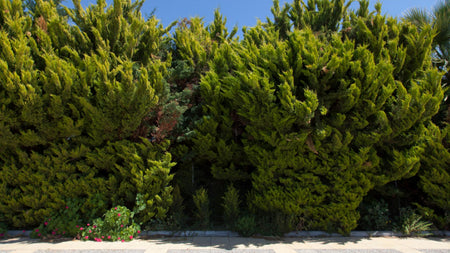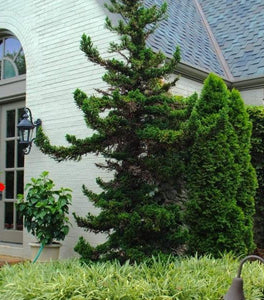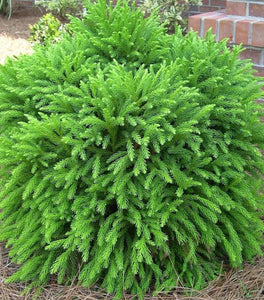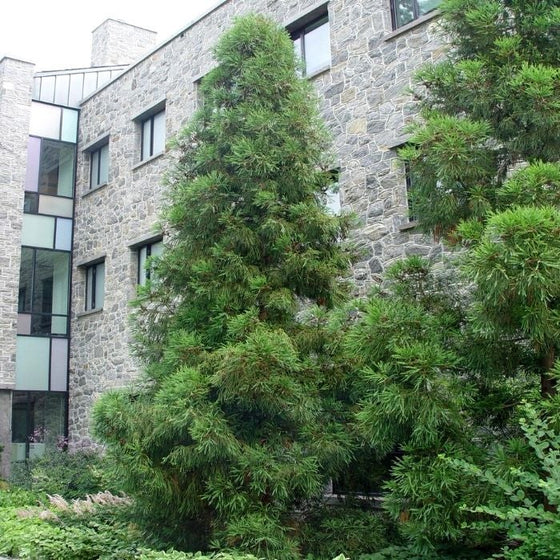

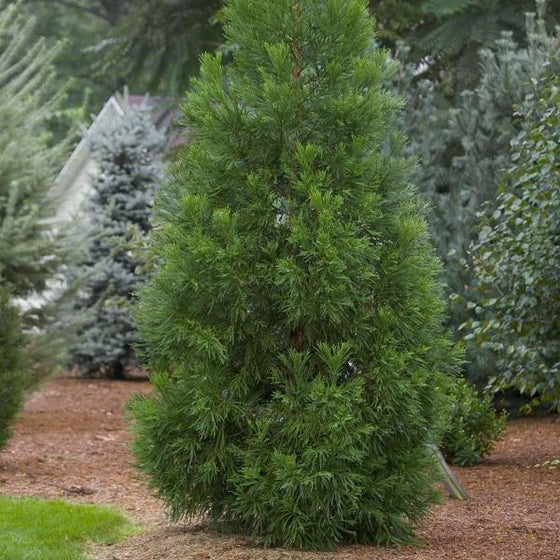


Images Depict Mature Plants
Yoshino Japanese Cedar
Cryptomeria japonica 'Yoshino'
If you’re after that “real privacy” feeling—quiet, sheltered, and green in every season—Yoshino Japanese Cedar is one of my favorite ways to get there without making your yard feel stiff. It grows fast enough to matter, but it looks polished while it’s doing the job: soft needles, a handsome pyramidal shape, and a dense evergreen presence that turns a wide-open yard into a place that feels established. Plant it right, water it well the first year, give it smart spacing, and you’ll have a screen that looks like it was always meant to be there.

15% OFF SITEWIDE SALE
Use Code 'PRIMETIME15' At Checkout
📦 Free shipping on orders over $99.
Delay shipping by leaving us a message at Checkout.
Share:

Fast-Growing Yoshino Japanese Cedar for Lush Evergreen Privacy
A Fast, Dense Evergreen Screen That Looks Refined
If you want privacy without a harsh, prickly look, Yoshino Japanese Cedar is a standout. It grows into a tall, clean pyramid with soft, lush needles that read more “garden estate” than “utility hedge.” Once established, it fills in quickly and holds a tidy silhouette, making it an easy yes for property borders, backyard buffers, and wide-open spaces that need structure year-round. It’s also a smart choice when you want a screen that stays green and feels calm—more layered and natural than a wall of identical, stiff evergreens.
What makes ‘Yoshino’ special is the combination of speed and elegance. The foliage is typically a bright, fresh green to blue-green, and the branching habit tends to be dense enough to deliver real privacy when planted and maintained correctly. Use it as a living fence line, a wind-softening barrier, or a bold specimen tree that anchors the landscape. Either way, you’re getting an evergreen that’s designed to mature into a confident presence—tall enough to matter, and handsome enough to belong in the front yard.
Soft Needles, Four-Season Color, And A Fuller Look In Winter
Yoshino Japanese Cedar is one of those evergreens you want to brush past on the way to the mailbox—its needles feel soft, not sharp, and the foliage has a clean, almost “feathered” texture from a distance. That fine texture is a big deal in landscape design because it plays well with broadleaf evergreens (like hollies and laurels) and with flowering shrubs that need a calmer backdrop. It’s also a strong winter plant: you’re not buying a tree that disappears when the garden goes quiet—you’re buying one that keeps the scene looking intentional.
In many landscapes, ‘Yoshino’ also holds its winter color better than some other cryptomerias, staying greener with less bronzing when temperatures dip. You may still see seasonal shifts—especially in exposed sites—but the overall effect is typically steady and attractive. And while it doesn’t produce showy flowers, it can form small cones that add subtle detail if you like botanical interest. The big win, though, is the evergreen “presence”: dense needles, layered branching, and a habit that looks groomed even when you don’t touch it.
Easy-To-Grow In The Right Spot: Sun, Soil, And Water Made Simple
Give Yoshino Japanese Cedar the right foundation, and it rewards you with faster growth, thicker coverage, and fewer headaches. Aim for full sun to part shade, and prioritize well-drained soil that doesn’t stay soggy after rain. This is not a “wet feet” tree. If your soil is heavy clay, you can still succeed—just improve drainage, plant slightly high, and use a broad mulch ring to moderate moisture and temperature. Slightly acidic, organically rich soil is ideal, and steady moisture during establishment makes a huge difference in both growth rate and needle density.
Watering is the make-or-break factor in the first season. Think “deep and consistent,” not frequent sprinkles. A slow soak that reaches the root zone encourages the tree to push roots outward and downward, which is what later creates drought tolerance. After the first year (sometimes two, depending on heat and soil), Yoshino becomes more forgiving, but it will always look best with occasional deep watering during extended dry spells. If you want a privacy screen that stays lush rather than sparse, moisture management is the simplest lever you can pull.
Spacing And Pruning That Deliver Real Privacy (Not Just Height)
Spacing is where most privacy plantings succeed—or fail. Yoshino Japanese Cedar can mature into a substantial tree, so you want enough room for healthy airflow and full branching, but close enough for the canopy to knit together over time. For a true screen, most homeowners get the best balance by planting roughly 10–15 feet apart (measured trunk to trunk). That range helps the trees fill in without immediately fighting each other, and it reduces the odds of thinning or disease pressure from crowded, shaded interiors. If you’re planting as a specimen or in a mixed border, give it more room so the natural pyramid can develop fully.
Pruning is simple when you time it right. The goal is light shaping and density—especially in the first few years—rather than aggressive cutting that exposes bare wood. If you want a thicker screen, gentle tip-pruning after the main flush of growth can encourage branching, but avoid heavy cuts into old wood. Also, plan your planting line with the “mature you” in mind: leave space from fences, driveways, and property lines so you’re not forced into hard pruning later. Done right, Yoshino becomes the kind of evergreen that looks professionally designed—because it was planned like one.
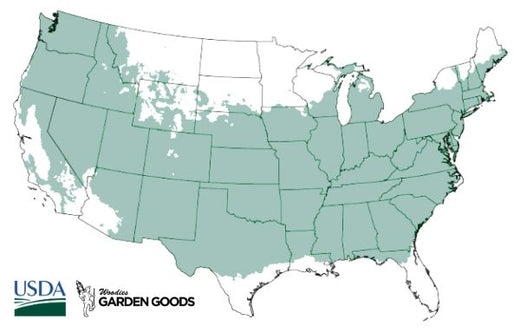
| Hardiness Zone: | 5-8 |
|---|---|
| Mature Height: | 30 to 40 Feet |
| Mature Width: | 20 - 30 Feet |
| Sunlight: | Full Sun to Part Shade |
| Bloom Time / Color: | No showy blooms; produces small cones |
| Soil Condition: | Moist, well-drained, slightly acidic; avoid soggy sites |
| Water Requirements: | Moderate; consistent deep watering during establishment |
| Wildlife Value | Excellent cover and nesting habitat for birds; winter shelter |
| Resistance | Deer-resistant once established; moderately drought-tolerant once rooted |
| Landscape Uses: | Privacy screen, windbreak, specimen tree, property border, evergreen backdrop |
How to Care for Yoshino Japanese Cedar
Be sure to read our planting instructions to ensure a healthy and happy Yoshino Japanese Cedar tree for years to come!

How should I plant Yoshino Japanese Cedar?
Choose a spot with full sun to part shade and soil that drains well after rain. Dig a hole 2–3x wider than the root ball but no deeper than the root ball’s height. Set the tree so the top of the root ball is level with (or slightly above) the surrounding soil, then backfill with the native soil you removed—breaking up clods and removing air pockets as you go. Finish with a wide mulch ring (2–3 inches deep) to protect roots and hold moisture, keeping mulch a few inches away from the trunk. Water deeply right after planting to settle the soil. If you’re planting for a screen, lay out spacing first with flags or stakes so your line stays straight and the finished hedge looks intentional.

How often should I water Yoshino Japanese Cedar after planting?
For the first 6–12 weeks, water deeply 2–3 times per week (more often during heat, less during cool rainy periods). The goal is to soak the entire root ball and the surrounding soil—not just wet the surface. A slow hose trickle for 20–40 minutes (depending on soil type and plant size) is often better than a quick daily splash. After that initial window, shift to deep watering about once per week during the first growing season, adjusting for rainfall. In year two, water during dry spells to keep growth strong and foliage dense. Once established, Yoshino is more forgiving, but it looks best with occasional deep watering when drought stretches on.

When should I fertilize Yoshino Japanese Cedar?
In most landscapes, the best time to fertilize is early spring as new growth begins. Use a balanced, slow-release fertilizer formulated for evergreens, and follow label rates—more is not better. If your soil is already reasonably fertile, a spring feeding plus compost/mulch maintenance may be all you need for steady, healthy growth. Avoid late-season heavy fertilizing, which can push tender growth that’s more vulnerable to winter stress. If growth seems slow or color is off, a soil test is the fastest way to dial in the right approach—especially for pH, since cryptomerias generally prefer slightly acidic conditions for their best performance.

When and how should I prune Yoshino Japanese Cedar?
Prune lightly for shape and density rather than “cutting it back hard.” The best approach is minor tip-pruning after the main flush of growth, which encourages branching and helps a privacy screen fill in. Remove any dead, damaged, or crossing branches as needed, and keep the overall form pyramidal—wider at the base—so lower branches don’t get shaded out over time. Avoid cutting deep into old wood where there’s no green foliage, because evergreens often won’t regenerate nicely from bare stems. If you’re using Yoshino for screening, a gentle, consistent approach beats big corrective pruning later. Plan spacing and placement so the tree has room to stay full without needing drastic cuts.