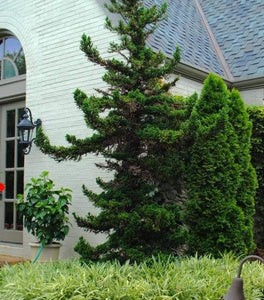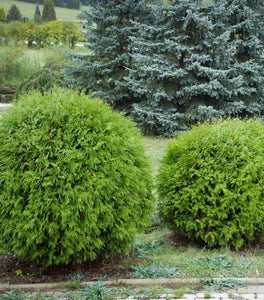

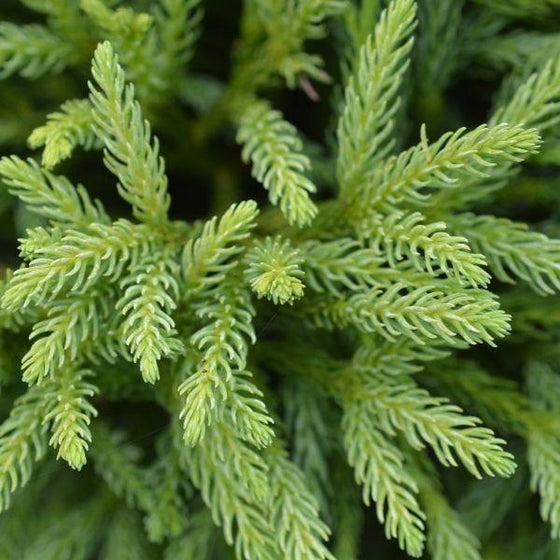
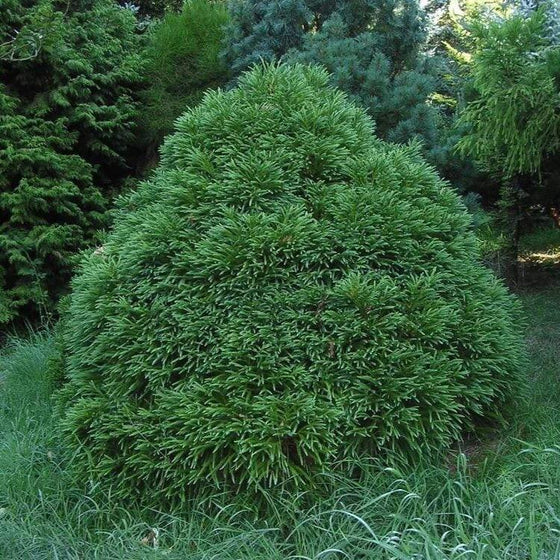


Images Depict Mature Plants
Dwarf Japanese Cedar (Cryptomeria japonica ‘Globosa Nana’)
Cryptomeria japonica 'Globosa Nana'
I've always liked Dwarf Japanese Cedar because it brings the beautiful, soft texture of Cryptomeria into landscapes where a full-size Japanese cedar would simply be too large. The first thing that stands out to me is its naturally rounded, almost cloud-like appearance. The foliage has a softness that contrasts beautifully with hollies, boxwoods, and other broadleaf evergreens, and I particularly enjoy the bronze to rusty-red color it can develop during winter. For foundation beds, rock gardens, and smaller landscapes, Globosa Nana Cryptomeria is an excellent low-maintenance evergreen shrub because it grows slowly and generally needs very little shaping. I like planting it in repeating groups to establish a consistent design or using a single specimen beside a walkway where its distinctive form can be appreciated. My advice is to give it good drainage, consistent moisture during establishment, and enough room to develop its natural rounded shape. If you're looking for a dwarf evergreen with beautiful texture and genuine four-season interest, this is one I would definitely consider.
$23.16 with code SAVINGS20 at checkout Save $5.79
📦 Free shipping on orders over $99.
Delay shipping by leaving us a message at Checkout.
Share:

Dwarf Japanese Cedar Shrubs for Beautiful Foundation Plantings and Year-Round Color
Add Soft Evergreen Texture with Dwarf Japanese Cedar Shrubs
Dwarf Japanese Cedar is one of the most attractive compact evergreen shrubs for homeowners who appreciate soft foliage texture and naturally rounded growth. Unlike many traditional evergreen shrubs with stiff or sharply pointed foliage, Cryptomeria japonica ‘Globosa Nana’ produces dense sprays of delicate, feathery needles that create a graceful, almost cloud-like appearance. Its finely textured foliage develops in a naturally mounded shape, adding a softer visual element to foundation beds, mixed borders, and smaller residential landscapes. The plant's appealing green to blue-green color provides dependable ornamental interest throughout the growing season.
One of the greatest benefits of Dwarf Japanese Cedar is its ability to create year-round landscape structure without extensive maintenance. The shrub develops its rounded form naturally, reducing the need for repeated shaping or trimming. Its soft texture contrasts beautifully with broadleaf evergreen shrubs, ornamental grasses, flowering perennials, and natural stone. Whether used as a single specimen or repeated throughout a planting bed, Dwarf Japanese Cedar introduces a distinctive combination of evergreen color, fine texture, and architectural form that complements both traditional and contemporary landscapes.
Create Beautiful Foundation Plantings with Compact Evergreen Shrubs
Dwarf Japanese Cedar is an excellent choice for foundation plantings where homeowners want attractive evergreen structure without the rapid growth of larger shrubs. Its slow-growing, naturally rounded form makes it particularly valuable near entrances, along residential foundations, and within mixed landscape beds. The foliage provides enough density to establish a strong visual presence while maintaining a soft, inviting appearance. Its manageable growth rate allows homeowners to enjoy the shrub's ornamental qualities for many years without constantly controlling its size.
For the most attractive foundation design, combine Dwarf Japanese Cedar with plants that offer contrasting foliage shapes and seasonal interest. Dark green hollies, compact hydrangeas, colorful perennials, and low-growing ornamental grasses all provide appealing combinations. The shrub's rounded form can help soften the straight architectural lines of a home, creating a natural transition between the building and surrounding garden. Planting several Dwarf Japanese Cedars in repeating groups creates a cohesive landscape design while allowing each shrub to maintain its distinctive globe-shaped silhouette.
Enjoy Beautiful Bronze Winter Color with Globosa Nana Cryptomeria
One of the most interesting ornamental characteristics of Dwarf Japanese Cedar is its seasonal foliage color change. During spring, the shrub develops attractive green to blue-green foliage with a soft, fresh appearance. As summer progresses, the needles maintain their dense texture and may develop warmer yellow-green tones. When temperatures fall, the foliage can shift toward bronze, copper, or rusty-red shades, introducing another layer of visual interest to the winter landscape. This seasonal transition is particularly attractive when the shrub is planted among evergreens that retain a consistent dark green color.
The winter coloration is a natural characteristic of the cultivar and should not automatically be mistaken for plant damage. Its intensity varies with temperature, exposure, and growing conditions. The shrub remains evergreen, providing texture and structure even when nearby deciduous plants have lost their leaves. Dwarf Japanese Cedar is particularly valuable in four-season garden designs, where its changing foliage complements spring flowers, summer perennials, autumn color, and winter landscapes. For homeowners seeking an evergreen that offers more than a single shade of green, Globosa Nana Cryptomeria provides distinctive year-round appeal.
Design Small Gardens with Naturally Rounded Dwarf Japanese Cedar
Dwarf Japanese Cedar is especially useful for small gardens, compact foundation beds, and landscape spaces where a large evergreen tree would be inappropriate. Its slow growth and naturally rounded shape allow it to contribute significant ornamental value without immediately dominating nearby plants. In rock gardens, its soft foliage contrasts beautifully with stone, gravel, and low-growing perennials. Along walkways and garden paths, it creates attractive evergreen accents that provide structure without requiring the formal maintenance associated with clipped hedges.
For larger landscapes, Dwarf Japanese Cedar can be repeated throughout a border to establish rhythm and visual consistency. Its rounded silhouette pairs particularly well with upright ornamental grasses, columnar evergreens, and flowering shrubs with arching branches. The contrast between these different growth habits creates a more interesting planting design while preserving the shrub's natural appearance. Its compact character and refined foliage make it an excellent choice for Asian-inspired gardens, contemporary landscapes, and traditional foundation plantings where year-round structure is an important design objective.
Enjoy Low-Maintenance Beauty with Deer-Resistant Evergreen Shrubs
Dwarf Japanese Cedar combines ornamental appeal with excellent adaptability and relatively simple maintenance requirements. Once established in a suitable planting location, this dwarf conifer requires little pruning because its naturally rounded habit develops without frequent intervention. It performs best in full sun to partial shade and appreciates moist, well-drained soil. Although established plants can tolerate occasional dry conditions, maintaining adequate soil moisture during prolonged drought helps preserve healthy foliage and consistent growth.
Another advantage is its general resistance to deer browsing, making it a useful choice for landscapes where deer regularly damage ornamental shrubs. Dwarf Japanese Cedar also demonstrates tolerance to heat and several common environmental stresses when properly established. For best results, provide a location with good drainage and some protection from severe, drying winter winds, particularly near the colder limits of its hardiness range. With thoughtful placement and basic establishment care, this evergreen becomes a dependable landscape shrub that offers attractive structure with relatively little ongoing attention.
Grow Dwarf Japanese Cedar in Containers, Borders, and Rock Gardens
The naturally compact growth habit of Dwarf Japanese Cedar makes it an attractive option for large decorative containers, mixed shrub borders, and ornamental rock gardens. When grown in containers, its rounded shape creates a polished evergreen accent near patios, entrances, and outdoor seating areas. Its soft foliage can also provide a permanent structural element around which seasonal flowering plants may be arranged. Because the shrub grows slowly, it is easier to incorporate into container designs than many larger evergreen species, although sufficient root space and drainage remain important.
In landscape beds, Dwarf Japanese Cedar provides visual balance when paired with plants that have contrasting foliage colors or upright growth habits. The shrub's soft mound can anchor a perennial planting, define the edge of a rock garden, or introduce a distinctive evergreen accent within a mixed border. Its changing foliage color adds seasonal interest without depending on showy flowers. For homeowners searching for a compact, attractive evergreen shrub with a naturally rounded form and minimal pruning requirements, Dwarf Japanese Cedar offers an excellent combination of beauty, versatility, and long-term landscape value.
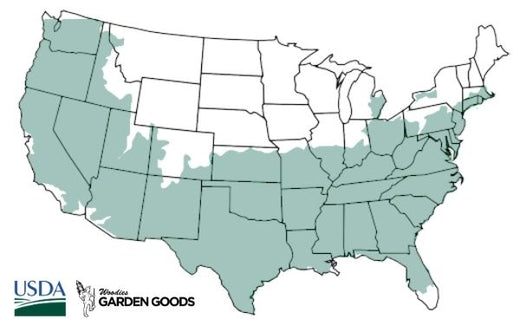
| Hardiness Zone: | 6-9 |
|---|---|
| Mature Height: | 4 to 6 feet over time |
| Mature Width: | 4 to 6 feet over time |
| Sunlight: | Full sun to partial shade |
| Soil Condition: | Moist; well-drained; adaptable to sandy, loamy, and improved clay soils |
| Water Requirements: | Moderate; regular watering during establishment; supplemental watering during prolonged drought |
| Wildlife Value: | Birds seeking evergreen cover; limited direct pollinator attraction |
| Resistance (deer/disease/drought/etc.): | Deer; heat; occasional drought once established; dry soil; moderate salt exposure; generally low susceptibility to significant pests and diseases |
| Landscape Uses: | Foundation plantings; borders; rock gardens; containers; specimen accents; small gardens; mixed evergreen plantings; Japanese-inspired gardens |
How to Care for Dwarf Japanese Cedar (Cryptomeria japonica ‘Globosa Nana’)
Be sure to read our planting instructions to ensure a healthy and happy Cryptomeria Globosa Nana for years to come!

How do I plant Dwarf Japanese Cedar?
Choose a planting location that receives full sun to partial shade and has moist, well-drained soil. Dig a hole approximately twice as wide as the root ball but no deeper than its height. Carefully remove the plant from its container, gently loosen circling roots, and position the top of the root ball level with the surrounding soil. Backfill with the original soil, firm it lightly, and water thoroughly to settle the roots. Apply 2 to 3 inches of organic mulch around the planting area, keeping the mulch away from the stems. Allow approximately 4 to 6 feet between plants when creating a repeated border or group planting. This provides room for the shrub's naturally rounded shape to develop without excessive crowding. Avoid locations where water stands after heavy rainfall.

How often should I water Dwarf Japanese Cedar?
Newly planted Dwarf Japanese Cedar shrubs need consistent moisture during their first growing season. Check the soil regularly and water deeply whenever the upper few inches begin to dry. Watering frequency depends on rainfall, temperature, soil texture, and whether the plant is growing in the ground or a container. Keep the root zone evenly moist without allowing the soil to remain saturated. Once established, Dwarf Japanese Cedar can tolerate occasional dry periods, but it generally performs best with moderate, consistent soil moisture. Water during prolonged summer drought, particularly in full-sun locations. Container-grown specimens may require more frequent watering because their root systems dry out faster than plants growing in garden soil.

What is the best fertilizer for Dwarf Japanese Cedar?
Dwarf Japanese Cedar usually requires only modest fertilization. If the soil is nutrient-poor or the shrub demonstrates weak growth, apply a balanced, slow-release fertilizer formulated for evergreen shrubs in early spring. Follow the product label and avoid excessive application. A light addition of compost may also improve soil structure and gradually supply nutrients. Because ‘Globosa Nana’ is naturally slow-growing, heavy fertilization is unnecessary and can encourage soft growth that detracts from its compact appearance. Good drainage, adequate sunlight, and appropriate watering contribute more to long-term plant health than frequent feeding. Healthy established plants may not require supplemental fertilizer every year.

When should I prune Dwarf Japanese Cedar?
Dwarf Japanese Cedar naturally maintains a dense, rounded growth habit, so extensive pruning is rarely necessary. Inspect the plant in late winter or early spring and remove any damaged, dead, or unusually long branches. If shaping is desired, make small corrective cuts to preserve the shrub's natural outline rather than shearing the entire plant into an artificial shape. Avoid pruning deeply into old, bare wood, because evergreen conifers may not regenerate foliage from those areas. Heavy pruning can permanently alter the plant's attractive globe-shaped appearance. The best maintenance strategy is to allow Dwarf Japanese Cedar to grow naturally, using occasional light trimming only when needed.