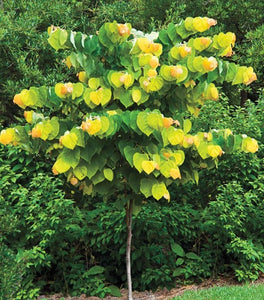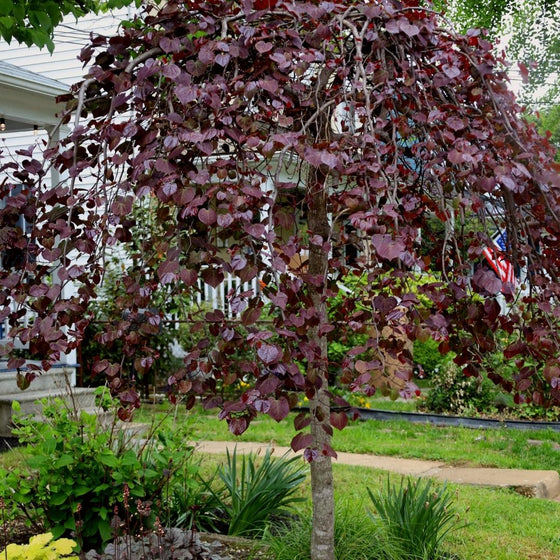
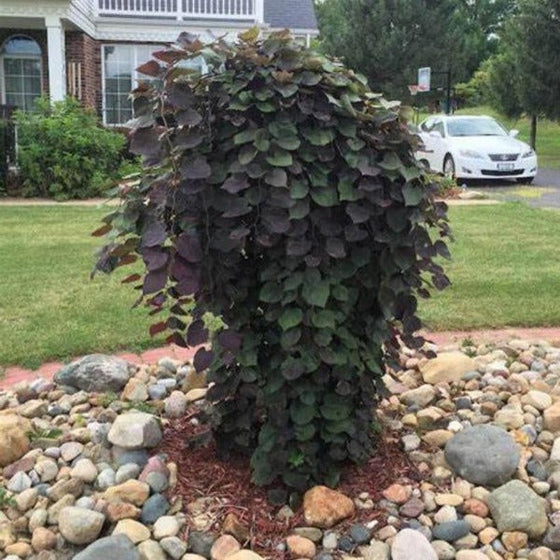
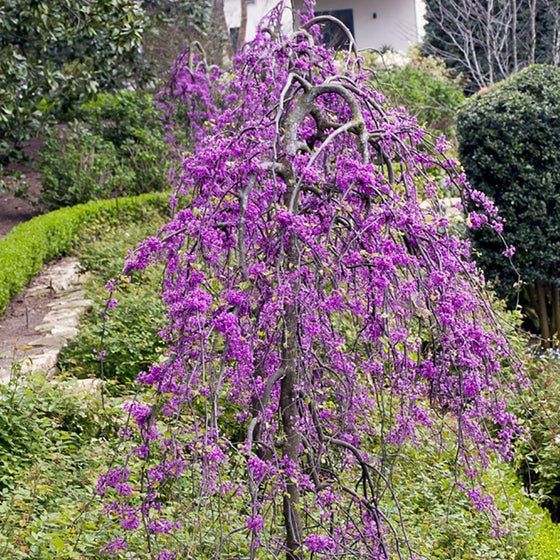
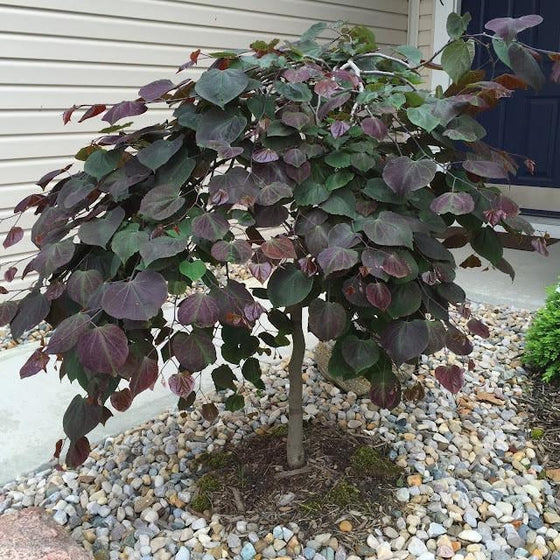


Images Depict Mature Plants
Cercis canadensis ‘Ruby Falls’ (Ruby Falls Redbud Tree)
Cercis canadensis 'Ruby Falls'
Ruby Falls is the redbud for people who want a serious focal point without needing a big yard—spring blooms that pop on bare branches, then a cascade of burgundy heart-shaped foliage that keeps the scene dramatic all season. Plant it where you’ll see it every day (entry bed, patio corner, near a walkway), give it drainage and establishment water, and you’ll get a compact, elegant flowering tree that feels custom-picked for your landscape.

Use Coupon Code: NEWYEAR
Take an Extra 30% Off Everything on Our Site
📦 Free shipping on orders over $99.
Delay shipping by leaving us a message at Checkout.
Share:


Dramatic Weeping Form + Burgundy Foliage in a Small-Space Tree
Like Getting Two Trees in One
Ruby Falls Redbud is a compact, weeping ornamental tree that gives you a “wow” moment in early spring—rosy-purple blooms lining graceful cascading branches, often before leaves appear. It’s the kind of tree you buy when you want a focal point that feels curated and high-end, even in a small landscape.
If you’re shopping to buy a Ruby Falls Redbud online, you’re really buying two show-stoppers in one: spring flowers and rich, heart-shaped foliage that reads deep burgundy to purple as the season unfolds.
Weeping Beauty all Year
This redbud is prized for its upright-weeping form—arching branches that create a cascading silhouette perfect near patios, walkways, and entry beds. Garden Goods Direct lists it as a true compact specimen at roughly 5–6 ft tall and 3–4 ft wide, which makes it ideal for tight foundation zones and courtyard gardens.
In ideal conditions and with proper training, many growers describe Ruby Falls as reaching into the 6–8 ft range—still small and manageable, but with enough presence to anchor a design.
Native Beauty with Little Maintenance
Ruby Falls thrives in full sun to partial shade and prefers well-drained soil. Give it consistent moisture while it establishes, then it becomes more drought-tolerant and refreshingly low-maintenance for a flowering tree—especially compared to fussier ornamentals.
For optimal color and performance, avoid sites where water collects (wet roots can cause problems). A simple mulch ring helps regulate moisture and temperature and keeps establishment easier—exactly what buyers want from a “plant-it-right-once” specimen tree.
The Perfect Focal Point for Small Gardens
Use Ruby Falls as a small-space focal point—a living sculpture near a front walk, a centerpiece in a mixed border, or an elegant accent beside a patio. It’s also an excellent choice for containers (with a large pot and good drainage), making it one of the most dramatic “small flowering trees” for patios and courtyards.
Bonus: those early blooms are pollinator-friendly, bringing bees and butterflies into the garden when nectar sources are still limited.
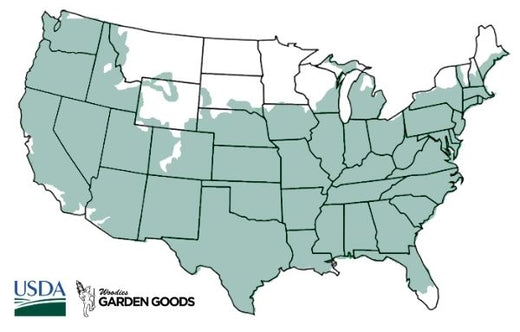
| Hardiness Zone: | 5-9 |
|---|---|
| Mature Height: | 5 to 6 Feet |
| Mature Width: | 3 to 4 Feet |
| Sunlight: | Full sun to partial shade |
| Foliage: | Burgundy Leaves |
| Bloom Time / Flower Color: | Early spring / pink to rosy-purple |
| Soil Condition: | Any well drained soil |
| Water Requirements: | Water well until established |
| Wildlife Value | Attracts bees & butterflies |
| Resistance | Moderately deer resistant |
| Landscape Uses: | Small gardens, patios, walkways, focal point, containers |
How to Care for Cercis canadensis ‘Ruby Falls’ (Ruby Falls Redbud Tree)
Be sure to read our planting instructions to ensure a healthy and happy Ruby Falls Redbud Tree for years to come!
-v1744045831977.png?92x91)
How should I plant Ruby Falls Redbud Tree?
Choose a site with full sun to partial shade and well-drained soil. Dig a hole 2× as wide as the root ball and the same depth, then set the tree with the root flare at soil level (not buried). Backfill with native soil, firm gently, and water deeply to settle the roots in without compacting the soil. Space plants with mature width in mind and add a 2–3 inch mulch ring to stabilize moisture (keep mulch a few inches away from the trunk). Spring and early fall are ideal planting windows. If planting in warmer months, focus on consistent watering until the plants are established for optimal flowering and foliage color.
-v1744045842283.png?89x84)
How often should I water Ruby Falls Redbud after planting?
During the first growing season, water the soil deeply once or twice a week, allowing it to dry slightly between waterings. Deep watering trains roots to grow downward and outward, improving resilience and reducing stress during summer heat. Once established, Ruby Falls is more drought-tolerant and usually only needs supplemental watering during prolonged dry spells. Check moisture at the root zone—if the top couple of inches are dry, it’s time to water—and keep mulch refreshed to reduce swings that cause stress.
-v1744045852998.png?90x89)
When should I fertilize Ruby Falls Redbud?
Fertilize in early spring, just before new growth begins, using a balanced, slow-release fertilizer applied around the drip line (not against the trunk). This supports healthy growth and flowering without forcing weak, overly fast shoots. If you prefer a soil-first approach, top-dress with compost or well-aged manure to build fertility gradually and improve soil structure. Avoid over-fertilizing—too much nitrogen can reduce flowering and encourage leggy growth.

When and how should I prune Ruby Falls Redbud?
Prune with a light hand to preserve the signature weeping form. Remove dead, damaged, or crossing branches and thin lightly for airflow. Garden Goods Direct notes pruning after flowering in late spring for shaping needs. If you need to refine the silhouette, do small, selective cuts and avoid stripping the canopy. The goal is to keep its cascading architecture intact while improving structure and reducing crowding—especially important if the tree is planted near walkways or patios.