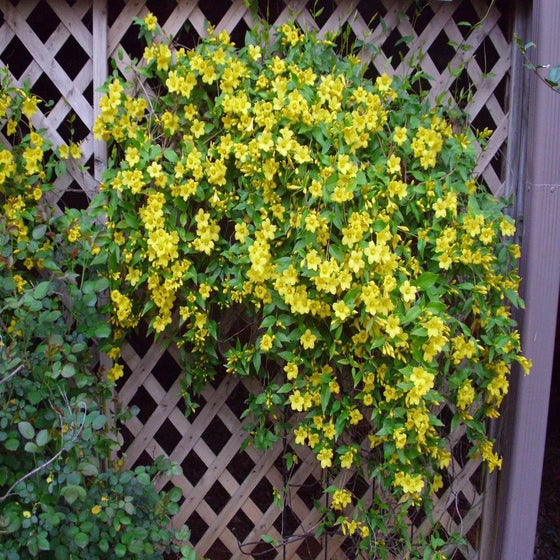

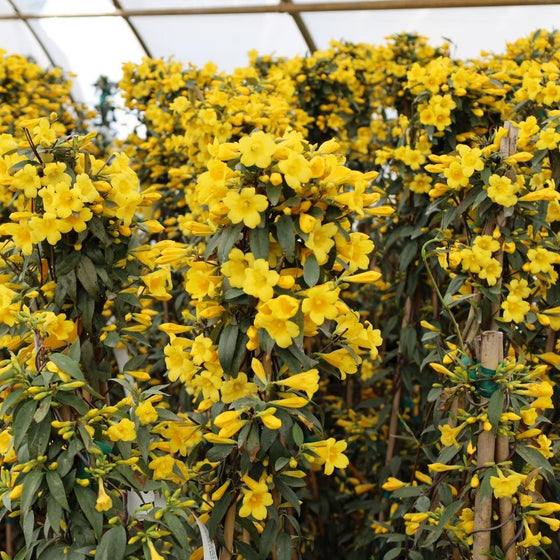


Images Depict Mature Plants
Carolina Jessamine
Gelsemium sempervirens
Carolina Jessamine is one of those plants that makes you feel like spring showed up early—glossy evergreen foliage on the trellis all year, then a burst of fragrant yellow trumpets in late winter that turns a plain fence into a “wow” moment. I love how easy it is to train and how polished it looks when you give it a simple support and one post-bloom trim; it’s the kind of vine that feels classic, not fussy.

15% OFF SITEWIDE, USE CODE 'FALLPLANT15'
📦 Free shipping on orders over $99.
Delay shipping by leaving us a message at Checkout.
Share:Recommended Add-Ons



Carolina Jessamine Vine With Fragrant Yellow Late-Winter Blooms
Golden, Fragrant Blooms That Kick Off The Season Early
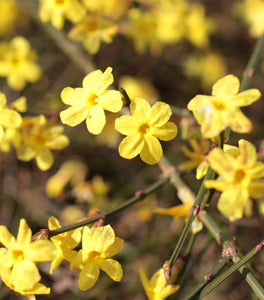
Carolina Jessamine is the vine you plant when you want your landscape to feel alive before spring is fully awake. In late winter to early spring, it covers itself in bright yellow, trumpet-shaped flowers with a sweet fragrance that stops you on the walkway and makes a fence line feel like a garden moment. It’s an instant mood-lifter after winter, and it’s especially striking trained along a trellis, arbor, pergola, or porch rail where the blooms can spill forward into view.
Beyond beauty, this vine brings real “front yard value.” Those early flowers help support seasonal pollinator activity, and the glossy green foliage adds structure when many plants are still bare. Whether you’re softening a chain-link fence, adding color to an entryway, or creating a flowering backdrop behind shrubs, Carolina Jessamine delivers a big seasonal payoff with a classic, Southern look that feels timeless rather than trendy.
Evergreen Foliage That Creates A Polished Privacy Trellis
The foliage is clean and refined: glossy, narrow leaves on slender twining stems that create a fine-textured screen. In many gardens, it’s evergreen to semi-evergreen, so you get year-round presence instead of a bare trellis all winter. That makes it a great choice for “privacy by the trellis” projects where you want coverage that looks intentional year-round, not just when flowers are open.
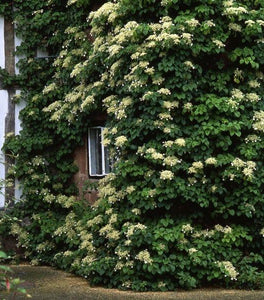
Carolina Jessamine is also a well-mannered climber. It twines rather than clings, so it’s easy to guide onto a support, and it tends to look airy and elegant rather than bulky. If you want a living green wall that still feels light, this is the kind of vine that plays nicely with surrounding plants. Train it early, keep it watered while establishing, and you’ll end up with a handsome evergreen backdrop that turns golden when the blooms arrive.
Versatile Growth For Fences, Arbors, And Sunny Slopes As Groundcover
With support, Carolina Jessamine can climb and trail to create a taller vertical statement, often reaching roughly 10–12 feet in typical garden conditions and stretching longer when given a strong structure to run. Without support, it can be allowed to sprawl as a mounding groundcover—an excellent option for slopes and banks where you want greenery and seasonal color without mowing or constant edging.
This versatility makes it easy to design with. Use it to dress up a mailbox trellis, wrap it along a porch lattice, or let it cascade down a sunny bank for a naturalized look. It prefers full sun for best flowering, but it can still perform with a bit of light shade (you’ll usually get fewer blooms). The key is drainage and a good start—once established, it becomes much more forgiving and reliably returns with that early-season flower show.
Low-Maintenance Beauty With Simple Training And One Smart Pruning Window
Carolina Jessamine is easy to live with because it doesn’t demand complicated routines. The main “secret” is training: guide young stems onto your support early so the vine grows where you want it, and you’ll avoid the frustration of untangling and redirecting older growth later. A few soft ties and occasional hand-twining during the growing season keep everything neat and evenly distributed.
Pruning is straightforward as well—do it right after the main bloom flush. That timing lets you shape the vine, reduce tangles, and encourage fresh growth without sacrificing next year’s flower buds (which can form after bloom). Keep pruning light and purposeful: remove wayward stems, thin for airflow if needed, and shorten overly long runners. Do that once a year, and you’ll keep a tidy, flower-loaded vine that looks designed, not wild.
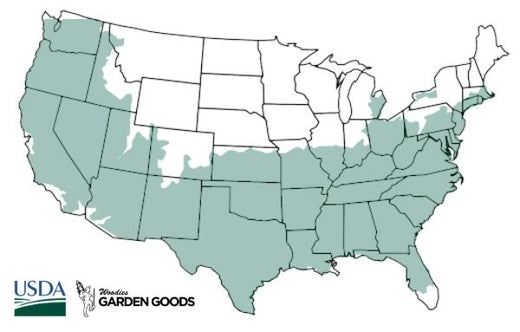
| Hardiness Zone: | 6-9 |
|---|---|
| Mature Height: | About 10–12 ft tall (up to ~20 ft with support) |
| Mature Width: | 6 to 8 feet |
| Bloom Time / Color: | Late winter to early spring; fragrant bright yellow trumpets |
| Sunlight: | Full sun (best flowering); tolerates light shade |
| Water Requirements: | Water well until established; more drought tolerant once established |
| Soil: | Well-drained, average to organically rich soil |
| Wildlife Value: | Attracts hummingbirds and butterflies; provides cover on trellises |
| Resistance: | Generally deer and rabbit resistant; drought tolerant once established; avoid wet soils |
| Landscape Uses: | Trellises, arbors, fences, pergolas, porch lattice, slope groundcover, evergreen screening |
How to Care for Carolina Jessamine
Read our recommended care instructions to ensure a happy and healthy Carolina Jessamine plant for years to come.
-v1770843286948.png?92x91)
How should I plant Carolina Jessamine?
Pick a sunny spot with well-drained soil and decide first whether you want it to climb or sprawl. If you’re training it up, install your support (trellis, wire panel, arbor, or fence ties) before planting so you don’t disturb roots later. Dig a hole about twice as wide as the root ball, set the plant at the same depth it was growing in the pot, backfill, and water deeply to settle the soil. Add a 2–3-inch mulch ring to hold moisture and reduce weeds, but keep the mulch a few inches away from the stem base. If planting along a fence, give it a little breathing room from the structure so air can move and you can water the root zone easily. Then begin gently guiding young stems toward the support as they grow.
-v1770843324322.png?89x84)
How often should I water Carolina Jessamine after planting?
For the first 2–3 weeks, water every 2–3 days (more often in hot weather or on sandy soils) so the root zone stays evenly moist, not soggy. After that, transition to a deep soak about once per week, adjusting it based on rainfall. The goal is to encourage roots to grow outward and downward, which makes the vine tougher and more drought-tolerant later. Once established, Carolina Jessamine can handle short dry spells better, but it will bloom and grow more consistently if it doesn’t go bone-dry for long stretches. During prolonged summer drought, a deep watering every 10–14 days is a good “insurance policy,” especially for vines growing against warm, reflective surfaces like fences and walls.
-v1770843364949.png?90x89)
When should I fertilize Carolina Jessamine?
Fertilize in early spring as new growth begins using a balanced, slow-release fertilizer. This supports steady growth and helps the plant build energy after flowering. If your soil is reasonably fertile and you mulch annually, you can keep feeding light—too much nitrogen can push lots of leafy growth with fewer flowers. If growth seems weak, a second light feeding in late spring can help, especially on sandy sites. Avoid heavy late-summer fertilizing so the vine can harden off naturally heading into cold weather. Consistent watering while establishing and good drainage usually matter more than extra fertilizer.

When and how should I prune Carolina Jessamine?
Prune right after flowering is finished. That’s the best window to shape, thin, and shorten runners without removing next year’s bloom buds. Focus on directing the vine: cut back wayward stems, remove tangles, and thin a little for airflow if the growth is crowded against a fence or arbor. Avoid heavy pruning in late summer, fall, or winter, which can reduce flowering. For groundcover plantings on slopes, you can do a yearly post-bloom “reset” trim to keep the mound lower and denser. The goal is simple: one thoughtful prune after bloom keeps Carolina Jessamine tidy, trainable, and loaded with flowers.