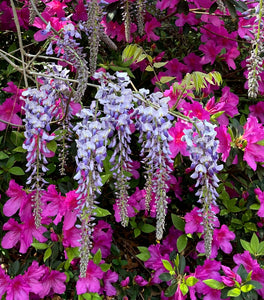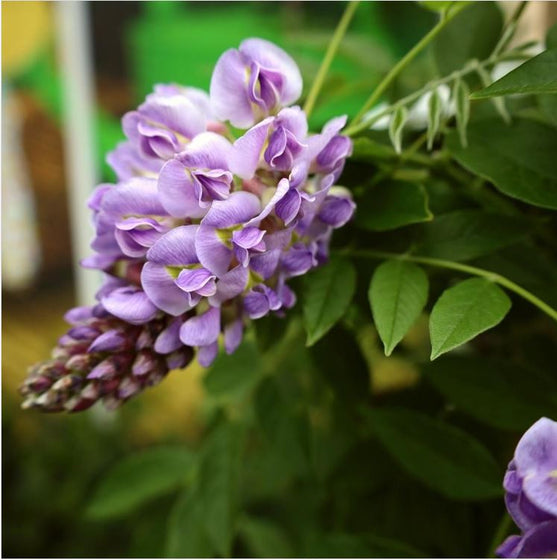

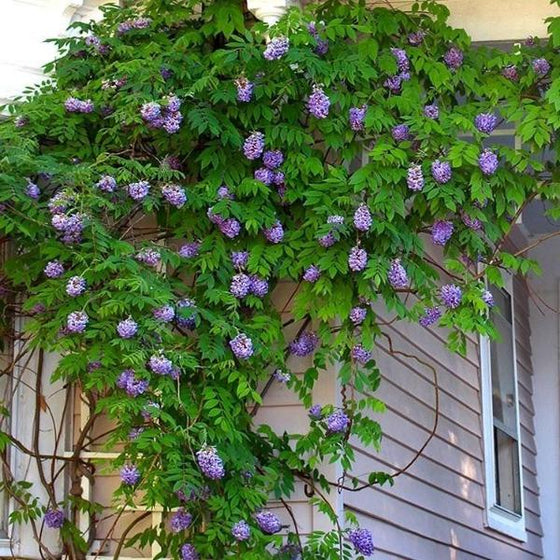
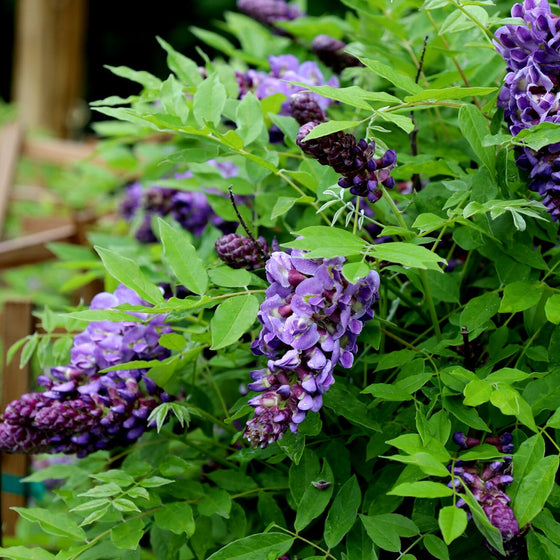
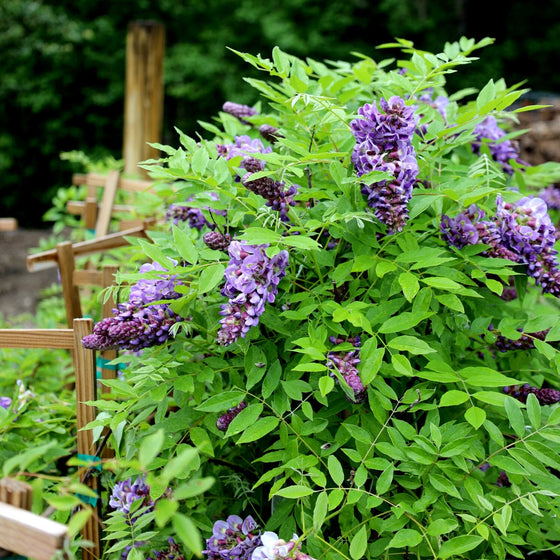


Images Depict Mature Plants
Amethyst Falls Wisteria Vine
Wisteria frutescens 'Amethyst Falls'
I love ‘Amethyst Falls’ because it gives you that classic wisteria magic—fragrant lavender blooms spilling over a pergola—without the “what have I done?” feeling that some wisterias can bring. Give it strong support, plenty of sun, and a simple pruning rhythm, and it turns into a reliable spring showpiece that looks like you hired a designer. If you want a flowering vine that feels romantic but still practical for real life, this is one I’d plant with confidence.

20% OFF SITEWIDE SALE
Use Code 'OCTOBER20' At Checkout
📦 Free shipping on orders over $99.
Delay shipping by leaving us a message at Checkout.
Share:Recommended Add-Ons



Amethyst Falls Wisteria Vine for Fragrant Purple Blooms Without the Headache
A “Wisteria Look” You Can Actually Live With
If you love the idea of wisteria but hate the stories—vines swallowing gutters, strangling trees, and turning pruning into a second job—‘Amethyst Falls’ is the refresh. This is an American wisteria selection that brings the same dreamy, lavender-purple flower clusters and sweet fragrance, but with a growth habit that’s far more cooperative in a home landscape. It’s the kind of flowering vine that gives you the romance of spring blooms without making you feel like you’ve invited chaos onto your property.
The result is a vine that’s easier to train, easier to maintain, and easier to feel good about planting—especially if you’ve avoided Asian wisterias because of how aggressive they can be. ‘Amethyst Falls’ twines beautifully on a trellis, arbor, pergola, or sturdy fence, and it’s often praised for blooming younger than many traditional wisterias. Plant it where you’ll see it often—near a patio, walkway, or entry—and let that early-season burst of color become your yearly “spring is here” moment.
Fast Coverage For Trellises, Pergolas, And Small Structures
‘Amethyst Falls’ can grow quickly once it’s happy, pushing long twining stems that are perfect for turning bare wood and plain fencing into a flowering feature. Early on, you’ll often see rapid extension growth as it learns its support—then, with consistent training and pruning, it fills in and looks more intentional. Over time, mature vines can reach substantial lengths, so think of them as vines with real presence: they can cloak a pergola, soften a railing, or create a flowering privacy moment without needing a huge footprint at ground level.
The key is giving it the right structure from day one. Wisteria isn’t a delicate vine—it’s a woody climber that needs strong, anchored support (not flimsy lattice). If you’re training it up a post, guide one or two main leaders and tie them in loosely, then let side shoots become the flowering framework. This approach gives you better bloom display and a cleaner look than letting it tangle freely. You’ll end up with a vine that reads “designed,” not “overgrown,” and it will keep rewarding you as the framework matures.
Fragrant Spring Flowers That Pollinators Notice
When ‘Amethyst Falls’ blooms, it puts on a show: drooping clusters of lavender-purple, lightly fragrant flowers that feel tailor-made for arbors and porch rails. Bloom typically arrives in late spring, and many gardeners also enjoy repeat flowering when the vine is pruned and grown in good conditions. Even when it’s not in flower, the foliage brings a lush, classic vine look—green, leafy coverage that makes hard lines and tall structures feel softer and more inviting.
This is also a pollinator-friendly choice. Those flower clusters draw attention from bees, butterflies, and hummingbirds, which makes ‘Amethyst Falls’ an easy add for gardens that prioritize life and movement—not just color. If you’re building a “seasonal rhythm” landscape, wisteria can be your spring headline act, followed by summer perennials and late-season shrubs. One practical note: wisteria can form pods and seeds, and those can be toxic if ingested—so it’s smart to place the vine where curious pets and small children aren’t likely to snack on fallen pods.
Pruning And Spacing That Keep It Blooming And Beautiful
Wisteria success is less about “green thumb magic” and more about two simple skills: spacing and pruning. For spacing, give the plant room at the base so air can move, and you can access the trunk for training—crowding it into tight corners makes everything harder later. Plan for the vine to spread along its support, and set it up so stems can be tied, guided, and maintained without climbing on ladders every weekend. A little planning now prevents the classic wisteria problem: a gorgeous top with a messy, shaded, unmanageable base.
For pruning, timing is everything. Light trimming right after the main bloom helps keep the vine tidy and can encourage additional flowering. Then, a more structural prune in late winter lets you shape the framework, control size, and direct energy toward flower-bearing spurs instead of endless whip growth. This two-step rhythm is the “secret” to getting reliable blooms and a vine that behaves. Done well, ‘Amethyst Falls’ becomes the kind of plant that looks high-maintenance—but actually isn’t—because you’re working with it, not fighting it.
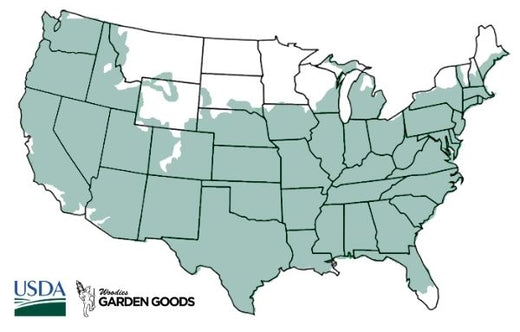
| Hardiness Zone: | 5-9 |
|---|---|
| Mature Height: | 10 to 20 Feet with support |
| Mature Width: | 10 to 15 Feet with support |
| Classification: | Broad leaved native deciduous vine |
| Sunlight: | Full sun to partial sun (best flowering in full sun) |
| Bloom Time / Color: | Late spring; lavender-purple, fragrant clusters; may repeat bloom |
| Soil Condition: | Enriched, humusy, well-drained; tolerates average soils; slightly acidic is ideal |
| Water Requirements: | Moderate; deep regular watering first season, then weekly during dry spells |
| Wildlife Value: | Attracts bees, butterflies, and hummingbirds |
| Resistance | Often deer resistant; drought tolerant once established; generally low major pest issues |
| Landscape Uses: | Trellis/arbor/pergola, fence cover, entry feature, patio container feature, pollinator garden accent |
How to Care for Amethyst Falls Wisteria Vine
Before you buy an Amethyst Falls Wisteria Vine, make sure to read about the recommended care instructions to keep this plant healthy and thriving.

How should I plant Amethyst Falls Wisteria Vine?
Plant in full sun (or light partial sun) with well-drained soil and a sturdy support already in place—trellis, pergola, arbor, or heavy-gauge wires anchored to strong posts. Dig a hole 2–3x wider than the root ball and no deeper than the root ball height, then set the vine at the same depth it was growing in its pot. Backfill with your native soil, water deeply to settle, and mulch 2–3 inches deep (keep mulch off the stem). Right after planting, choose one or two main stems to serve as your “leaders,” and loosely tie them to the support so the vine learns where you want it to go. This training step turns wisteria into a beautiful, controlled feature rather than a tangle. If you’re planting near a structure, give it breathing room and access for pruning—future-you will be grateful.

How often should I water Amethyst Falls Wisteria Vine after planting?
Water deeply and regularly through the first growing season to build an extensive root system. A good rule is deep watering 2–3 times per week for the first 6–10 weeks (more during heat, less with steady rain), focusing on soaking the root zone rather than wetting the surface. After establishment, reduce frequency—most gardens do well with a deep weekly soak during dry spells. Consistent moisture supports healthier growth and better bloom performance, but avoid keeping the soil soggy. If the top couple of inches of soil are dry, it’s usually time to water; if it’s still damp, wait.

When should I fertilize Amethyst Falls Wisteria Vine?
Feed in early spring as growth begins, using a balanced, slow-release fertilizer (or a light application of compost) to support steady development. Avoid overdoing high-nitrogen fertilizer—too much nitrogen can push leafy growth at the expense of flowers, which is the opposite of what you want with wisteria. If your vine is growing vigorously but blooming lightly, scale back fertilizer and focus on pruning timing and sun exposure instead. In many cases, more sun + correct pruning beats more fertilizer. A soil test is a smart move if growth looks weak or leaves yellow, because pH and nutrient balance can affect performance.

When and how should I prune Amethyst Falls Wisteria Vine?
Do a light trim right after the main flowering period to keep the vine tidy and encourage repeat bloom. This is when you shorten overly long shoots, remove messy tangles, and keep growth directed along the support. Think “refine and redirect,” not “hack and hope.” Then prune in late winter to shape the framework and control size. Remove dead or crossing wood, and shorten side shoots to encourage flower-bearing spurs instead of endless whip growth. This two-part routine—post-bloom tidy-up and late-winter shaping—is the simplest path to a wisteria that blooms well and stays manageable.