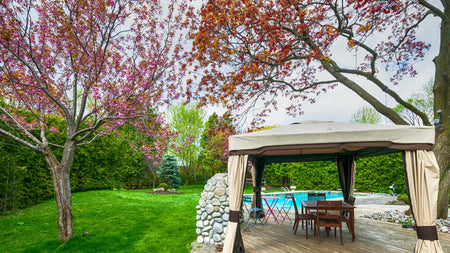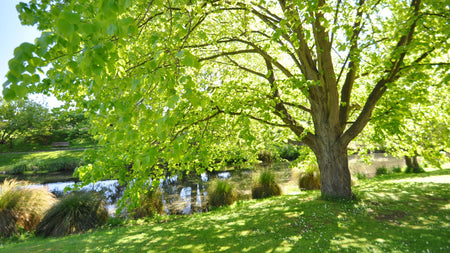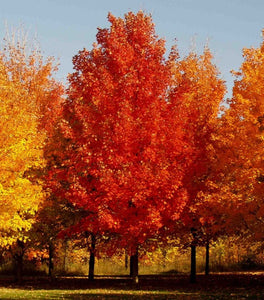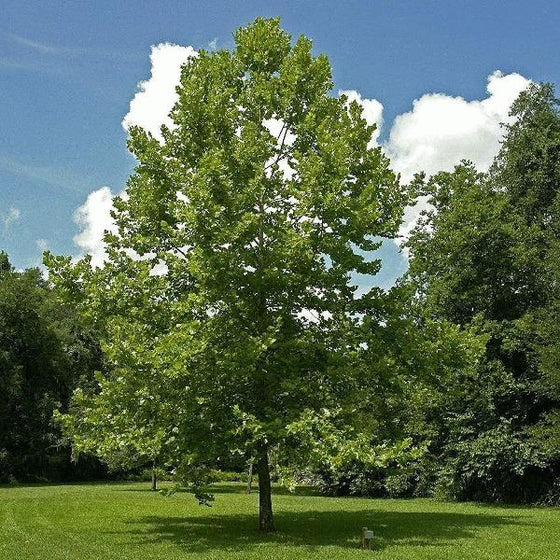
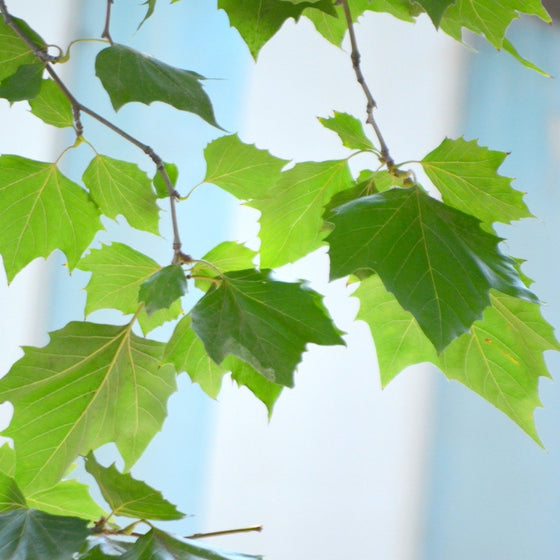


Images Depict Mature Plants
American Sycamore Tree
Platanus occidentalis
American Sycamore is a tree I would only recommend when the site truly has room for it, but when it does, it is hard to beat. The bark is unforgettable, the growth is fast, and the tree has a real native grandeur that smaller shade trees just do not bring. For a big property, naturalized edge, or open lawn where you want a long-term signature tree, this is the kind of plant that can define the landscape for decades. That recommendation is based on its documented mature size, fast growth, and suitability for large open sites.

15% OFF SITEWIDE, USE CODE 'FALLPLANT15'
📦 Free shipping on orders over $99.
Delay shipping by leaving us a message at Checkout.
Share:

A Bold Native Shade Tree for Big Open Spaces
A Massive Native Tree With Unmistakable Bark
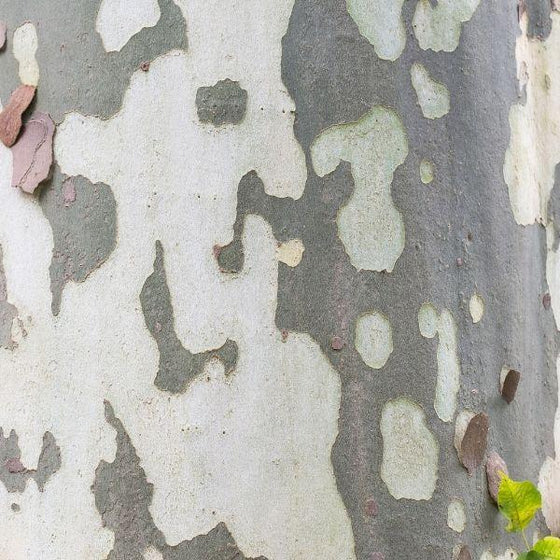
American Sycamore is one of the most visually distinctive native shade trees in the eastern United States. Its mottled bark peels and flakes to reveal lighter inner patches, creating the striking white, tan, cream, and olive patterning that makes mature sycamores instantly recognizable from a distance. NC State describes it as a large, fast-growing deciduous tree with a wide-spreading, irregular crown, while Clemson notes that mature trees commonly reach 75 to 100 feet tall with a similar or even greater spread.
That dramatic bark is only part of the appeal. American Sycamore also brings a huge shade-tree presence and a sense of permanence to the landscape. When planted where it has enough room, it becomes the kind of tree that defines an entire property rather than simply filling a single spot. For homeowners or landowners with real space to work with, it can create a commanding focal point and a powerful long-term canopy tree.
Fast Growth for Large Landscapes and Naturalized Settings
American Sycamore is especially appealing to buyers who want a fast-growing native shade tree. NC State identifies it as fast-growing, and federal forest references note its ability to grow to enormous proportions, with open-grown crowns capable of spreading 100 feet or more in exceptional specimens. That growth habit makes it better suited to large yards, parks, farm edges, stream corridors, and naturalized landscapes than to small front yards or tight suburban foundation plantings.
This is a tree that needs thoughtful placement from the beginning. Clemson specifically warns that sycamores require ample space, and University of Florida guidance says they are best not planted in ordinary yards because of their messy habit and enormous scale. For the right site, though, that size becomes a major strength. It can create deep shade, strong landscape character, and a big native-tree look much faster than slower-growing canopy trees.
A Strong Native Choice for Moist Soils and Tough Sites
American Sycamore is naturally associated with bottomlands, streamsides, and moist, fertile soils, which helps explain why it is often recommended for larger open sites and naturalized settings. NC State lists it as native to southeastern Canada and the central and eastern United States, and Virginia Tech notes that it can tolerate wet soils and is best suited to parks or natural areas.
That site tolerance makes it useful where some other large shade trees struggle. It can handle moisture better than many upland trees, though it still performs best when roots can establish in reasonably oxygenated soil rather than in permanently stagnant conditions. For larger properties with low areas, expansive lawns, pond edges, or rooms near drainage ways, American Sycamore can be a very practical native tree choice. This last point is an inference based on its cited wet-soil tolerance and floodplain associations.
A Wildlife-Supporting Shade Tree With Long-Term Presence
American Sycamore also contributes ecological value. Clemson highlights its winter seed balls and wildlife value, while broader native tree references place it among the important large trees of eastern riparian and bottomland systems. Even beyond direct food value, a tree of this size helps create cover, nesting opportunity, and long-term habitat structure in a landscape.
From a design standpoint, this is not a “small ornamental tree” purchase. It is a long-view tree for buyers who want scale, native character, and true canopy development. If the property is large enough, American Sycamore can become one of the most memorable trees in the landscape. If space is limited, it is usually better to choose a smaller species. That recommendation follows directly from the tree’s documented mature size and site needs.
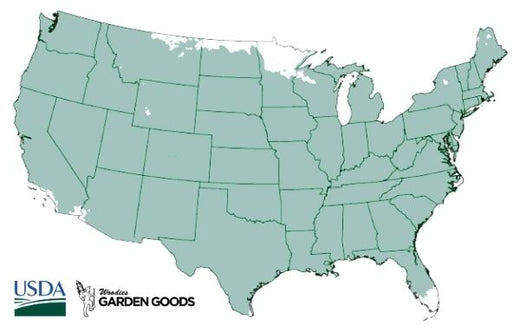
| Hardiness Zones: | 4-9 |
|---|---|
| Mature Height: | 75 to 100 feet |
| Mature Width: | 75 to 100 feet |
| Sunlight: | Full sun to part shade |
| Bloom Time / Color | Spring; inconspicuous flowers |
| Soil Condition: | Moist, rich, well-drained to periodically wet soils; tolerates wet sites |
| Water Requirements: | Moderate during establishment; more tolerant of moist conditions than many shade trees |
| Ornamental Features | Exfoliating mottled bark |
| Wildlife Value | Native habitat tree with cover and seed value |
| Resistance (deer/disease/drought/etc.) | Fast growing; tolerates wet soils |
| Landscape Uses | Large shade tree, parks, naturalized areas, streamside planting, very large properties |
How to Care for American Sycamore Tree
Be sure to read our planting instructions to ensure healthy and happy American Sycamore Trees for years to come!
-v1746193166163.png?92x91)
How should I plant American Sycamore Tree?
Plant American Sycamore in a location with plenty of long-term space and full sun to part shade. Dig a hole two to three times as wide as the root ball but no deeper than the root ball itself, and set the root flare at or slightly above grade. The University of Maryland’s planting guidance generally supports shallow, wide planting and proper root flare placement for trees and shrubs. The most important decision is site selection. Because American Sycamore can grow into a massive tree, it should be planted well away from homes, sidewalks, septic systems, and narrow planting strips. It is much better suited to large lawns, parks, and naturalized or streamside settings than tight residential beds.
-v1746193197265.png?89x84)
How often should I water American Sycamore Tree after planting?
Water deeply right after planting and keep the root zone evenly moist during the establishment period. A newly planted sycamore should receive deep watering on a regular schedule during dry weather, especially in its first growing season. This exact schedule varies by soil and weather, but the goal is consistent moisture without turning the site into standing mud. That guidance is an inference based on the tree’s preference for moist sites and standard tree-establishment practice. Once established, American Sycamore is better adapted to moist sites than many shade trees and can tolerate wetter conditions. It is generally a stronger fit for sites that stay somewhat moist than for highly droughty, compacted sites.
-v1746193213669.png?90x89)
When should I fertilize American Sycamore Tree?
A young American Sycamore usually does not need heavy fertilization if it is planted correctly in a suitable site. The sources reviewed emphasize site suitability, planting, and moisture conditions more than routine feeding, so a light spring feeding only if growth is poor is the safest general recommendation. This is a best-practice inference rather than a cultivar-specific feeding rule. In most cases, proper mulching, watering during establishment, and adequate rooting space matter more than fertilizer. Overemphasizing fertilizer will not solve problems caused by poor siting or restricted space.

When and how should I prune American Sycamore Tree?
Prune American Sycamore when it is young to improve structure, especially by correcting double leaders and gradually raising lower branches as needed. Penn State’s tree-planting guidance specifically recommends structural pruning of young trees to improve tree form. Ongoing pruning should focus on structure, clearance, and removal of damaged wood rather than constant shaping. Clemson also notes anthracnose and other pest issues on sycamore, so pruning tools should be kept clean when working on diseased material.