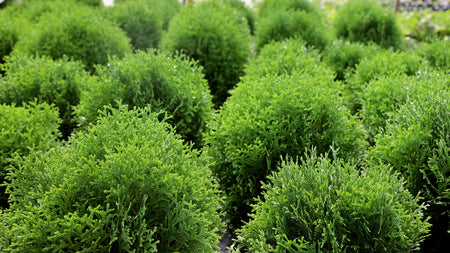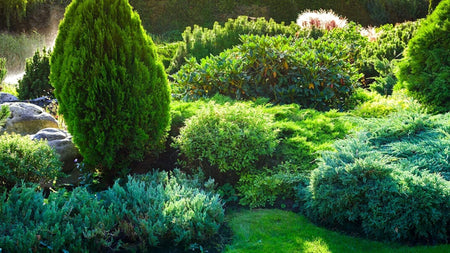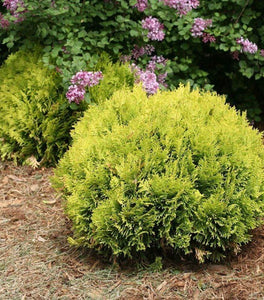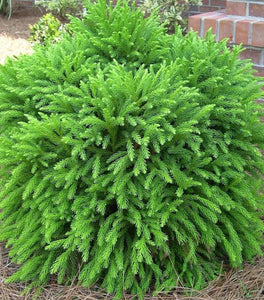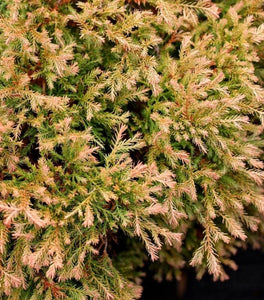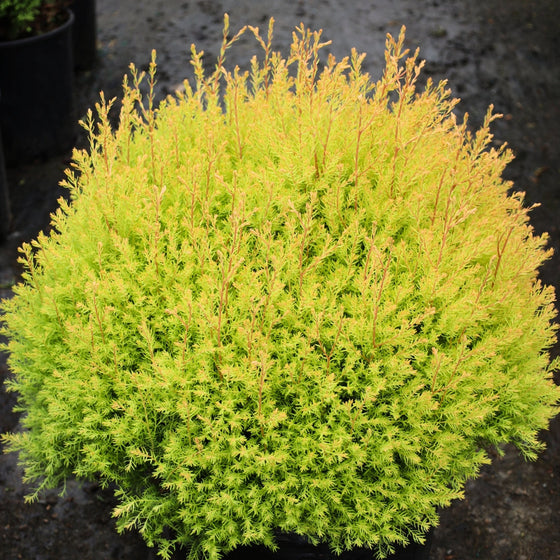
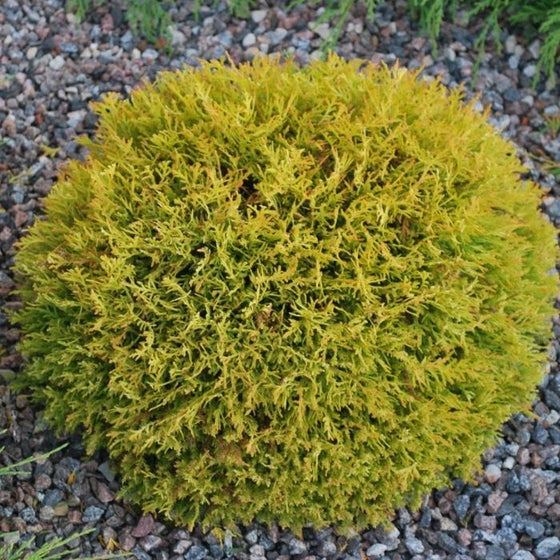
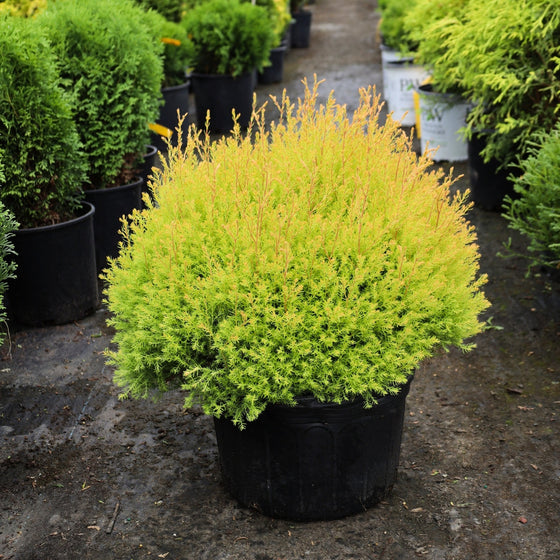
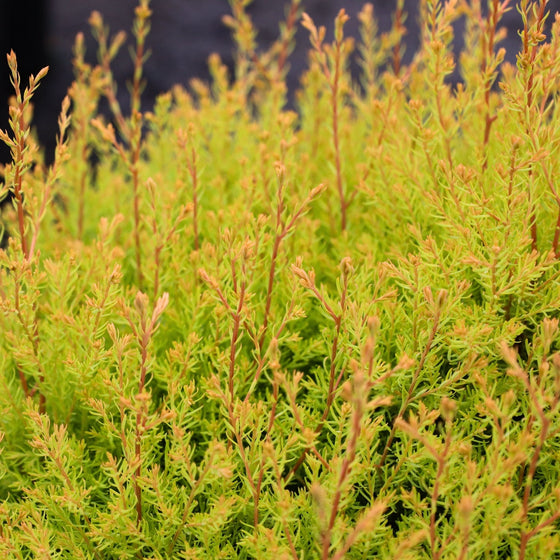


Images Depict Mature Plants
Rheingold Arborvitae
Thuja occidentalis 'Rheingold'
If you want an evergreen that brightens the landscape like a little sunburst, Rheingold Arborvitae is a can’t-miss pick—compact, naturally globe-shaped, and glowing gold through the growing season with a cozy copper shift in winter. It’s the perfect “front row” foundation shrub for clean structure without constant pruning, and it looks fantastic repeated along walkways or clustered in mixed borders for year-round color and texture.

Use Coupon Code: FOREVER20
Take 20% Off ALL Evergreens
📦 Free shipping on orders over $99.
Delay shipping by leaving us a message at Checkout.
Share:


Rheingold Arborvitae (Golden Globe Arborvitae)
Rheingold Arborvitae (Thuja occidentalis ‘Rheingold’) is the kind of dwarf evergreen shrub that instantly makes a landscape look more “designed.” If you’re looking to buy a golden arborvitae online that delivers reliable color without demanding constant pruning, Rheingold is a standout—its soft, feathery foliage glows a rich gold through the growing season and often warms into coppery tones in winter. That year-round color means you’re not just purchasing a shrub for summer—you're adding structure and brightness for every season.
Because it stays compact and tidy, Rheingold is an easy win for homeowners who want a polished look fast. It’s also a smart choice for pros who need a consistent, repeatable plant for foundation packages and front-border installs. If you want a golden globe arborvitae for sale that feels upscale, low-maintenance, and high-impact, Rheingold checks all the boxes.
Growth Habit
Rheingold develops into a dense, mounded-to-rounded form with tight branching that naturally holds its shape—so you get that “finished” look without shearing. Mature size typically falls within the 3–5 ft range, which is the sweet spot for foundation beds: large enough to anchor the design, but not so big that it encroaches on windows, walkways, or sightlines. This predictable habit is exactly what most shoppers want when they’re buying evergreens online—no surprises, no constant resizing.
It also plays well in mixed plantings. Rheingold’s rounded form contrasts beautifully with upright conifers and spiky perennials, and it repeats cleanly along paths or driveway edges for a professional, cohesive rhythm. If your goal is a compact evergreen that remains attractive throughout every season, Rheingold’s habit is a significant reason to consider adding it to your cart.
Cultural Needs
For the strongest gold color and best growth, plant Rheingold in full sun (it can handle part shade, but you’ll see deeper, brighter color with more light). Like most arborvitae, it performs best in well-drained soil with consistent moisture levels during its establishment period. Think “even moisture, not soggy.” A simple mulch ring helps keep roots cool and reduces watering swings—especially important for customers planting in hot, exposed beds.
Once established, Rheingold is straightforward: regular deep watering during dry stretches and minimal fuss otherwise. This is the kind of evergreen that fits real life—great for homeowners who want a low-maintenance landscape and great for landscapers who need dependable performance across many installs. If you’re shopping for a golden dwarf arborvitae that won’t become a project, Rheingold is built for long-term ease.
Landscape Uses
Rheingold Arborvitae is a go-to for foundation plantings, front borders, and entry beds where you want bright evergreen color without blocking views. Use it as a single accent to highlight a doorway, mailbox, or corner bed—or plant it in a repeating line for a clean, modern look that reads well from the street. It’s especially effective when paired with dark green evergreens (boxwood, hollies) or blue-toned conifers, because the gold foliage pops hard against cooler colors.
It’s also an excellent choice for containers when you want year-round structure on patios and porches—just use a large pot with drainage and don’t let it dry out completely. Whether you’re designing a small-space landscape or building a layered evergreen border, Rheingold is the kind of shrub people buy online because it’s dependable: compact size, standout color, and a naturally tidy habit that keeps the landscape looking sharp.
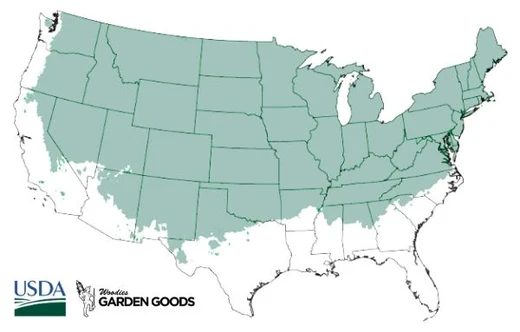
| Hardiness Zone: | 3-7 |
|---|---|
| Mature Height: | 3 to 5 Feet |
| Mature Width: | 3 to 5 Feet |
| Classification: | Evergreen shrub |
| Sunlight: | Full sun (best color); tolerates partial shade |
| Habit: | Densely branched, round |
| Foliage: | Golden yellow |
| Flower Color: | None |
| Pruning Season: | Rarely needed |
| Soil Condition: | Any well drained soil |
| Water Requirements: | Water well until established; average moisture after |
| Landscape Uses: | Mixed borders, foundations, mass plantings |
How to Care for Rheingold Arborvitae
Before purchasing your Rheingold Arborvitae Shrub, be sure to read the recommended care instructions to ensure your plant remains healthy and thriving for years to come.
-v1768249000799.png?92x91)
How should I plant Rheingold Arborvitae?
Start by choosing a site with full sun for best gold color and well-drained soil. Dig a hole 2–3× as wide as the root ball and just as deep, then set the shrub so the top of the root ball sits level with (or slightly above) the surrounding grade to encourage healthy drainage. Backfill with your native soil, firm gently, and water deeply to settle air pockets. After planting, create a wide watering basin and apply 2–3 inches of mulch (keep mulch a few inches off the trunk) to stabilize moisture and temperature. Space it with its mature width in mind, and plant in spring or fall when possible for easier establishment. If your site is windy or exposed, add protection the first winter to reduce stress and drying.
-v1768249026359.png?89x84)
How often should I water Rheingold Arborvitae after planting?
For the first 2–6 weeks, water every 2–3 days (adjust for heat and rainfall), focusing on deep soakings that wet the root ball and surrounding soil. Arborvitaes prefer consistently moist—but not waterlogged—soil, so aim for even moisture while roots expand into the native ground. After the first growing season, shift to weekly deep watering during dry spells, especially in summer heat or in sandy soil. Once established, Rheingold handles “average” garden moisture well, but it will look best (and hold color better) when it doesn’t swing from bone-dry to soaked.
-v1768249061473.png?90x89)
When should I fertilize Rheingold Arborvitae?
Feed in early spring as new growth begins using a slow-release, balanced fertilizer to support steady evergreen growth without forcing weak, overly fast shoots. If you planted recently, prioritize watering first—fertilizer is most effective once roots are actively growing and the shrub is not drought-stressed. For a more natural approach, top-dress with compost and refresh mulch annually to build soil structure and moisture-holding capacity. If your soil is lean, a spring application of organic fertilizer can provide gentle nutrition that supports dense branching and strong color without a surge.

When and how should I prune Rheingold Arborvitae?
Rheingold is naturally round and densely branched, and pruning is rarely needed—most gardeners only remove stray tips or winter-damaged sprigs. If you do prune, do it in late winter to early spring before the strongest flush of growth, using clean hand pruners to make small, selective cuts. Avoid shearing hard into old wood; instead, shape lightly to maintain a tidy globe and encourage fresh interior growth. If snow or ice loads splay branches, gently tie them back and remove broken stems promptly—then let the plant fill in naturally over the season.