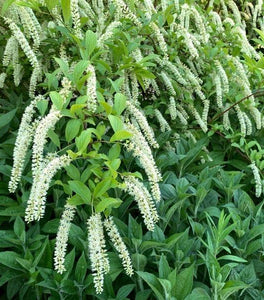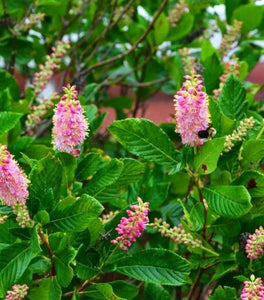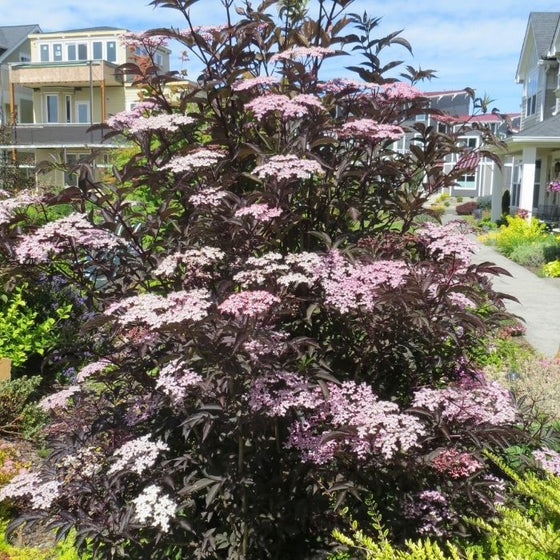

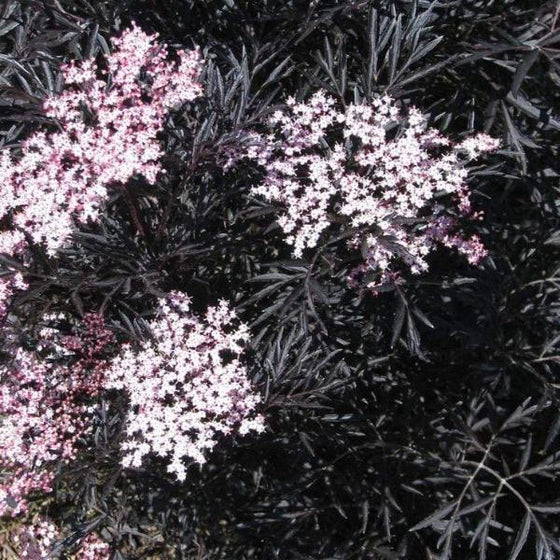


Images Depict Mature Plants
Black Lace® Elderberry
Sambucus nigra 'Eva' PP15575
Black Lace® Elderberry is one of those “one plant, instant upgrade” shrubs, with dark, lacy foliage that makes everything around it look more intentional, plus those soft pink flower clusters that pull pollinators in right when summer starts to hum. Give it sun for the best color, don’t be afraid to prune for shape, and you’ll have a bold focal point that earns attention all season long.

20% Off Sitewide Sale!
Use Code 'ENDOFSEASON20' At Checkout
📦 Free shipping on orders over $99.
Delay shipping by leaving us a message at Checkout.
Share:


Black Lace® Elderberry For Dark Foliage Drama And Pollinator-Friendly Blooms
Dark, lacy foliage that gives “Japanese maple” impact in a shrub
Black Lace® Elderberry brings instant drama with finely cut, purple-black foliage that looks like living lace. It delivers that high-end, Japanese maple texture—only on a fast, easy shrub that can hold its own in mixed borders, foundation beds, and modern landscapes that need contrast. The leaves stay richly colored through the growing season, especially with plenty of sun, and the plant’s naturally bold silhouette makes it a standout even when it’s not flowering.
Design-wise, it’s a “shortcut” to a layered, intentional look. Use it as a specimen where you want a focal point, or repeat it for rhythm in a long border. It also plays beautifully against bright greens, silver foliage, and chartreuse accents, making nearby plants look more vivid. If your landscape needs a strong anchor with texture, not just another green shrub—Black Lace® is the kind of plant that instantly upgrades the whole bed.
Soft pink blooms that pull pollinators in and soften the dark leaves
In late spring to early summer, Black Lace® produces broad, flattened clusters of tiny blooms that bud pink and open to soft pink-white. Against the dark foliage, the flowers look almost “lit,” adding a gentle, romantic contrast without losing the plant’s bold edge. The bloom display is also a major pollinator moment, bees and butterflies work the flower clusters, bringing movement and life to the garden right as summer begins.
After flowering, berry clusters can follow, adding another layer of seasonal interest and wildlife value. For the most reliable berry set, having another compatible elderberry cultivar (Sambucus nigra) nearby can help. Whether you grow it strictly for ornamental impact or you’re hoping for berries as a bonus, the bloom phase alone is worth the price of admission, fragrant, showy, and genuinely garden-making.
Tough, adaptable growth for borders, hedges, and edible-style landscapes
Black Lace® is a strong performer in full sun to partial shade, with the best foliage color and flowering in fuller sun. It prefers evenly moist, well-drained soil but adapts to many common garden soils (including heavier soils when drainage is reasonable). Once established, it’s more tolerant of short dry spells than many high-impact ornamentals, making it a practical choice for real landscapes, not just perfect ones.
It also works in multiple roles: a focal specimen, a bold deciduous hedge, or a backdrop shrub that makes perennials pop. If you’re designing a pollinator garden or a wildlife border, the flowers and berries add ecological value without sacrificing aesthetics. The key is giving it room to mature and enough sunlight to keep the foliage dark and the overall plant dense and showy.
Simple pruning keeps it full, colorful, and beautifully shaped
Black Lace® responds well to pruning, and that’s good news, because it lets you tailor the size and shape to your space. Prune in late winter to early spring to encourage vigorous new growth (which means fresh foliage and strong flowering potential), or do light shaping right after bloom if you want to refine the silhouette. The goal is to keep the plant open enough for airflow while maintaining a full, layered structure.
For hedging, plan your spacing and then use periodic pruning to encourage branching from the base upward. For specimen use, remove a few older stems at ground level as needed to refresh the shrub and keep the foliage looking clean and vibrant. Done right, Black Lace® becomes the kind of plant that looks more “designed” every year, lush, textured, and confidently dramatic.
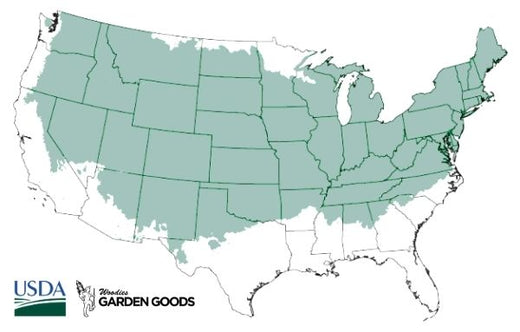
| Growth Zone: | 4-7 |
|---|---|
| Mature Height: | 6 to 8 feet |
| Mature Width: | 6 to 8 feet |
| Sunlight: | Full sun to partial shade |
| Bloom Time / Color: | Late spring to early summer; soft pink to pink-white flower clusters |
| Soil Condition: | Moist, well-drained; adaptable (avoid long-term standing water) |
| Water Require: | Moderate; consistent moisture while establishing |
| Wildlife Value: | Flowers support pollinators; berries can feed birds (and can be harvested when ripe) |
| Resistance (deer/disease/drought/etc.): | Generally deer resistant; drought tolerance improves once established |
| Landscape Uses: | Specimen shrub, mixed borders, deciduous hedge/screen, pollinator gardens, wildlife plantings |
How to Care for Black Lace® Elderberry
Be sure to read our planting instructions to ensure healthy and happy Black Lace Elderberry Shrubs for years to come!
-v1746236671517.png?92x91)
How should I plant Black Lace® Elderberry?
Plant Black Lace® Elderberry in full sun to partial shade in well-draining soil with room for a 6–8 foot mature spread. Dig a hole 2–3 times wider than the root ball, set the shrub so the top of the root ball is level with the surrounding soil, backfill, and water deeply. Add a 2–3-inch mulch ring around the root zone to stabilize moisture, keeping mulch a few inches away from the stems. Choose your placement with design in mind—this shrub is a focal point. For the darkest foliage and best flowering, prioritize full sun. If you want berries as part of the plan, consider planting a second compatible elderberry cultivar nearby to improve fruit set.
-v1746236699578.png?89x84)
How often should I water Black Lace® Elderberry after planting?
Water deeply right after planting, then keep the root zone evenly moist through the first growing season. A deep soak once per week is a solid baseline, increasing to 1–2 times per week during hot, dry stretches or in sandy soil. Water at the base rather than overhead to keep foliage cleaner and to direct moisture where roots need it. Once established, Black Lace® becomes more tolerant of short dry spells, but it looks best with consistent moisture during prolonged summer heat. Mulch helps reduce moisture swings and supports stronger growth—especially important if you’re aiming for a dense hedge or a large specimen with full, lacy foliage.
-v1746236717266.png?90x89)
When should I fertilize Black Lace® Elderberry?
Fertilize in early spring as new growth begins using a balanced slow-release shrub fertilizer, or top-dress with compost. Elderberries don’t need heavy feeding to perform, and moderate fertility supports lush foliage and strong flowering without pushing weak, thirsty growth. Avoid heavy late-season fertilizing. If the shrub is growing vigorously and leaf color looks strong, compost plus good watering habits is often enough. When in doubt, keep fertility moderate and let sunlight, pruning, and moisture do the heavy lifting.

When and how should I prune Black Lace® Elderberry?
Prune in late winter to early spring before new growth begins to maintain shape and encourage vigorous new shoots. Remove any dead wood, then thin by taking a few older stems back to the ground to refresh the shrub and improve airflow. This approach keeps the plant full while maintaining that signature lacy, layered look. If you need to control size, Black Lace® can handle a harder cutback, but aim to keep a balanced framework so it regrows evenly. For light shaping, you can also trim just after flowering to refine the silhouette while still preserving the season’s visual impact.