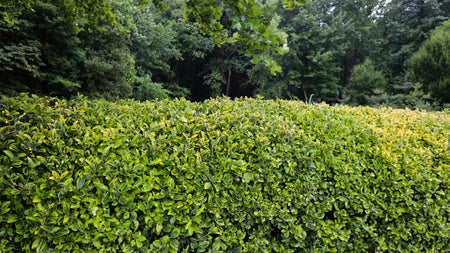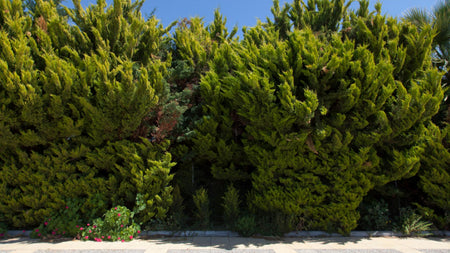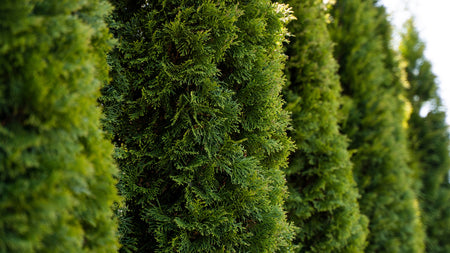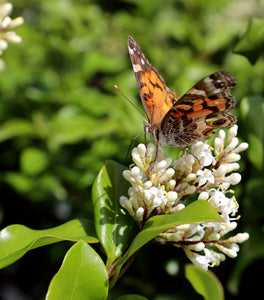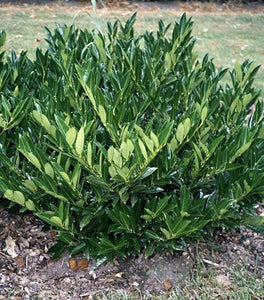


Images Depict Mature Plants
Red Tip Photinia
Photinia x fraseri
If you want privacy fast, Red Tip Photinia is one of those classic, no-nonsense evergreen hedges that earns its keep—thick screening, glossy green leaves, and that red new growth that makes the whole hedge look fresh. The “secret” is simple: give it room for airflow, water at the base, and do your main pruning in late winter so it stays dense without turning into a leaf-spot magnet.

15% OFF WITH CODE PLANTING15
Save 15% Off Your Entire Order! Limited time.
📦 Free shipping on orders over $99.
Delay shipping by leaving us a message at Checkout.
Share:


Fast-Growing Evergreen Privacy Hedge With Brilliant Red New Growth
A Privacy Hedge That Fills In Fast And Looks Finished
Red Tip Photinia earns its reputation as a quick, confidence-building privacy shrub. It grows into a dense, evergreen screen that’s easy to shape for hedge lines, fence borders, and property edges where you want immediate visual separation. The overall look is bold and polished, with glossy green leaves, an upright habit, and a thick canopy that blocks views when planted with the right spacing.
It’s also versatile in design. Keep it natural for a soft, informal screen, or clip it into a tighter hedge for a more tailored look. Along driveways and side yards, it creates a clean green wall that reads intentional year-round. If your goal is “privacy that looks planted, not improvised,” Red Tip Photinia delivers a fast path to that finished landscape feel.
Red New Growth That Adds Color Without Needing Flowers
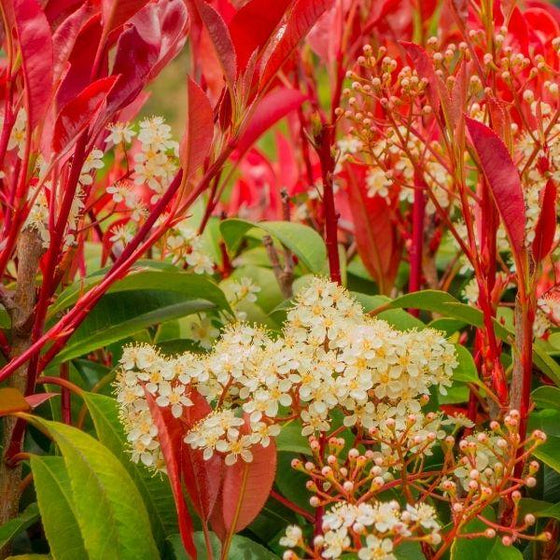
The signature feature is the flush of red at the tips. New leaves emerge bronze-red to bright red, then mature to glossy green. That color contrast gives you seasonal excitement without relying on blooms, and it’s especially striking when the hedge is sheared lightly to encourage fresh growth. In full sun, the red color typically shows stronger and longer; in partial shade, the plant still performs well, with a slightly softer color effect.
This is an evergreen that behaves as both an accent and a screening plant. You get that “freshly planted” look each time new growth appears, which keeps hedges from feeling flat or static. For customers who want privacy but still care about curb appeal, the red-tip flush is the detail that makes the hedge feel premium.
Built For Heat, With Practical Drought Tolerance Once Established
Red Tip Photinia is well-suited to warm climates and holds up nicely once the root system is established. Give it consistent moisture in year one, then it becomes much more forgiving during typical summer dry spells. It tolerates a wide range of soils as long as drainage is decent, and it’s comfortable in full sun to partial shade, making it a flexible choice for many yard conditions.
The biggest performance booster is airflow. Like many broadleaf evergreens, photinia benefits from spacing and pruning that keep the hedge from becoming an airless wall of foliage. Good airflow helps keep foliage cleaner and reduces the risk of common leaf-spot headaches. The result is a hedge that stays thicker, greener, and better-looking with less intervention.
Easy To Shape For Screens, Hedges, And Green Backdrops
Photinia responds well to pruning, which is why it’s so useful for hedges and screens. You can maintain a formal line, create a tall green backdrop behind mixed shrubs, or shape it as a large evergreen mass for privacy around patios and outdoor living spaces. It’s also a strong “background plant” that makes flowering shrubs and perennials pop in front of it.
For best results, plan hedge spacing up front, then prune with purpose: keep the top slightly narrower than the base so light reaches lower branches, maintaining fullness from top to bottom. When it’s planted and shaped well, Red Tip Photinia becomes a living privacy wall that looks crisp, lush, and intentional in every season.
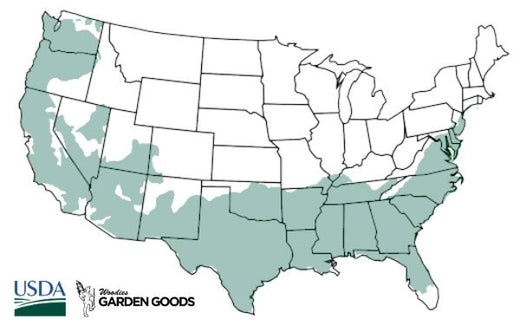
| Hardiness Zone: | 7-9 |
|---|---|
| Mature Height: | 10 to 15 feet |
| Mature Width: | 8 to 12 feet |
| Sunlight: | Full sun to partial shade |
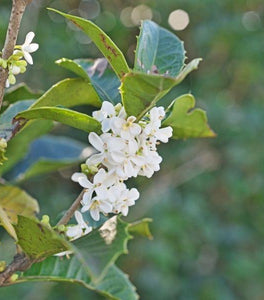
| Bloom Time / Color | Spring; clusters of small white flowers |
| Soil Condition: | Well-drained, adaptable; avoid consistently wet sites |
| Water Requirements: | Moderate; drought tolerant once established |
| Wildlife Value | Flowers attract pollinating insects; dense cover for birds |
| Resistance (deer/disease/drought/etc.) | Heat tolerant; drought tolerant once established; can be prone to leaf spot without good airflow |
| Landscape Uses | Privacy hedges, screens, foundation plantings, fence lines, evergreen backdrops, windbreak massing |
How to Care for Red Tip Photinia
Before you buy a Red Tip Photinia Shrubs, make sure to read about the recommended care instructions to keep this plant healthy and thriving for years to come!

How should I plant Red Tip Photinia?
Plant Red Tip Photinia in full sun to partial shade in well-drained soil. Dig a hole twice as wide as the root ball, set the shrub so the top of the root ball is level with the surrounding soil, then backfill and water deeply to settle. Add a 2–3 inch mulch layer over the root zone to conserve moisture, keeping mulch a few inches away from the stems. For hedges, plan spacing before you dig so the line stays straight and airflow stays healthy as plants mature. Avoid low areas that hold water after rain, and choose a site where breezes can move through the foliage—good placement is the easiest way to grow a dense hedge that stays cleaner and better-looking.

How often should I water Red Tip Photinia after planting?
Water deeply right after planting, then keep the root zone evenly moist during the first growing season. A good starting rhythm is a deep soak 1–2 times per week during dry stretches, adjusting for heat, wind, and soil type. Focus water at the base of the plant rather than overhead watering. After establishment, Red Tip Photinia becomes more drought-tolerant, but it still looks best with consistent moisture during prolonged summer dry spells. Deep, occasional watering encourages deeper roots and stronger screening growth, while avoiding wet foliage helps reduce leaf-spot issues.

When should I fertilize Red Tip Photinia?
Fertilize in early spring, just before or as new growth starts, with a balanced, slow-release shrub fertilizer. This supports vigorous red-tip growth and helps the hedge fill in quickly without pushing excessive, weak growth. If your soil is already fertile, a light feeding (or compost top-dressing) is often enough. Avoid heavy late-season fertilizing, which can encourage tender growth at the wrong time and may increase maintenance and stress as weather extremes approach.

When and how should I prune Red Tip Photinia?
Prune Red Tip Photinia in late winter while it’s dormant, focusing on shaping and thinning for airflow. For hedges, keep the top slightly narrower than the base so sunlight reaches the lower branches and the hedge stays full from top to bottom. Use clean, sharp pruners and remove crowded interior stems as needed. Avoid frequent heavy shearing during the growing season if disease pressure is a concern, since repeated flushes of tender new growth can be more vulnerable. One well-timed dormant-season prune, plus light touch-ups only when needed, typically produces the densest hedge with the cleanest foliage.